Highlights
- Explains why smart-home compatibility remains fragmented despite rapid innovation
- Breaks down Matter, Thread, Zigbee, and ecosystem-level interoperability
- Offers practical, user-focused solutions to reduce smart-home friction today
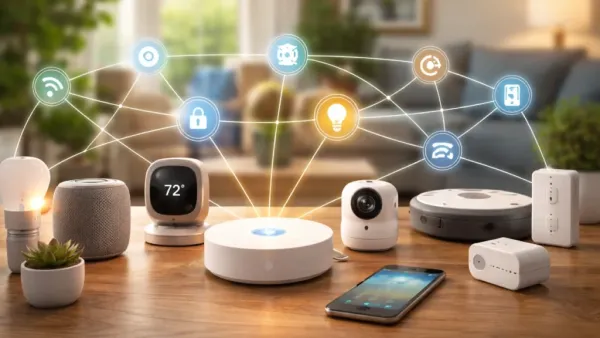
The smart home was supposed to be simple. Buy a smart bulb, connect a speaker, add a camera, and let everything work together seamlessly. Instead, many households in 2025 find themselves juggling multiple apps, incompatible devices, and ecosystems that refuse to talk to one another. The promise of a truly connected home is real, but fragmentation remains one of its biggest obstacles.
This feature article examines why smart-home compatibility is still so difficult, how standards are trying to fix the problem, and what realistic solutions exist for users navigating a crowded ecosystem of brands, protocols, and platforms.
The fragmented reality of smart homes
Most smart homes do not grow by design; they grow by accumulation. A user starts with a smart speaker, adds lights from another brand, installs a camera recommended by a friend, and later buys a smart appliance bundled with a phone. Each device works well on its own, but together, they often feel disjointed.
This fragmentation arises from three overlapping layers:
- Ecosystems (software platforms and voice assistants)
- Communication protocols (how devices talk to each other)
- Vendor priorities (business incentives and lock-in strategies)
The result is a smart home that is technically advanced but operationally messy.
Platform ecosystems: convenience with boundaries
At the ecosystem level, three major players dominate global smart homes: Amazon (Alexa), Google (Google Home), and Apple (HomeKit).
Each ecosystem offers a polished experience, voice control, automation routines, and centralised management. However, each also sets boundaries around which devices integrate fully.
- Amazon Alexa prioritises breadth, supporting a vast number of third-party devices, often at the cost of deeper security controls.
- Google Home focuses on intelligence and automation, integrating well with Google services but sometimes lagging in device-level granularity.
- Apple HomeKit emphasises privacy and security, but has historically limited device availability and higher entry barriers.
From a user perspective, choosing one ecosystem early can simplify life, but it also shapes future purchases, sometimes unintentionally locking households into a single platform.
Protocols: the invisible language barrier
Beyond apps and voice assistants, smart-home devices rely on communication protocols, technical languages that determine how devices connect and exchange data.
Common protocols include:
- Wi-Fi: flexible and familiar, but power-hungry
- Bluetooth: short-range and setup-friendly, but limited
- Zigbee and Z-Wave: low-power mesh networks favoured for lighting and sensors
- Thread: a newer IP-based mesh protocol designed for reliability and efficiency
Historically, devices built on different protocols required dedicated hubs or bridges, adding cost and complexity. A Zigbee bulb might work with one hub but not another; a Z-Wave sensor could be invisible outside its ecosystem.
This invisible fragmentation is often more frustrating than app overload, because users cannot see it, but feel its consequences.
The promise of universal standards
In response to years of incompatibility, the industry has begun to converge around shared standards. The most significant effort is Matter, backed by major players including Apple, Google, Amazon, and Samsung.
Matter aims to solve compatibility at a foundational level by:
- Defining a common application layer for devices
- Allowing devices to work locally across ecosystems
- Reducing dependence on cloud services
- Enabling one device to be controlled by multiple platforms
In theory, a Matter-certified smart bulb should work equally well with Alexa, Google Home, and Apple Home, without hacks or workarounds.
In practice, Matter is still evolving. Device categories are expanding gradually, and advanced features sometimes behave differently across platforms. Nonetheless, it represents the most serious attempt yet to reduce fragmentation.
Why fragmentation persists despite standards
If standards exist, why does fragmentation continue?
1. Legacy devices: Millions of existing smart-home devices predate modern standards. Manufacturers are not always incentivized to update older products, leaving users with partial compatibility at best.
2. Feature differentiation: Brands compete not just on compatibility, but on unique features. Advanced camera analytics, proprietary automations, or ecosystem-specific services may not translate cleanly across standards.
3. Business incentives: Lock-in remains profitable. Encouraging users to stay within a single ecosystem increases service revenue, data collection, and brand loyalty. Full openness can conflict with these incentives.
4. User expectations: Consumers often expect “plug-and-play” simplicity, underestimating the complexity of networking, security, and interoperability. When devices fail to integrate smoothly, frustration follows.
Hubs, bridges, and the role of middleware
To cope with fragmentation, many smart homes rely on hubs or middleware platforms.
Dedicated hubs, such as those from Philips Hue or Aqara, translate between protocols and manage local automation. While effective, they add hardware, maintenance, and points of failure.
More advanced users turn to software-centric solutions like Home Assistant or open-source controllers, which unify devices across brands and protocols under a single interface. These platforms offer unparalleled flexibility, but require technical confidence and time investment. In essence, middleware shifts the burden of compatibility from manufacturers to users.
Privacy and security: the hidden cost of compatibility
Compatibility is not purely a convenience issue; it has privacy and security implications.
Each additional app, cloud service, or integration expands the attack surface of a smart home. Devices that rely heavily on cloud connectivity may expose usage data or remain vulnerable if vendors discontinue support.
Local-first standards like Matter and Thread reduce some risks by keeping control within the home network. Apple’s HomeKit model, which emphasises on-device processing, reflects growing user concern about surveillance and data misuse.
The challenge is balancing openness with safeguards. A universally compatible smart home that is poorly secured solves one problem while creating another.
What users can do today
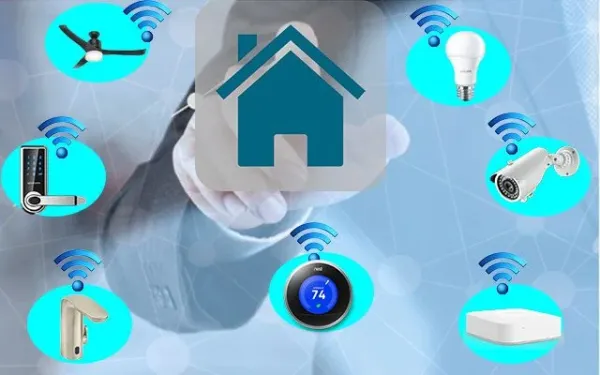
Until fragmentation is fully resolved, smart-home users can make pragmatic choices to reduce friction:
- Commit to a primary ecosystem early and buy compatible devices consistently.
- Prefer standards-based devices, especially those supporting Matter or Thread.
- Avoid obscure brands with unclear update policies.
- Use hubs strategically, not redundantly.
- Prioritise local control where possible to reduce cloud dependence.
These steps do not eliminate fragmentation, but they contain it.
The road ahead: convergence, not uniformity
The future of smart-home ecosystems is unlikely to be perfectly unified. Diversity in brands, features, and user preferences is inevitable, and often healthy.
What is changing is the cost of diversity. As standards mature and ecosystems converge, users should no longer have to choose between innovation and compatibility.
By the late 2020s, smart homes may feel less like collections of gadgets and more like coherent environments, where devices cooperate by default, and differentiation happens at the experience level rather than the protocol level.
Conclusion
A smart home should reduce mental load, not increase it. Compatibility is not just a technical challenge; it is a quality-of-life issue. When devices fail to work together, users are forced to adapt to technology rather than the other way around.
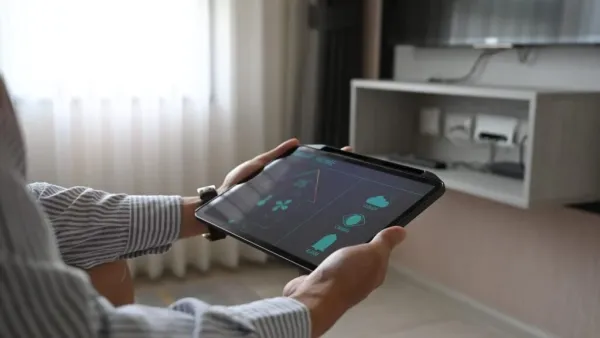
The gradual shift toward shared standards, local control, and cross-platform support signals a more humane direction for connected living. Progress may be uneven, and frustration will persist in the short term. But the trajectory is clear.
The smartest homes of the future will not be those with the most devices, but those where technology fades into the background, quietly cooperating across brands and boundaries, in service of everyday life.
-
'Most Overrated': Fans Slam Ishan Kishan After Flop Show In IND vs NZ 1st T20I

-
India vs New Zealand 2026 1st T20 Match Live Score: Suryakumar Yadav’s Team India eye winning start to five-match series

-
Despite negative reviews and controversies, Sivakarthikeyan, Sreeleela starrer Parasakthi crosses Rs 100 crore mark

-
Sunny Deol, Varun Dhawan starrer Border 2 completes its CBFC formalities, gets…

-
Kerala HC denies bail to Padmakumar, two others in Sabarimala gold loss cases