
The property dispute related to the former Mewar royal family of Udaipur is once again in the headlines.
The property disputes of former royal families have always been a matter of curiosity for the common people. Many royal families of the country have gone to the courts at different times regarding rights over property and have also made headlines. Rajasthan looks ahead in this matter because it has the highest number of royal families and property disputes too. One such property dispute of the Mewar royal family is currently in discussion and its hearing is going on in the Delhi High Court.
Come, let us know in detail what is this whole matter, where is the problem and why has the Mewar royal family reached the shelter of the law?
What is the whole matter?
The property dispute related to the former Mewar royal family of Udaipur is once again in the headlines. This time, the center is the properties of late Arvind Singh Mewar and his alleged will, over which his son Lakshyaraj Singh Mewar and daughters Padmaja Kumari Parmar and Bhargavi Kumari are at loggerheads. The recent development is that Delhi High Court has sought response from Lakshyaraj's sisters on his petition and the case is now proceeding simultaneously in the High Court.
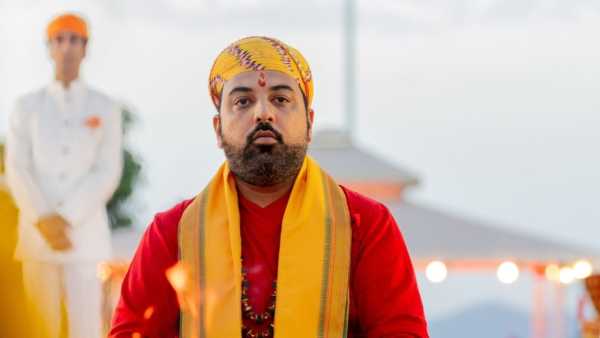
Lakshyaraj Singh
What happened in Delhi High Court?
According to the report of Bar and Bench, Justice Subramonium Prasad in Delhi High Court has issued notice on the petition of Lakshyaraj Singh Mewar. Notice was issued to Padmaja Kumari Parmar, Bhargavi Kumari Mewar, her mother Vijayraj Kumari Mewar and the state of Rajasthan. The court has asked everyone to file objections and replies.
According to the report, the dispute is regarding succession and control of the properties of Arvind Singh Mewar. It is said that in a will dated February 2025, Arvind Singh Mewar has given the rights of his self-acquired properties to Lakshyaraj. Lakshayraj's sisters Padmaja and Bhargavi are challenging this will. Cases related to will and inheritance are filed in the Delhi High Court from both sides, in which the right to administer property has been sought.

Padmaja Kumari Parmar.
Two big reasons for controversy
1- Is the will valid or not?
The will will be recognized only if it is proved in front of the court that the document has been made legally and correctly. The conditions of witnesses and the rest of the process etc. are fulfilled, and this was actually the wish of the deceased. In fact, Lakshya Raj's sisters are calling the will itself controversial and a senior lawyer argued that the onus is on the party presenting the will to prove its validity.
2- Which property is self-acquired and which is inheritance?
If any property is considered truly self-acquired, the effect of the will will be different. If it is considered as joint inheritance of family or trust, then the picture of rights may change. The controversy regarding this categorization figures prominently in many media reports. An NDTV report discusses the classification of properties into different categories and the trust structure.
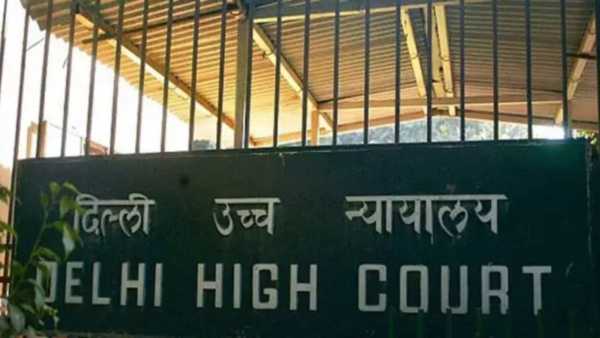
Delhi High Court
How did the matter reach Delhi High Court?
The main reason for the problem was that cases related to the same dispute started going on in different High Courts and forums. Somewhere Rajasthan High Court, somewhere Bombay High Court. This increased the risk of parallel arguments in different courts on the same facts/documents, conflict of orders and the process becoming lengthy and expensive. To resolve this, the petitions were transferred to the Supreme Court.
The Supreme Court ordered to transfer the related cases to Delhi High Court so that a consolidated hearing could be conducted on a single platform. This transfer is a solution, but at the same time there is a catch because now the Delhi High Court will have to hear the entire case by bringing together the list of many pending proceedings, parties, trusts and documents in one frame.
Why is this dispute said to be decades old?
Today's brother-sister dispute is being considered as a new episode of a big historical family dispute. According to media reports, the background of the dispute goes back to the 1980s, when tensions in the family increased over inheritance, will and trust management. It has also been told in these reports that after a legal struggle that lasted for about 37 years, in 2020, the Udaipur District Court had given an order for the division of some properties. Things like banning some economic activities also came to light. The present case is also being viewed in this background.
At which places is the screw stuck?
- Veracity and legal proof of will: Is the document genuine? Is the process correct? Witness, date, willingness, capacity, all these are in issue. The court will now examine all these aspects.
- Classification of Properties: Self-acquired vs. traditional, trust, inheritance. This will decide how strong is whose claim on whom.
- Control vs. Ownership: Who has day-to-day control over institutions like hotels, businesses and trusts is a big question even in the interim phase.
- Consolidation of multiple forums into one forum: List of documents, parties, trusts, companies if the process is technically important. Party list, list as per rules etc. are also mentioned in many reports.
- Character of heritage properties: City Palace, heritage properties are not only real estate but also have cultural-historical importance. Therefore, trust structure, conservation objectives versus commercial operations can all become part of the legal debate.
Now what next?
According to Bar and Bench, Delhi High Court has sought answers and objections and has fixed February 12 as the date of further hearing. The direction forward will largely hinge on how the court frames the issues over the validity of the will and the nature of the assets. And are the cases of both the parties heard together or sequentially?
Overall, this matter is not going to be resolved so quickly. The reason is that the Supreme Court has ordered the Delhi High Court to hear this case. Now there is no legal framework beyond this in our country. It is the compulsion of both the parties to wait for the decision of Delhi High Court. Yes, in case of disagreement either party can again go to the Supreme Court.
-
Yuzvendra Chahal and RJ Mahvash unfollow each other on Instagram, fresh speculation leaves fans guessing

-
The Signs of Poor Sleep Quality That You Shouldn't Ignore

-
Drivers are only just finding out what common car button does after years of avoiding it

-
Meet Saina Nehwal's sister Abu: Inside the life of the pharmacist turned digital content creator

-
Skin Serums that boost skin elasticity better than Retinol