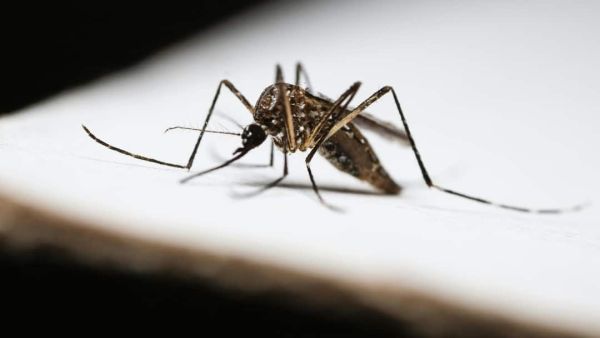
(Dr. Ritabrata Kundu)
Dengue, once considered a monsoon disease, now is observed in winters too. From the first large epidemic recorded in India in 1963, the face of dengue incidences has radically transformed. What used to be an occasional outbreak has become a recurring public health challenge. Since the mid-90s, dengue epidemics have become more frequent and progressively larger in scale. The geographical spread of the disease has also expanded as these outbreaks usually begin in cities, where population density is high, and then quickly spread to nearby towns and regions.
Dengue: A Year-Round Disease
Over time, the pattern of dengue occurrence itself has also changed. Earlier regarded as a disease confined largely to the monsoon season, dengue has, over the past few decades, continued to circulate even between outbreaks. This sustained transmission has turned dengue into a regular presence rather than a seasonal event in many parts of the country. As a result, India has now become endemic for dengue, including its more severe forms. In several large and densely populated cities, the situation has progressed further to hyperendemicity, meaning that multiple types of the virus circulate continuously, increasing the risk of repeated infections and more serious illness.
A major reason for this persistence lies in changing environment we live in. Rising temperatures, higher humidity, irregular rainfall patterns and rapid urbanisation have created ideal conditions for dengue-carrying mosquitoes to survive and breed throughout the year. Everyday realities such as water storage practices, construction activity, clogged drains and waste accumulation provide abundant breeding sites close to homes, schools and workplaces.
Why Children Are Vulnerable
The shift in dengue disease pattern has serious consequences, especially for children whose immunity is still in the developing stage. Dengue can rapidly escalate and lead to severe, life-threatening complications requiring hospitalization. Children can get infected multiple times through different strains. Since there is no specific cure for dengue, prevention remains the most effective and reliable strategy to protect children.
Prevention And Community Action Is The Key
Despite its growing impact, dengue remains a preventable disease. Currently in India, many states continue to rely heavily on outdoor insecticide fogging as a key dengue control measure. While fogging is visible and often reassuring, its impact is limited because the dengue mosquito prefers to rest indoors, in dark and hidden spaces. In some areas, households may refuse entry to spray teams for indoor spraying or close doors and windows during outdoor fogging, further reducing its impact. Delays in reporting cases or incomplete surveillance also mean that spraying often happens too late to prevent outbreaks, allowing mosquito populations to return quickly.
Preventing mosquito breeding presents another challenge. Dengue mosquito eggs can remain dormant for over a year in dry conditions and hatch as soon as they come into contact with water. This makes one-time control efforts ineffective unless breeding sites are identified and eliminated regularly.
This is why dengue control cannot rest solely with authorities. Controlling dengue is everyone’s responsibility. Individuals and families play a crucial role by regularly checking and eliminating mosquito breeding sites in and around their homes. Covering stored water, clearing stagnant water, keeping surroundings clean and using personal protective measures against mosquitoes can significantly reduce risk.
Dengue prevention in India requires an integrated approach that combines personal protection, strong community-based mosquito control, responsive public health systems and sustained government action. Protecting children from dengue demands shared accountability and enduring collaboration between the state and society. Only through such coordinated efforts can India achieve long-term dengue control and secure a healthier future for its children.
Dr. Ritabrata Kundu is the Professor of Pediatric Medicine at Institute of Child Health, Kolkata
[Disclaimer: The information provided in the article is shared by experts and is intended for general informational purposes only. It is not a substitute for professional medical advice, diagnosis, or treatment. Always seek the advice of your physician or other qualified healthcare provider with any questions you may have regarding a medical condition.]
-
Axar Patel: The Next Ravindra Jadeja In Team India? Stats Comparison

-
How Will Mumbai Get Its New Mayor? All Eyes On Mayor Reservation As Maharashtra Prepares Lottery Draw

-
EPS Will Be NDA’s CM Face In Tamil Nadu: Piyush Goyal
-
IND vs NZ 1st T20I: Despite Glenn Phillips' fiery knock, New Zealand suffer a loss in Nagpur

-
Pakistan Only Country To Vote In Favour Of Bangladesh At ICC Meet For T20 World Cup Relocation