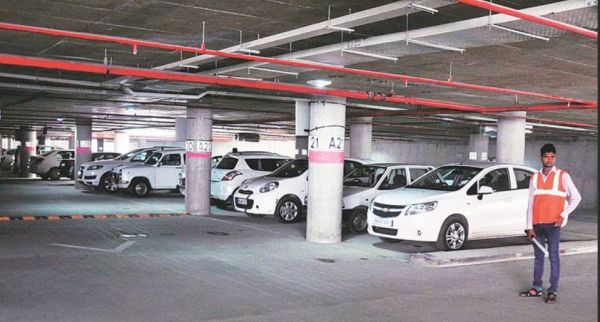
The information provided is **accurate** based on multiple reliable news reports as of January 21, 2026. The Delhi government has decided to double parking charges at de facto authorized parking sites (except those managed by the Delhi Metro Rail Corporation, or DMRC) when **GRAP Stage III** (‘Severe’, AQI 401–450) or **Stage IV** (‘Very Severe+’, AQI >450) is in place. The aim of this move is to reduce the use of private vehicles amid the ever-increasing air pollution in the national capital.
The decision is in line with the directives of the Commission for Air Quality Management (CAQM), which has recommended increasing parking fees to reduce private transport during peak pollution periods. It also follows CAQM’s July 2022 policy guidelines on air pollution control in the National Capital Region, which emphasizes transport demand management and higher parking fees. Additionally, it is also a response to an order by the National Green Tribunal, which emphasized efforts to reduce private vehicles through destination buses and other restrictions.
Vehicular pollution is a major contributor to Delhi’s pollution, especially in winter. According to a 2015 IIT Kanpur study cited in the notification, vehicles account for about 19.7% of PM10 and 25.1% of PM2.5 in winter, and also account for the majority of annual CH4 (18%), N2O (92%), and CO2 (30%) emissions. There are over 82.4 lakh registered vehicles in Delhi, which has around 677 approved parking facilities (except 91 DMRC sites) which can park around 1,06,037 vehicles.
Delhi’s AQI on January 21, 2026, showed marginal improvement, but remained of concern—it was around 324–341 in the ‘very poor’ category (301–400 range) at the beginning of the day, with fluctuations seen at different stations. With some relief, GRAP Stage IV restrictions were lifted recently (around January 20), but Stage I–III measures remain in place. The policy promotes public transport options like metro (through DMRC exemption) to reduce dependence on private cars and two-wheelers. The move is a targeted, short-term intervention under GRAP to reduce serious pollution incidents, however long-term solutions will need to address multiple sources such as stubble burning, industry and construction.
-
Relief for 50 Vaishno Devi college students as counselling set for Jan 24
-
Stand-up comedian Zakir Khan’s reported fees for Hyderabad show

-
Mumbai Set To Get Woman Mayor As Maharashtra Declares Reservations; Full Category-Wise List Out
-
SC Clears Hindu, Muslim Friday Prayers At Madhya Pradesh’s Bhojshala; Lays Down Timings
-
OpenAI in talks to raise $50B from Middle East investors