It might be an odd thing to say even before the T20 World Cup has begun, but India already find themselves on the home stretch. The five T20Is against New Zealand offer a valuable opportunity, but they also come with a risk: any vulnerabilities exposed now will be there for the rest of the cricketing world to study.
While the build-up to the World Cup has been dominated by action off the field—particularly the political drama surrounding Bangladesh that shows no sign of resolution—these matches provide Suryakumar Yadav a chance to lay down a marker as captain.
India’s preparation has also had an unusual rhythm. The ODI series scheduled in a 20-over World Cup year shifted attention squarely onto Virat Kohli, Rohit Sharma and Shubman Gill. While the 50-over format has benefited from the presence of the two stalwarts, the fact that none of them feature in T20Is means the focus can now finally turn fully to the shortest format.
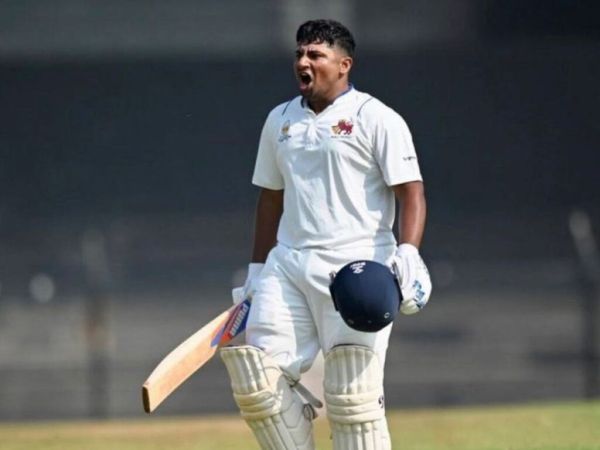
For Suryakumar, who does not play the longer formats, T20 cricket is everything. His impending 100th T20I is a reminder of how much the game’s landscape has changed—it is now perfectly acceptable, even normal, for a player to build longevity in one format without featuring in the other two.
Yet captaincy does not shield him from pressure or scrutiny, especially with a recent lack of runs. Given the way he bats, Suryakumar is never likely to string together scores in the 30s. Both the team management and the player know he is in the side for impact rather than consistency. Still, while fans understand this in theory, there remains a constant demand for reassurance that he “still has it.”
At 35, Suryakumar has little left to prove. Even if he never played again, his achievements would stand. But because he plays only T20 internationals—and captains the side in the format—this World Cup will feel like the culmination of his entire cricketing journey.
India are unlikely to be severely tested in the first round of the World Cup, with due respect to the opposition. The match against Pakistan will carry pressure for reasons that go beyond cricket, but Pakistan have not been a dominant T20 force for some time. India’s bowling, both pace and spin, has enough variety to do the job, while Pakistan’s batting is yet to crack the T20 code in a way that truly unsettles top attacks.
That relative comfort comes with its own downside. With qualification for the Super 8s all but assured, the early stages of the tournament may not provide the rigorous examination needed to reveal where the team truly stands before sterner tests arrive. In that context, the T20Is against New Zealand assume added importance.
After the sobering ODI series loss—where India were the stronger side on paper and New Zealand were missing several key players—there will be no complacency. Preparation and execution will not be purely inward-looking; the opposition will be taken seriously.
Typically, teams like India focus more on their own processes than on the opposition, trusting results to follow. This time, however, outcomes matter. Each win against New Zealand banks real-time experience that could prove decisive later.
In T20 cricket, where batting orders are frequently shuffled and bowling combinations tweaked to suit conditions, the lead-up to a World Cup is less about locking down individual spots and more about functioning as a cohesive unit capable of answering questions as they arise.
India know they have the resources. They are further aided by home conditions, not because these are unfamiliar to visiting teams, but because they are likely to favour batting. The stars may not have fully aligned yet, but these final games before the World Cup represent the best possible chance to take stock of what will be needed to go all the way.
While the build-up to the World Cup has been dominated by action off the field—particularly the political drama surrounding Bangladesh that shows no sign of resolution—these matches provide Suryakumar Yadav a chance to lay down a marker as captain.
India’s preparation has also had an unusual rhythm. The ODI series scheduled in a 20-over World Cup year shifted attention squarely onto Virat Kohli, Rohit Sharma and Shubman Gill. While the 50-over format has benefited from the presence of the two stalwarts, the fact that none of them feature in T20Is means the focus can now finally turn fully to the shortest format.
For Suryakumar, who does not play the longer formats, T20 cricket is everything. His impending 100th T20I is a reminder of how much the game’s landscape has changed—it is now perfectly acceptable, even normal, for a player to build longevity in one format without featuring in the other two.
Yet captaincy does not shield him from pressure or scrutiny, especially with a recent lack of runs. Given the way he bats, Suryakumar is never likely to string together scores in the 30s. Both the team management and the player know he is in the side for impact rather than consistency. Still, while fans understand this in theory, there remains a constant demand for reassurance that he “still has it.”
At 35, Suryakumar has little left to prove. Even if he never played again, his achievements would stand. But because he plays only T20 internationals—and captains the side in the format—this World Cup will feel like the culmination of his entire cricketing journey.
India are unlikely to be severely tested in the first round of the World Cup, with due respect to the opposition. The match against Pakistan will carry pressure for reasons that go beyond cricket, but Pakistan have not been a dominant T20 force for some time. India’s bowling, both pace and spin, has enough variety to do the job, while Pakistan’s batting is yet to crack the T20 code in a way that truly unsettles top attacks.
That relative comfort comes with its own downside. With qualification for the Super 8s all but assured, the early stages of the tournament may not provide the rigorous examination needed to reveal where the team truly stands before sterner tests arrive. In that context, the T20Is against New Zealand assume added importance.
After the sobering ODI series loss—where India were the stronger side on paper and New Zealand were missing several key players—there will be no complacency. Preparation and execution will not be purely inward-looking; the opposition will be taken seriously.
Typically, teams like India focus more on their own processes than on the opposition, trusting results to follow. This time, however, outcomes matter. Each win against New Zealand banks real-time experience that could prove decisive later.
In T20 cricket, where batting orders are frequently shuffled and bowling combinations tweaked to suit conditions, the lead-up to a World Cup is less about locking down individual spots and more about functioning as a cohesive unit capable of answering questions as they arise.
India know they have the resources. They are further aided by home conditions, not because these are unfamiliar to visiting teams, but because they are likely to favour batting. The stars may not have fully aligned yet, but these final games before the World Cup represent the best possible chance to take stock of what will be needed to go all the way.
(Disclaimer: The opinions expressed in this column are that of the writer. The facts and opinions expressed here do not reflect the views of www.economictimes.com.)