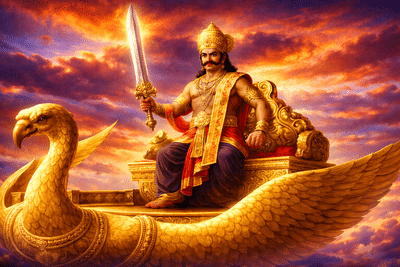
Ravana is usually remembered through a single moment of his life, his defeat in the
Ramayana. Every year, his effigy is burned to symbolise the victory of good over evil. But Indian tradition has never been comfortable with reducing complex lives to one ending. That is why, in certain regions, Ravana is not rejected. He is worshipped.
These places do not worship Ravana by denying his mistakes. They worship him because they remember
why he mattered before he fell. Knowledge, devotion, lineage, and penance carry deep spiritual weight in Hindu philosophy, sometimes even outweighing moral failure. Here is why these six places continue to honour Ravana, not as a villain, but as a layered, human figure.
1. Because Here, Ravana Is Family, Not a Foe
Mandsaur
In Mandsaur, Ravana is worshipped because he is considered part of the family. This region is believed to be the maternal home of Mandodari, Ravana’s wife. That makes Ravana the honoured son-in-law of the land.
In Indian culture, familial bonds carry sacred value. Because of this connection, Ravana’s death is mourned here instead of celebrated. A large statue stands as a mark of respect, and prayers are offered during Dussehra. Ravana is worshipped not for his final act, but for his place in a revered lineage and his identity as a learned king.
2. Because Birth and Roots Cannot Be Erased
Bisrakh
Bisrakh believes Ravana was born on its soil. The village takes its name from Vishrava, Ravana’s father. Because of this belief, Ravana is worshipped here as a son of the land.
In Hindu thought, birthplace holds spiritual importance. A person’s origins are respected regardless of how their life unfolds. Bisrakh does not celebrate Dussehra with effigy burning. Instead, the day is observed quietly, honouring Ravana’s scholarship, Brahmin lineage, and devotion to Shiva. Worship here exists because roots are not judged by endings.
3. Because Knowledge Is Sacred, Even When the Knower Falls
Ravangram
Ravangram worships Ravana because of his unmatched knowledge. A reclining idol of Ravana lies in a temple where he is revered as a master of the Vedas and shastras.
In Hindu philosophy, knowledge itself is divine. Ravana’s ten heads are seen as symbols of his vast learning, not just arrogance. The villagers believe that his intellectual brilliance and devotion to Shiva deserve respect, even if his ego led to destruction. Worship here exists because wisdom is never considered meaningless, even when misused.
4. Because Devotion to Shiva Transcends Moral Labels
Kakinada
In Kakinada, Ravana is worshipped primarily as a devotee of Shiva. Local belief holds that Ravana built a Shiva temple here and performed intense devotion that earned him powerful boons.
In Shaiva traditions, devotion is judged by intensity and surrender, not by moral perfection. Ravana’s tapasya is remembered as genuine and extraordinary. He is worshipped alongside Shiva not as an equal, but as an example of how devotion can elevate a person, even if later actions lead to downfall.
5. Because Kingship and Counsel Still Matter
Mandore
Mandore worships Ravana because he is remembered as a king shaped by culture, learning, and royal values. As Mandodari’s ancestral home, the region sees Ravana as a respected royal son-in-law.
Here, Ravana is honoured as a ruler who governed a prosperous kingdom but failed to listen to wise counsel. Worship exists not to glorify his arrogance, but to remember the tragedy of ignored wisdom. In Indian tradition, a fallen king is still a king.
6. Because Penance Earns Reverence, Not Ridicule
Kangra
Kangra worships Ravana because of his intense penance. Legends say Ravana performed severe tapasya here to please Shiva, earning strength and protection.
In Hindu belief, penance is one of the highest spiritual acts. Ravana’s discipline and endurance are honoured independently of how he later used his power. Worship here exists because spiritual effort is never mocked, even when the seeker later stumbles.
-
Became a selector at the age of 37, now announced to leave the post, gave shocking reason

-
Why Did Greenwich LifeSciences Stock Soar Pre-Market Today?

-
Rocket Lab Deploys Two Open Cosmos Spacecraft In Its First Electron Launch Of 2026

-
Why do women get morning sickness during pregnancy? “Gynecologist told the reason and when the problem increases.. – News Himachali News Himachali

-
Not Border 2-Dhurandhar, these 5 films broke records through advance booking. Top 5 Indian Films Highest Advance Booking Record Border 2 Not In List