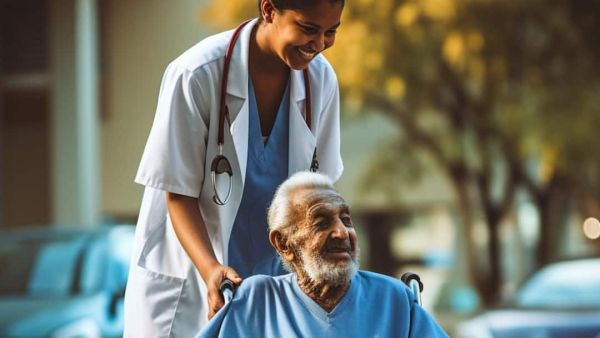
For years, caregiving in India sat in a grey zone. It was essential, often exhausting, and rarely described as a profession. That picture is changing. As India grows older and families seek care at home, a new labour market is taking shape where compassion meets clinical skill. Home healthcare is moving from a stopgap to a service layer.
Startups, hospitals, and insurers are building models that rely on trained caregivers who can deliver safe, dignified support in living rooms or step-down facilities. For young people deciding on their first job or career path, this is no longer sideline work. It is a future-proof career with structure, progression, and impact.
Demographic & Market Shift
Two realities are converging. India’s elderly population is rising, and chronic conditions require daily management rather than occasional hospital visits. Families want recovery, rehabilitation, and palliative care at home; a familiar, convenient and often cost-effective setting.
Hospitals want to optimise already crunched bed capacity and improve overall outcomes post discharge. Insurers and employers are paying attention to home-based care because it lowers costs and enhances experience. All of this creates significant demand tail-winds for caregiving as a sector and a profession.
What Caregiving Looks Like Now
The modern caregiver is not a bystander. They are trained and specialised across aspects ranging from physical support to advanced clinical assistance and even behavioural counselling. For each demand cohort, there is a special training and skilling structure.
In post-operative cases, trained attendants act as nursing assistants playing a key role in managing hygiene, physical positioning and more. For dementia and stroke, they support routines that preserve cognitive function and independence. In oncology and palliative settings, they deliver comfort and dignity while keeping families informed.
Real Career Paths, Not Dead Ends
The perception that caregiving has no growth path is becoming outdated. Clear ladders are emerging. A fresher can enter as a home health aide, certify further to become a senior caregiver, and then specialise in geriatric, rehabilitation, or pediatric care.
With experience, roles open up in care coordination, training, and quality assurance. Some move into hospital patient care services. Others become entrepreneurs who staff and supervise neighbourhood care pods. For graduates in nursing, physiotherapy, or psychology, caregiving experience is valuable exposure that builds confidence and bedside judgment.
Technology Is Changing The Toolkit
Care at home is more connected than before. Devices track blood pressure, oxygen saturation, and glucose in real time. Apps schedule medications, prompt exercises, and flag deviations for clinicians. Simple video check-ins allow multi-city families to stay involved. For caregivers, this technology reduces guesswork and raises safety. It also creates new roles around remote monitoring and documentation.
Young professionals who are comfortable with smartphones and basic analytics are already ahead. Beyond tech for clinical governance, there is an evolution of technology to support flexible engagement models, allowing more caregivers to enter the ecosystem on their own terms. The gig-care ecosystem is a future shift that healthcare systems are embracing at an expedited pace.
Economics & Employability
The sector offers what many first jobs do not. Predictable demand, structured schedules, and the satisfaction of visible outcomes. Leading providers invest in training and certification, which improves pay and employability. International opportunities exist for those who build language skills and obtain recognised credentials.
Within India, urban and tier-two markets alike are recruiting, which broadens the opportunities for students outside the largest cities. For families making education decisions, short vocational courses can create fast entry, while diplomas and degrees unlock supervisory tracks.
Dignity, Purpose, & Inclusion
Young workers often say they want work that matters. Few roles deliver meaning as directly as helping someone stand after surgery or guiding a loved one through the evening when memory is failing. The profession is also becoming more inclusive.
Men are entering a field once seen as exclusively female. Women who paused careers for caregiving at home are reentering the workforce with formal skills. The result is a talent pool that reflects the families it serves.
What Still Needs Work
For caregiving to scale as a respected profession, standards must continue to tighten. Transparent pay, safe working conditions, and clear escalation protocols are essential. Certification frameworks need wider adoption so clients can trust credentials and workers can carry them across employers.
Data privacy must be non-negotiable as more care moves online. Finally, public awareness has to catch up with reality. Caregivers are not domestic help with a new name. They are allied health workers who extend the reach of the system.
(The author is the CEO, Apollo Home Healthcare, Apollo Hospitals)
Disclaimer: The opinions, beliefs, and views expressed by the various authors and forum participants on this website are personal and do not reflect the opinions, beliefs, and views of ABP Network Pvt. Ltd.
-
Who Is Laila Faisal? Abhishek Sharma's Rumoured Girlfriend Grabbing Attention Off Field Amid IND vs NZ Series

-
'AI To Make Routine Jobs More Productive, Skilled Workers Needed': President & CEO Of Nvidia Jensen Huang At Davos

-
Border 2 Box Office Collection Day 1: Netizens Predict Massive Opening For Sunny Deol, Varun Dhawan's War Film

-
'It Does Hurt...': Mardaani 3 Actress Rani Mukerji On Not Winning National Award For Black

-
Devkhel OTT Release Date Locked: When & Where To Watch Prajakta Mali & Ankush Chaudhry's Crime-Thriller Web Series Online?