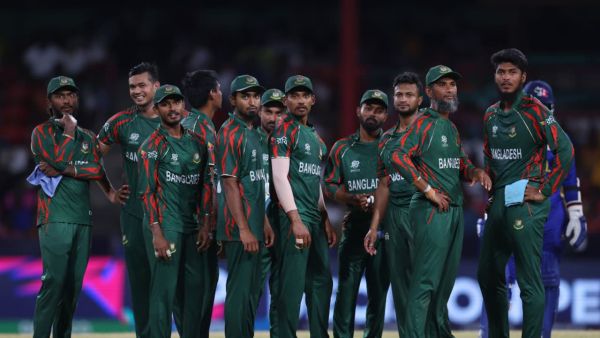
Bangladesh’s refusal to travel to India for the T20 World Cup 2026, despite ICC rejection of a venue change, could backfire badly—triggering heavy financial penalties, risking future hosting rights, and straining vital cricketing ties with India.
Bangladesh Cricket Board (BCB) has continued to remain adamant on its stance of not sending the national team to India for the upcoming edition of the T20 World Cup, despite the International Cricket Council (ICC) rejecting their request to shift their group stage matches to Sri Lanka due to security concerns and political tensions between both nations.

On Wednesday, the ICC held an official meeting via video conference, where all the members, including chairman Jay Shah, attended to discuss Bangladesh’s request to shift its national team’s group stage matches from India to Sri Lanka. 14 out of 16 members voted against the relocation of Bangladesh’s T20 World Cup matches out of India, putting BCB in a difficult position.
In an official statement released by the world governing body of cricket, the ICC officially rejected Bangladesh’s request, stating that there was no ‘credible threat’ in India, adding that the change of venue so close to the marquee event could pose an unprecedented threat to future events.
Therefore, the International Cricket Council has decided to stick to the original schedule, which was released in November 2025, rather than accommodate Bangladesh’s last-minute request, as the ICC stated that multiple independent security assessments showed no credible threat to the safety of Bangladesh players, officials, or fans in India during the T20 World Cup 2026.
BCB Refuses to Change Its Stance
Despite ICC giving an additional day to take a final call on Bangladesh’s participation in the T20 World Cup 2026, the BCB has remained firm on its refusal to send the national team to the neighbouring nation. Speaking to the reporters in Dhaka, board president Nazrul Islam confirmed that Bangladesh would not travel to India, but wanted ICC to shift their group stage matches to Sri Lanka.
Nazrul vowed to keep ‘fighting’ for a venue change for Bangladesh’s matches, while calling India the main ‘influencer’ in the ICC’s decision-making and warned ICC of losing viewership, calling the meeting’s decisions “shocking.”
“ICC had denied us our request to shift our matches away from India. We are not sure about the status of world cricket. Its popularity is going down. They have locked away 200million people. Cricket is going to the Olympics, but if a country like ours is not going, it is the ICC's failure. We will continue to communicate with the ICC. We want to play the World Cup. But we won't play in India,” Islam told reporters.
“We will keep fighting. There were some shocking calls in the ICC Board Meeting. The Mustafizur issue is not an isolated single issue. They (India) were the sole decision makers in that issue. We will go back to the ICC with our plan to play in Sri Lanka.
"They did give us a 24-hour ultimatum, but a global body can't really do that. ICC will miss out on 200 million people watching the World Cup. It will be their loss ... ICC is calling Sri Lanka co-hosts. They are not co-hosts. It is a hybrid model. Some of the things I heard in the ICC meeting were shocking," BCB President added.
Scroll to load tweet…
The crisis over Bangladesh’s T20 World Cup participation began after the pacer Mustafizur Rahman was released from the Kolkata Knight Riders (KKR) squad ahead of the IPL 2026 as per the instructionsby the Board of Control for Cricket in India (BCCI), apparently due to the ongoing religious and political tensions between India and Bangladesh.
BCB Nets a Self-Goal
Bangladesh Cricket Board’s firm stance on refusal to send national team to India is more like a self-goal, as it could have significant repercussions on their World Cup participation in the future, international relations, and player development opportunities. Bangladesh is already on the verge of risking substantial financial losses after refusing to travel to India.
All participating nations will receive a fee of at least round $300,000 from the International Cricket Council for being part of the marquee event, with larger sums on offer for teams progressing further in the tournament, including Super 8 qualification, semifinal, and final. This means Bangladesh would lose the participation payment as well as additional earning opportunities tied to match wins and advances.
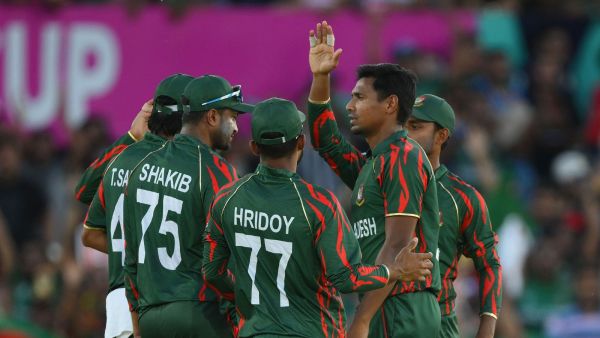
Additionally, under the ICC’s Member Participation Agreement, any team withdrawing from the global event triggers fines and penalties, which is a worst-case scenario for Bangladesh, facing multimillion-dollar fines. It was reported that the Bangladesh Cricket Board (BCB) could be fined upto $2 million for withdrawal from the tournament without an ICC‑accepted reason. The share of revenue is expected to take a hit as Bangladesh would forfeit its guaranteed participation fees, prize money from match wins, and a portion of ICC-distributed commercial and broadcasting revenues.
The Impact on Bangladesh Cricket
Bangladesh’s refusal to travel to India for the upcoming T20 World Cup 2026 will have a significant impact on the board’s finances, international reputation, and players' development. Under the current ICC model 2024-27, the Bangladesh Cricket Board (BCB) is set to receive $20 million annually from the governing body of cricket, which could be jeopardised if they boycott the marquee event by refusing to travel to India.
To make matters worse, Bangladesh might be stripped of their ICC rankings while losing their place in the T20 World Cup 2026 by not travelling to India. If the world governing body of cricket takes action against Bangladesh by removing them from the rankings, the team might be forced to play qualifiers to earn qualification for the global ICC events, including ODI World Cups, T20 World Cups, and Champions Trophy.
Scroll to load tweet…
Bangladesh could be pitted against lower-ranked associate teams in the qualifiers round instead of automatic qualification for the ICC events. Since the 2027 World Cup is the next ICC marquee event after the T20 World Cup 2026, Bangladesh is currently at risk of losing its direct entry into the ODI World Cup next year, being forced into qualifying rounds and face long-term setback in international standings.
Additionally, Bangladesh is also at risk of getting hosting rights for the future ICC events. The 2031 ODI World Cup is set to be co-hosted by India and Bangladesh, and the latter’s refusal to participate in the T20 World Cup 2026 could threaten its role as a co-host of the marquee event, potentially leading the ICC to reconsider or reassign hosting rights, which would affect the country’s reputation, fan engagement, and associated economic benefits.
India to Halt Bilateral Series against Bangladesh
India is one of the strongest cricketing nations and a key bilateral partner for Bangladesh. Bangladesh’s refusal to travel to India for the T20 World Cup 2026 could strain cricketing ties between the two nations, potentially leading to suspension or cancellation of future bilateral series and tours.
The Men in Blue were scheduled to travel to Bangladesh for the white-ball series, which includes three ODIs and as many T20Is, in September. However, the current tensions over Bangladesh’s adamant of not participating in the T20 World Cup could lead India to reconsider their bilateral series, which may impact bilateral relations, revenue from cricket sales, broadcasting and fan engagement.
Since the Board of Control for Cricket in India (BCCI) is the richest cricket board in the world, and top Indian stars, including Virat Kohli and Rohit Sharma, have their fan base in Bangladesh, India holds significant leverage in cricketing ties and commercial influence.
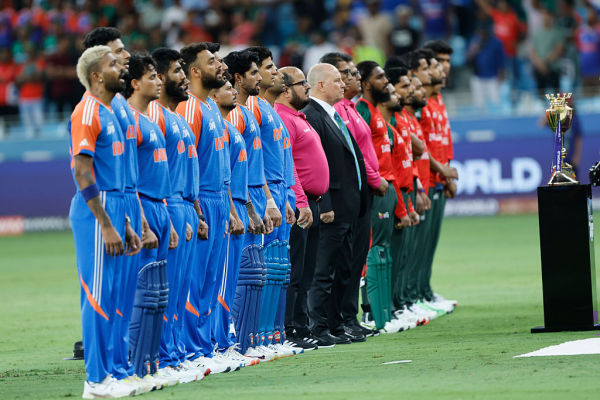
Bangladesh’s refusal to travel to India for the T20 World Cup 2026 is likely to sour relationships between the two nations, affecting future series, player exposure, broadcasting revenue, and fan engagement, potentially isolating the team in the international cricket ecosystem.
Looking at the overall scenario, Bangladesh is sitting on the edge of the cliff with multiple risks looming. The Bangladesh Cricket Board (BCB)’s continued refusal to participate in the T20 World Cup in India could have long-term implications and repercussions for the nation's cricket’s global standing.
-
Karnataka govt directs officers to respond to calls from elected representatives
-
Karnataka govt directs officers to respond to calls from elected representatives
-
Nitish Kumar snaps at women leaving venue during speech in Bihar's Siwan
-
MP: Herd of cows killed after train runs over in Bhind
-
Gold Outlook: Prices May Rise Further as Goldman Sachs Raises Its Target — Here's What It Means for Investors