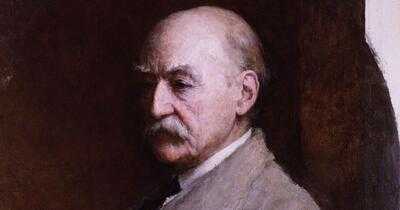
Thomas Hardy’s final novel, Jude the Obscure (1895), was ahead of its time in more ways than one. Upon its publication, it provoked controversy with its explicit criticism of organised religion and traditional marriage, leading to book burnings and public criticism.
Hardy attributed the public criticism to his retirement from novel writing. He had already courted controversy in the literary establishment a few years earlier by describing the unmarried mother who (spoiler alert) goes on to commit murder at the centre of Tess of the D’Urbervilles (1891) as “a pure woman”. But Jude the Obscure was his most searing attack yet on the hypocrisies of late Victorian society.
The novel’s apparent endorsement of free love, and damning portrait of conventional marriage, alienated many readers including – perhaps unsurprisingly – Hardy’s wife, with whom the novel caused an irreparable breach.
There’s no getting away from it; the story is something of a downer. It’s the tale of a young man – the “obscure” Jude – whose life starts off hard and gets harder as he faces a string of obstacles in the pursuit of his dreams. And he is a dreamer.
The novel opens with a young Jude being introduced to the idea of a university education, as his beloved schoolteacher leaves him for...
Read more
-
Volkswagen Assembles Tayron R-Line Locally As Premium SUV Push Continues

-
India Has Helped The World At Its Own Cost, Says RSS Chief Mohan Bhagwat
-
RCB Sale: Serum Institute CEO Adar Poonawalla Confirms Bid To Purchase 2025 IPL Champion Team

-
Australian Open 2026: World No. 1 Aryna Sabalenka Named New Gucci Brand Ambassador

-
Oscars 2026: Sinners Breaks Records By Earning 16 Nominations - Know Where To Watch Michael B Jordan's Film Online In India