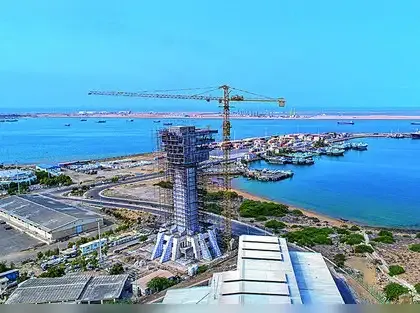
Trump's announcement of a 25% tariff on countries trading with Iran - though framed as a universal measure - complicates India's calibrated engagement with Tehran, especially its strategic involvement in Chabahar Port. Coming on top of existing trade tariffs, the move introduces another layer of uncertainty into New Delhi-Washington ties.
The tariffs follow on a 6-mth waiver India secured from the US in October 2025 for Chabahar operations, widely seen as a temporary window to recalibrate its presence at the port. But the new tariff threat undermines that exemption, injecting fresh uncertainty into a fragile regional environment and raising the risk of renewed escalation across Iran and West Asia.
During Trump 1.0, the US withdrew from Joint Comprehensive Plan of Action (JCPOA) in 2018 and launched a 'maximum pressure' campaign to economically isolate Tehran through sanctions on oil exports, banking, shipping and third-party trade. Under Biden, this architecture endured, though enforcement fluctuated. Iran has long been a fault line in India-US relations, including after the 2008 civil nuclear deal, when pressure mounted on New Delhi to align its Iran policy with Western non-proliferation objectives.
Trump's return has revived the coercive edge of this strategy, with tariffs deployed to deter third countries from sustaining economic ties with Iran - aimed at severing economic lifelines, isolating partners and cornering Tehran under the shadow of potential military escalation.
For India, Chabahar is not just a commercial port project. It's also a strategic asset that ties together civilisational links, regional connectivity and expanding security interests. The port offers India a rare overland and maritime gateway to Afghanistan, Central Asia and onward to Russia, even as its alternative access remains structurally constrained by Pakistan's refusal to grant India transit rights. Sanctions on Iran and disruptions since the Russia-Ukraine war have had a debilitating impact, preventing the connectivity vision from attaining its full potential.
India signed a 10-yr contract with Iran in May 2024, under which the state-run India Ports Global Ltd (IPGL) committed investments of around $370 mn for the development of Shahid Beheshti terminal at Chabahar. The agreement, signed with Iran's Ports and Maritime Organisation, was intended to provide operational stability and signal India's intent to remain engaged despite geopolitical headwinds. Trump's announcement has run against it.
Recent statements from New Delhi suggest that India is reassessing its options. While the 6-mth waiver was initially seen as an exit ramp, India now appears to be exploring ways to sustain its presence, reflecting the careful assessments about costs involved and the strategic value Chabahar holds for India's wider maritime and Indo-Pacific ambitions. India is not alone in facing repercussions of Trump's tariffs on Iran. China, the UAE, Brazil, Turkey and Russia stand to be affected.
Broader implications extend beyond bilateral frictions. Iran sits astride Strait of Hormuz, a critical artery for global energy flows and Indo-Pacific supply chains. Any destabilisation of Iran's economy or security environment risks spillover effects that could disrupt trade, raise insurance and shipping costs, and undermine investment confidence for the Indo-Pacific region. For India, which is expanding its footprint in West Asia through energy and infrastructure connectivity and diaspora ties, the loss or downgrading of Chabahar would be a strategic setback.
The timing of it all may be critical. Iran is already under internal strain, and the cancellation of a recent visit by Iran's foreign minister to India, where Chabahar was expected to be discussed, underscores the urgency. Meanwhile, West Asia remains volatile with fragile ceasefires and unresolved conflicts. A renewed US economic or military coercion against Iran risks derailing any prospects for regional stabilisation, including progress on Gaza.
The latest US measures may not explicitly target India, but their indirect impact is unavoidable. Beyond lost economic opportunity, a diminished role at Chabahar would undercut India's maritime vision and its aspiration to act as a stabilising power across the Indo-Pacific and West Asia. Perhaps most expectedly, China will swoop in to fill any void that would be left by India's withdrawal.
As Trump heightens pressure on Iran, externalities will increasingly shape India's choices. To a hammer, everything may look like a nail. But for New Delhi, navigating this moment will require deft balancing and conversations with Washington.
The tariffs follow on a 6-mth waiver India secured from the US in October 2025 for Chabahar operations, widely seen as a temporary window to recalibrate its presence at the port. But the new tariff threat undermines that exemption, injecting fresh uncertainty into a fragile regional environment and raising the risk of renewed escalation across Iran and West Asia.
During Trump 1.0, the US withdrew from Joint Comprehensive Plan of Action (JCPOA) in 2018 and launched a 'maximum pressure' campaign to economically isolate Tehran through sanctions on oil exports, banking, shipping and third-party trade. Under Biden, this architecture endured, though enforcement fluctuated. Iran has long been a fault line in India-US relations, including after the 2008 civil nuclear deal, when pressure mounted on New Delhi to align its Iran policy with Western non-proliferation objectives.
Trump's return has revived the coercive edge of this strategy, with tariffs deployed to deter third countries from sustaining economic ties with Iran - aimed at severing economic lifelines, isolating partners and cornering Tehran under the shadow of potential military escalation.
For India, Chabahar is not just a commercial port project. It's also a strategic asset that ties together civilisational links, regional connectivity and expanding security interests. The port offers India a rare overland and maritime gateway to Afghanistan, Central Asia and onward to Russia, even as its alternative access remains structurally constrained by Pakistan's refusal to grant India transit rights. Sanctions on Iran and disruptions since the Russia-Ukraine war have had a debilitating impact, preventing the connectivity vision from attaining its full potential.
India signed a 10-yr contract with Iran in May 2024, under which the state-run India Ports Global Ltd (IPGL) committed investments of around $370 mn for the development of Shahid Beheshti terminal at Chabahar. The agreement, signed with Iran's Ports and Maritime Organisation, was intended to provide operational stability and signal India's intent to remain engaged despite geopolitical headwinds. Trump's announcement has run against it.
Recent statements from New Delhi suggest that India is reassessing its options. While the 6-mth waiver was initially seen as an exit ramp, India now appears to be exploring ways to sustain its presence, reflecting the careful assessments about costs involved and the strategic value Chabahar holds for India's wider maritime and Indo-Pacific ambitions. India is not alone in facing repercussions of Trump's tariffs on Iran. China, the UAE, Brazil, Turkey and Russia stand to be affected.
Broader implications extend beyond bilateral frictions. Iran sits astride Strait of Hormuz, a critical artery for global energy flows and Indo-Pacific supply chains. Any destabilisation of Iran's economy or security environment risks spillover effects that could disrupt trade, raise insurance and shipping costs, and undermine investment confidence for the Indo-Pacific region. For India, which is expanding its footprint in West Asia through energy and infrastructure connectivity and diaspora ties, the loss or downgrading of Chabahar would be a strategic setback.
The timing of it all may be critical. Iran is already under internal strain, and the cancellation of a recent visit by Iran's foreign minister to India, where Chabahar was expected to be discussed, underscores the urgency. Meanwhile, West Asia remains volatile with fragile ceasefires and unresolved conflicts. A renewed US economic or military coercion against Iran risks derailing any prospects for regional stabilisation, including progress on Gaza.
The latest US measures may not explicitly target India, but their indirect impact is unavoidable. Beyond lost economic opportunity, a diminished role at Chabahar would undercut India's maritime vision and its aspiration to act as a stabilising power across the Indo-Pacific and West Asia. Perhaps most expectedly, China will swoop in to fill any void that would be left by India's withdrawal.
As Trump heightens pressure on Iran, externalities will increasingly shape India's choices. To a hammer, everything may look like a nail. But for New Delhi, navigating this moment will require deft balancing and conversations with Washington.
(Disclaimer: The opinions expressed in this column are that of the writer. The facts and opinions expressed here do not reflect the views of www.economictimes.com.)





Harsh V Pant
The writer is professor of international relations, King’s College London
Vivek Mishra
Vice-president, Observer Research Foundation (ORF), New Delhi.