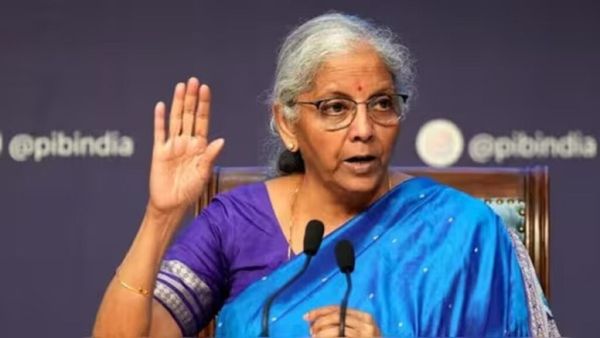
India’s renewable energy sector is signaling a change in priorities ahead of Finance Minister Nirmala Sitharaman presenting Budget 2026 on February 1. Industry stakeholders say success will now depend not just on adding new capacity but on improving the power system infrastructure including transmission network, energy storage, grid stability, financial health of discoms and risk mitigation.
India has expanded rapidly in the field of renewable energy in the last decade. The country has achieved over 262 GW of non-fossil fuel based installed capacity and aims to achieve 500 GW by 2030 and net zero by 2070. But as the share of renewable energy in power generation is increasing, the structural weaknesses of the power system are also coming to the fore.
According to industry experts, incidents of curtailment of renewable power are increasing in high capacity states like Rajasthan. This is due to inadequate transmission networks and concerns to grid stability. “Challenges to transmission connectivity have impacted project award activities in the current financial year and PSA (power sale agreements) signing with discoms for some capacity auctioned in the last one year,” a senior official said.
Renewable curtailment occurs when solar or wind plants are forced to reduce output even when they are available because the grid does not have sufficient transmission or flexibility. This affects the income of projects, weakens investor confidence and wastes cheap clean power.
Varun Karad, co-founder, LNK Energy, said, “While the existing incentives have provided impetus to large capacity additions and domestic manufacturing, long-term capital flows for investors will come only if policy stability and payment discipline is ensured.” “If the government does not focus on grid resilience and long-term storage, there could be a limit to the absorption of renewable energy,” he warned.
Energy storage, especially battery energy storage systems and pumped hydro, is expected to be at the center of Budget 2026. Although the Center has announced Viability Gap Funding (VGF) for limited battery capacity, the industry says both scale and speed are now essential. “Continuity in policy and higher budgetary allocations, especially through measures like VGF, will encourage more capital investment in battery storage,” said an official. It was also added that timely implementation of inter-state and intra-state transmission projects is of utmost importance.
Payment delays from state-owned distribution companies still remain a major concern for investors. The industry believes that greater budgetary support for distribution reforms and smart metering could improve the cash position of discoms.
“The adequacy of transmissions and the pending PSA signing are key monitoring points for the near term,” according to a senior representative.
The industry says that Budget 2026 will be judged not just on big targets but on improving the ‘plumbing’ of the system. After a period of rapid capacity addition, India’s clean energy transition is now entering a phase where reliability, storage and integration are as important as generation. The next leap will be determined by how efficiently India can transmit, store and economically utilize electricity.
Know why India-EU trade agreement will be called ‘Mother of All Deals’
Rs 8031.56 crore saved so far from cyber fraud, know how the Centre’s registry is working
Pakistan: Wazir-e-Difa inaugurates fake Pizza Hut; The real company sent the notice
-
Easy ways to get out of a debt trap: Don't panic, these 5 smart steps can change your financial situation.

-
Budget 2026 Timing Explained: Why Union Budget Is Presented at 11 AM Instead of Evening
-
Banks Closed for Four Days? Check RBI Holiday List Before Visiting Your Branch

-
Major Pay Hike Approved for PSU Insurance, NABARD and RBI Staff; Pensioners Also Get Relief

-
Banks to Remain Shut for Four Straight Days From January 24 Due to Holidays and Nationwide Strike