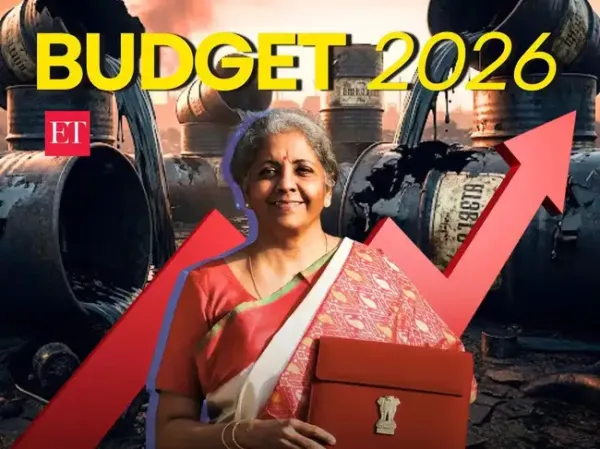
Budget 2026: Tax, regulations, and GIFT City opportunities could be shaping India’s oil & gas industry
Budget 2026 could redraw the map of India’s oil and gas industry, which now stands at a critical juncture -- shaped by geopolitical tensions, trade tariffs, the global energy transition, volatile pricing, and an evolving tax landscape.
As the Union Budget 2026 approaches, considering India’s major dependence on oil imports, businesses are anticipating measures that could influence cross-border investments, pricing structures, and compliance strategies.
Also Read: Budget 2026: The great game of gold is at play. Will Sitharaman play her hand?
Depending on contract duration, nature of activities undertaken etc, businesses evaluate either of the options, whichever is more efficient.
However, in view of recent Indianisation trend, and considering Government’s ‘No Global Tender Enquiry’ for prescribed contracts, overseas players are contemplating to restructure their global operations to setup presence in India to align with the said objective.
The same provides further impetus to Government’s initiatives under Hydrocarbon Exploration and Licensing Policy (HELP) regime to be energy selfreliant and to provide preference to local capability in bids through Open Acreage Licensing (OALP), Discovered Small Field (DSF) and other related mechanisms.
India’s recent emergence as a frontrunner for Global Capability Centres (GCC), also acts as a headwind for the Indianization theme, with several global players exploring to setup presence in India.
Also Read: Budget 2026: Sitharaman & Co will be counting every rupee on the road to Viksit Bharat 2047
To align with the above, multinational enterprises prefer a more certain and friendly tax and regulatory business environment, inter-alia, commercial considerations.
While the Government has adopted flagship initiatives like GIFT City (discussed separately below), implementation of new ITA 2025, in order to provide further fillip to the Indianisation theme, upcoming budget could provide explicit framework for tax neutrality with respect to conversion of existing business presence into long-term presence (eg. integrating existing project office with a new or existing subsidiary which is optimal from group’s overall tax and regulatory framework).
Under the existing income-tax provisions, a unit setup in IFSC can avail 10-year tax holiday out of first 15 years, subject to satisfaction of certain conditions.
Amongst other frameworks, IFSCA have also notified leasing framework for ship leasing to boost India’s maritime ambitions. The benefit would thus be extended to any ships/ ocean vessels used in shipping and/or O&G industry, thus garnering interest from global conglomerates.
Get the latest on Budget 2026 and related developments here.
In addition to 10-year tax holiday for IFSC unit, royalty income earned by non-resident lessors is tax exempt with respect to leasing of ships/ocean vessels to such IFSC units.
However, on conjoint reading of definition of royalty and tax exemption provisions for such lessors, it appears that such exemption could be unintentionally jeopardised with respect to royalty income earned by foreign lessors for providing ships/ocean vessels ‘in connection with O&G operations.
Further, as stated above, considering that foreign service providers can opt for net regime, there was an express prohibition to off-set business losses and unabsorbed depreciation emanating out of such regime, against income computed basis presumptive tax regime arising in subsequent years.
The ITA 2025, however, unintentionally specifies that apart from business losses and unabsorbed depreciation, ‘no deductions against profits’ would be available against presumptive income.
Further, since 10-year tax holiday (for GIFT City entities) is provided expressly as a ‘deduction against profits’ (including case where foreign company branch in IFSC offering income on presumptive basis), an express amendment is required to remove such ambiguity.
Also Read: Budget 2026: Not just big guns, the real test of Bharat's defence will be dictated by its modern muscle
It is recommended to reinstate the language of ITA 1961 to merely prohibit set off of unabsorbed depreciation and brought forward losses against presumptive income and not all deduction or allowances.
Overall, to provide stimulus to India’s ambition on self-reliance for energy security and related measures, it is imperative to adopt measures on an ongoing basis to provide a more certain tax and regulatory environment. Businesses would hope that addressing some of the above measures would definitely be a step in the right direction.
Neetu Vinayek, Tax Infrastructure Leader at EY India, authored this article, with contributions from Ratish Iyer, Director – Tax, and Dipen K. Patoliya, Tax Professional at EY India.
As the Union Budget 2026 approaches, considering India’s major dependence on oil imports, businesses are anticipating measures that could influence cross-border investments, pricing structures, and compliance strategies.
Also Read: Budget 2026: The great game of gold is at play. Will Sitharaman play her hand?
Indianisation of business operations:
Foreign players providing services in connection with O&G exploration activities have an option to offer income under presumptive tax regime (gross regime) or offer lower profits by maintaining audited books and undertaking related compliances (net regime).Depending on contract duration, nature of activities undertaken etc, businesses evaluate either of the options, whichever is more efficient.
However, in view of recent Indianisation trend, and considering Government’s ‘No Global Tender Enquiry’ for prescribed contracts, overseas players are contemplating to restructure their global operations to setup presence in India to align with the said objective.
The same provides further impetus to Government’s initiatives under Hydrocarbon Exploration and Licensing Policy (HELP) regime to be energy selfreliant and to provide preference to local capability in bids through Open Acreage Licensing (OALP), Discovered Small Field (DSF) and other related mechanisms.
India’s recent emergence as a frontrunner for Global Capability Centres (GCC), also acts as a headwind for the Indianization theme, with several global players exploring to setup presence in India.
Also Read: Budget 2026: Sitharaman & Co will be counting every rupee on the road to Viksit Bharat 2047
To align with the above, multinational enterprises prefer a more certain and friendly tax and regulatory business environment, inter-alia, commercial considerations.
While the Government has adopted flagship initiatives like GIFT City (discussed separately below), implementation of new ITA 2025, in order to provide further fillip to the Indianisation theme, upcoming budget could provide explicit framework for tax neutrality with respect to conversion of existing business presence into long-term presence (eg. integrating existing project office with a new or existing subsidiary which is optimal from group’s overall tax and regulatory framework).
GIFT City / IFSC:
The International Financial Services Centres Authority (IFSCA) was established in 2020 as the dedicated regulator for IFSCs in India, responsible for developing, regulating, and promoting various financial services in IFSC, in line with global financial hubs like Singapore, Dubai etc.Under the existing income-tax provisions, a unit setup in IFSC can avail 10-year tax holiday out of first 15 years, subject to satisfaction of certain conditions.
Amongst other frameworks, IFSCA have also notified leasing framework for ship leasing to boost India’s maritime ambitions. The benefit would thus be extended to any ships/ ocean vessels used in shipping and/or O&G industry, thus garnering interest from global conglomerates.
Get the latest on Budget 2026 and related developments here.
In addition to 10-year tax holiday for IFSC unit, royalty income earned by non-resident lessors is tax exempt with respect to leasing of ships/ocean vessels to such IFSC units.
However, on conjoint reading of definition of royalty and tax exemption provisions for such lessors, it appears that such exemption could be unintentionally jeopardised with respect to royalty income earned by foreign lessors for providing ships/ocean vessels ‘in connection with O&G operations.
Budget expectations
The Government should expressly clarify that irrespective of whether the ships are being used in shipping sector (eg. carrying cargo/ passengers) or in connection with oil and gas sector, any royalty payable in relation to such ships should be exempted.Further, as stated above, considering that foreign service providers can opt for net regime, there was an express prohibition to off-set business losses and unabsorbed depreciation emanating out of such regime, against income computed basis presumptive tax regime arising in subsequent years.
The ITA 2025, however, unintentionally specifies that apart from business losses and unabsorbed depreciation, ‘no deductions against profits’ would be available against presumptive income.
Further, since 10-year tax holiday (for GIFT City entities) is provided expressly as a ‘deduction against profits’ (including case where foreign company branch in IFSC offering income on presumptive basis), an express amendment is required to remove such ambiguity.
Also Read: Budget 2026: Not just big guns, the real test of Bharat's defence will be dictated by its modern muscle
It is recommended to reinstate the language of ITA 1961 to merely prohibit set off of unabsorbed depreciation and brought forward losses against presumptive income and not all deduction or allowances.
Other considerations:
Government could also provide a simplified framework for players contemplating to execute short-term contracts in India (say < 1 year), who have to go through the rigours of setting up presence, obtaining tax and other statutory registrations.Overall, to provide stimulus to India’s ambition on self-reliance for energy security and related measures, it is imperative to adopt measures on an ongoing basis to provide a more certain tax and regulatory environment. Businesses would hope that addressing some of the above measures would definitely be a step in the right direction.
Neetu Vinayek, Tax Infrastructure Leader at EY India, authored this article, with contributions from Ratish Iyer, Director – Tax, and Dipen K. Patoliya, Tax Professional at EY India.
(Disclaimer: The opinions expressed in this column are that of the writer. The facts and opinions expressed here do not reflect the views of www.economictimes.com.)