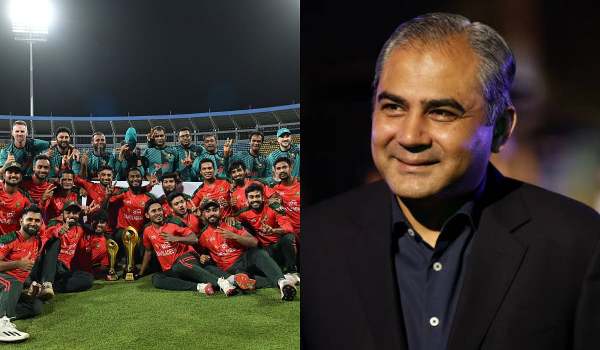
Bangladesh cricket finds itself at a defining crossroads after senior national players met government and board officials in Dhaka amid mounting uncertainty over the country’s participation in the ICC T20 World Cup 2026, with unresolved venue concerns and administrative decisions threatening to derail the team’s World Cup campaign.
The meeting, involving senior players, members of the Bangladesh Cricket Board and government sports advisors, took place as tension escalated over Bangladesh’s refusal to play its World Cup matches in India. The issue has evolved into one of the most serious crises in the country’s recent cricketing history, combining sporting concerns with political sensitivities and administrative rigidity. While the gathering was publicly framed as a consultation with players, those present reportedly left with the impression that crucial decisions regarding participation had already been taken at higher levels, leaving the squad facing the possibility of missing a global tournament despite qualifying on merit.
The controversy has not only unsettled players and fans but has also drawn international attention, highlighting the fragile balance between sports administration, player autonomy and geopolitical considerations in modern cricket. With the tournament approaching and no resolution in sight, the episode has cast a long shadow over Bangladesh’s preparations and raised fundamental questions about governance and player representation.
Players’ meeting exposes widening gap between administration and team aspirations
The meeting between Bangladesh’s cricketers and senior officials was convened at a moment of growing anxiety within the team. Players had been preparing for the T20 World Cup as a major professional milestone, with many viewing the tournament as a rare opportunity to compete against the world’s best on a global stage. Expectations among the squad were that the discussion would allow them to express their willingness to play and explore practical solutions to address safety or logistical concerns. Instead, the interaction reportedly revealed a widening disconnect between the administration’s position and the players’ aspirations.
Several players conveyed that while they were allowed to speak during the meeting, the tone suggested that the broader course of action had already been finalised. Officials reportedly outlined the government’s and the board’s stance on the venue issue, stressing dissatisfaction with the International Cricket Council’s refusal to relocate Bangladesh’s matches to a neutral country. The players, many of whom expressed readiness to play under appropriate security arrangements, felt that their perspectives carried limited weight in the final calculus.
The sense of frustration among the squad stemmed not only from the potential loss of World Cup participation but also from the manner in which the decision-making process unfolded. For many players, years of preparation, performance and sacrifice culminate in opportunities such as the T20 World Cup. Being excluded due to administrative standoffs rather than on-field performance has left several players disheartened, particularly younger members of the squad for whom World Cups are rare career-defining moments.
Officials present at the meeting defended their approach by emphasising that the concerns were not merely symbolic but rooted in perceived security risks and fairness issues. They argued that assurances provided were insufficient and that the refusal to shift venues reflected a lack of sensitivity to Bangladesh’s position. However, critics within the cricketing community argue that the players were effectively placed in a passive role, informed of decisions rather than actively involved in shaping outcomes that directly affect their careers.
The meeting has since become emblematic of a deeper structural issue in Bangladesh cricket, where players often find themselves excluded from strategic discussions during moments of crisis. While administrative leadership holds authority, the growing professionalisation of cricket globally has increased expectations that players’ voices be meaningfully integrated into major decisions. The failure to bridge this gap has intensified dissatisfaction and created an atmosphere of helplessness within the team camp.
Tournament uncertainty deepens as cricketing and political stakes rise
The unresolved dispute over Bangladesh’s participation has broader implications that extend beyond a single tournament. With the ICC maintaining its stance on venues and Bangladesh authorities holding firm on their refusal to travel, the possibility of Bangladesh being replaced in the tournament has emerged as a real and damaging scenario. Such an outcome would not only deprive the team of competition but could also have long-term consequences for the country’s standing in international cricket.
Cricket in Bangladesh occupies a unique cultural and emotional space, often serving as a unifying force in times of national uncertainty. Missing a World Cup would represent a significant blow to public morale and could undermine trust in the institutions responsible for managing the sport. Fans have expressed concern that administrative rigidity may cost the nation a chance to showcase its talent on the world stage, while former players and analysts have questioned whether all diplomatic avenues have been adequately explored.
The controversy has also reignited debate about the role of the ICC in balancing member concerns. While global tournaments require logistical certainty, critics argue that governing bodies must be responsive to issues raised by participating nations, particularly those involving player welfare. Supporters of Bangladesh’s stance believe that accepting unfavourable conditions would set a precedent that marginalises smaller boards, while opponents argue that non-participation risks isolating the team and diminishing its competitive relevance.
Within the team environment, uncertainty has begun to affect preparation and morale. Planning for a World Cup involves months of tactical work, fitness management and psychological readiness. The absence of clarity on participation has disrupted these processes, leaving players in limbo. Coaches and support staff face the challenge of maintaining focus and motivation without knowing whether the ultimate objective remains attainable.
At a broader level, the situation illustrates the increasingly complex intersection of sports and politics in international cricket. Decisions that once revolved around schedules and venues are now deeply influenced by diplomatic relationships and perceptions of equity. For Bangladesh, navigating this terrain has proven particularly challenging, as the country seeks to assert its concerns while safeguarding the interests of its players and the integrity of its cricketing future.
As the tournament timeline advances, pressure continues to mount on all parties involved to find a resolution that preserves Bangladesh’s place in the competition. The players’ meeting, rather than settling the issue, has highlighted the depth of the crisis and the urgent need for dialogue that genuinely incorporates those most affected. The coming weeks are likely to determine not only Bangladesh’s participation in the T20 World Cup 2026 but also how cricket governance within the country evolves in response to this defining moment.
The post Bangladesh Cricket Faces Uncertainty as Players Meet Officials Amid Deepening T20 World Cup 2026 Venue Crisis | cliQ Latest appeared first on CliQ INDIA.
-
Palash Muchhal Sends Rs 10 Cr Defamation Notice To Vidnyan Mane For ‘False, Outrageous’ Allegations

-
Imran Khan Reveals Why He Missed Out On Chennai Express, Delhi 6 Roles Early In Career

-
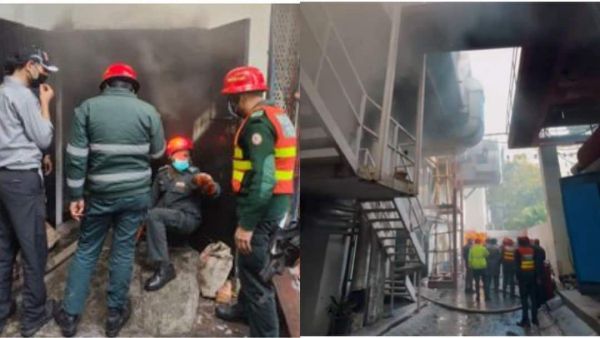
3 Killed In Gulberg Hotel Fire In Pakistan's Lahore
-
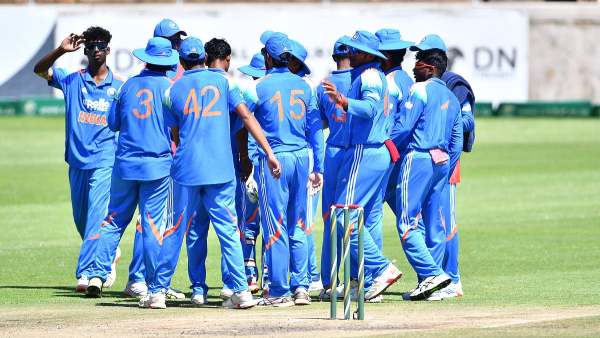
IND Vs NZ, ICC U19 World Cup 2026: Ayush Mhatre And Co Remain Unbeaten, Thrash Kiwis By 7 Wickets In Rain-Hit Encounter
-
After Bangladesh, Pakistan To Boycott ICC T20 World Cup 2026? PCB Awaits Government Decision, Says Chief Mohsin Naqvi