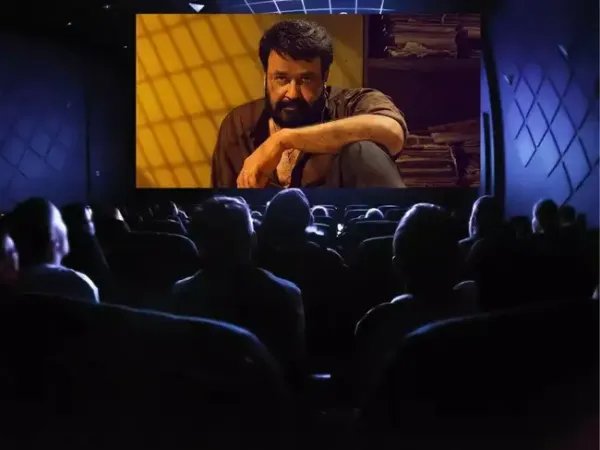
Last year, on a weekday evening in April, I went to watch Mohanlal’s Thudarum in Noida, and the theatre was full. As the end credits rolled, there was a shared sense across the cinema hall that the superstar’s legacy had once again been reaffirmed. Over the past year, I watched numerous films like Lokah, Sarvam Maya, L2: Empuraan, Ponman, Kalamvakal, Thalavara and several others in different theatres across Noida, and almost every time, the shows were housefull - with families, office-goers, college students and elderly viewers all turning up in large numbers. By this measure, Malayalam cinema had a year that felt far bigger than its numbers.
Films connected with audiences, theatres remained lively, and several releases stayed in public discussion long after they left the big screen. But when the numbers came in, the applause faded. Despite the noise, the industry ended the year with an estimated Rs 530 crore in revenues against nearly Rs 860 crore invested - a contradiction that forced many to ask whether popularity alone is still enough to keep cinema financially alive.
A total of 184–185 Malayalam films were released in theatres in 2025, averaging nearly four releases every week. While films like Lokah Chapter 1: Chandra, L2: Empuraan and Thudarum crossed the Rs 200 crore mark globally, a report by the Kerala Film Producers’ Association (KFPA) states that fewer than 10 per cent of releases turned profitable. Only nine films were reportedly classified as superhits and six as hits, leaving a long tail of losses that blockbuster earnings could not offset.

By comparison, 2024 saw six films crossing the Rs 100 crore mark and a slightly higher success rate of 10.63 per cent. In 2025, the figure slipped to about 8.15 per cent, despite the presence of record-breaking titles. Simply put, a handful of big winners could not compensate for the sheer number of losses elsewhere.
Malayalam actor-producer Achu Baby John describes this as an unsustainable surge. "Malayalam is a small industry. We are not big enough to support 200 films a year," he told The Economic Times, pointing out that global film industries typically consider a 25–30 per cent success rate a strong outcome. In Kerala’s case, less than 10 per cent of releases made money.
Looking back, Achu, the producer of Mohanlal's Malaikottai Vaaliban, attributes this contradiction to a post-pandemic hangover. "Ever since COVID, consumption patterns changed. People leaned heavily on OTT, and a bubble opened up," he says.
During 2020–22, streaming platforms, newly launched and hungry for content, bought films aggressively, often paying enough to recover production costs.
"It became a numbers game. OTTs were ready to pay X amount, and theatres were seen as a bonus," he explains.

That surge encouraged overproduction. First-time producers entered the market, projects multiplied, and many films were greenlit with limited theatrical potential. "We reached a point where nearly 200 films were being made in a year. That’s almost four films every week," Daveed actor says.
However, some marketing professionals argue the issue is structural. "Films don’t fail, budgets do," says Varun Gupta, marketing director of superhit Hindi movie Dhurandhar. He states that there is a need for a deeper examination of screen count, average ticket pricing, production costs, and the marketing and distribution of regional films. "Working backwards across all departments, including actor fees, is the only way forward," he notes.
This reminds us of one of the actor-producer Dulquer Salmaan's words, when he gave a detailed view of the Malayalam industry. He told The Hollywood Reporter India that Malayalam cinema does not carry the entourage or luxury costs seen elsewhere. “We never had any luxury on set. We’d shoot all over the state, get permission from a house, pay the owners, and that would be where we change or use the restrooms. That was always the practice,” he said.
There are early signs of correction. Registrations for new films have reportedly dropped to nearly half of last year’s numbers. The Kerala Film Chamber of Commerce (KFCC) has also warned that revenue generation has become “high-risk”, with OTT platforms no longer acquiring films as frequently. Its president, Anil Thomas, has said the number of films produced is likely to dip further next year.
For Achu, this pruning may be necessary. "I think 120 to 130 films a year is the sweet spot," he says. Fewer projects could mean tighter budgets, clearer vision and better chances of recovery. "Genuine films, made with a vision to tell a story, not just chase returns, are still doing well."

The path ahead, most agree, lies in basic discipline. Realistic budgeting, closer producer involvement, controlled remuneration and aligning scale with story are no longer optional. As the Malayalam actor-producer Achu puts it, "Treat cinema like any other business. Be fiscally responsible, be present, and know where your money is going."
In 2025, Malayalam cinema survived its contradictions because audiences continued to show up for the right films. Fresh stories, on-screen magic and the ability to momentarily pull viewers away from everyday realities kept theatres alive. That, after all, is what cinema does best - it allows audiences to lose themselves in storytelling.
Whether the industry can convert that trust into sustainable profits will depend on how seriously it learns from a year where success sounded loud, but the balance sheet told a quieter, different story.
Films connected with audiences, theatres remained lively, and several releases stayed in public discussion long after they left the big screen. But when the numbers came in, the applause faded. Despite the noise, the industry ended the year with an estimated Rs 530 crore in revenues against nearly Rs 860 crore invested - a contradiction that forced many to ask whether popularity alone is still enough to keep cinema financially alive.
A total of 184–185 Malayalam films were released in theatres in 2025, averaging nearly four releases every week. While films like Lokah Chapter 1: Chandra, L2: Empuraan and Thudarum crossed the Rs 200 crore mark globally, a report by the Kerala Film Producers’ Association (KFPA) states that fewer than 10 per cent of releases turned profitable. Only nine films were reportedly classified as superhits and six as hits, leaving a long tail of losses that blockbuster earnings could not offset.
Kalyani Priyadarshan's Lokah Chapter 1: Chandra (Credit: Instagram)
By comparison, 2024 saw six films crossing the Rs 100 crore mark and a slightly higher success rate of 10.63 per cent. In 2025, the figure slipped to about 8.15 per cent, despite the presence of record-breaking titles. Simply put, a handful of big winners could not compensate for the sheer number of losses elsewhere.
Malayalam actor-producer Achu Baby John describes this as an unsustainable surge. "Malayalam is a small industry. We are not big enough to support 200 films a year," he told The Economic Times, pointing out that global film industries typically consider a 25–30 per cent success rate a strong outcome. In Kerala’s case, less than 10 per cent of releases made money.
Looking back, Achu, the producer of Mohanlal's Malaikottai Vaaliban, attributes this contradiction to a post-pandemic hangover. "Ever since COVID, consumption patterns changed. People leaned heavily on OTT, and a bubble opened up," he says.
During 2020–22, streaming platforms, newly launched and hungry for content, bought films aggressively, often paying enough to recover production costs.
"It became a numbers game. OTTs were ready to pay X amount, and theatres were seen as a bonus," he explains.
Basil Joseph's Ponman is currently streaming on JioHotstar (Credit: Instagram)
That surge encouraged overproduction. First-time producers entered the market, projects multiplied, and many films were greenlit with limited theatrical potential. "We reached a point where nearly 200 films were being made in a year. That’s almost four films every week," Daveed actor says.
However, some marketing professionals argue the issue is structural. "Films don’t fail, budgets do," says Varun Gupta, marketing director of superhit Hindi movie Dhurandhar. He states that there is a need for a deeper examination of screen count, average ticket pricing, production costs, and the marketing and distribution of regional films. "Working backwards across all departments, including actor fees, is the only way forward," he notes.
This reminds us of one of the actor-producer Dulquer Salmaan's words, when he gave a detailed view of the Malayalam industry. He told The Hollywood Reporter India that Malayalam cinema does not carry the entourage or luxury costs seen elsewhere. “We never had any luxury on set. We’d shoot all over the state, get permission from a house, pay the owners, and that would be where we change or use the restrooms. That was always the practice,” he said.
What needs to change?
During our conversation, actor-producer Achu agrees that inflated budgets remain at the heart of the problem. "Because of the OTT bubble, the cost of everything went up, remuneration, production expenses and logistics. It has to come down," he says. He stresses that OTT should return to its original role. "It was always meant to mitigate risk, not be the primary business. If you’re making a theatrical film, it ultimately has to work in theatres."There are early signs of correction. Registrations for new films have reportedly dropped to nearly half of last year’s numbers. The Kerala Film Chamber of Commerce (KFCC) has also warned that revenue generation has become “high-risk”, with OTT platforms no longer acquiring films as frequently. Its president, Anil Thomas, has said the number of films produced is likely to dip further next year.
For Achu, this pruning may be necessary. "I think 120 to 130 films a year is the sweet spot," he says. Fewer projects could mean tighter budgets, clearer vision and better chances of recovery. "Genuine films, made with a vision to tell a story, not just chase returns, are still doing well."
Nivin Pauly made a comeback with Sarvam Maya in 2025 (Credit: Instagram)
The path ahead, most agree, lies in basic discipline. Realistic budgeting, closer producer involvement, controlled remuneration and aligning scale with story are no longer optional. As the Malayalam actor-producer Achu puts it, "Treat cinema like any other business. Be fiscally responsible, be present, and know where your money is going."
In 2025, Malayalam cinema survived its contradictions because audiences continued to show up for the right films. Fresh stories, on-screen magic and the ability to momentarily pull viewers away from everyday realities kept theatres alive. That, after all, is what cinema does best - it allows audiences to lose themselves in storytelling.
Whether the industry can convert that trust into sustainable profits will depend on how seriously it learns from a year where success sounded loud, but the balance sheet told a quieter, different story.