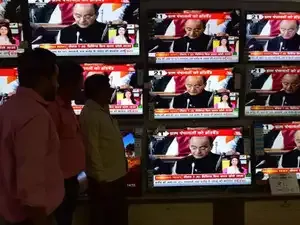
India’s television audience is projected to grow to nearly 1 billion viewers by 2029, driven by rising disposable incomes, improving literacy levels, and increasing internet penetration, according to a new study by the Indian Institute of Management Ahmedabad (IIMA).
The ‘Future of TV in India’ report, authored by IIMA professors Viswanath Pingali and Ankur Sinha and supported by the Brij Disa Centre for Data Science and Artificial Intelligence (CDSA), forecasts a sustained growth phase for television consumption across the country. The study estimates that India’s TV audience will expand at an annual rate of about 2.37% to reach approximately 1.03 billion viewers by 2029.
The report examines demographic, economic, and digital factors shaping television consumption in India, including population structure, income levels, literacy rates, internet access, and household infrastructure. It notes that growth in viewership will increasingly come from rural areas and lower-income states as their socio-economic indicators move closer to those of higher-income regions.
A key finding of the study is the complementary role of internet penetration in driving television growth. Rising internet access is associated with a significant increase in TV audiences, indicating that television and digital video consumption are expected to coexist and expand together.
Using a statistical regression framework, the researchers analysed variations in television audiences across states over multiple years. The model incorporated variables such as the number of internet subscribers, Gross State Domestic Product (GSDP) per capita, literacy rates, dependency ratios, income levels, and access to micro-credit. The analysis shows that as states urbanise and household infrastructure improves, television penetration is likely to rise meaningfully, particularly in rural and low-income regions.
“As affordability and incomes improve, television ownership and consumption are expected to rise disproportionately in emerging markets where per capita income is lower than the national average,” the report said.
Commenting on the findings, Prof. Viswanath Pingali said, “The objective of our research was to examine and establish concrete data-led indicators around the growth trajectory of television as a mature consumption medium and its pertinent role in India’s socio-economic development. Systematic evaluation methodologies coupled with empirical analysis enabled us to map the evolving factors in television consumption and predict how television audiences within a state change in correlation with several other demographic and economic factors. There is a clear indication of rising incomes and improving literacy rates, particularly in rural and lower-income regions, creating a multiplier effect that strengthens TV adoption and consumption.”
Prof. Ankur Sinha added, “The report quantifies the drivers of television audience growth by using models that account for multiple variables simultaneously. The key pattern that emerged consistently was the role of internet penetration in boosting television audiences. It was interesting to note how internet access, demographic composition, and income growth interact in powerful ways, particularly in rural and low-income regions that are also traditionally considered under-penetrated television markets. The state-wise projections presented in the report underscore that the next phase of growth for television will be led by regions undergoing rapid socio-economic transition.”
The study also highlights a strong correlation between literacy rates, dependency ratios, and television adoption. It points to television’s role in social development through initiatives such as same-language subtitling, which support literacy improvement, especially in rural India. Television content, the report notes, can influence attitudes related to personal autonomy, financial independence, and gender norms.
Overall, the analysis underscores the deep penetration of television in India’s social fabric and identifies the demographic factors shaping its future growth. The audience-estimation model used in the report blends economic, demographic, and digital indicators to project long-term viewership trends, offering academic validation of television’s continued relevance in India’s evolving media landscape.
The ‘Future of TV in India’ report, authored by IIMA professors Viswanath Pingali and Ankur Sinha and supported by the Brij Disa Centre for Data Science and Artificial Intelligence (CDSA), forecasts a sustained growth phase for television consumption across the country. The study estimates that India’s TV audience will expand at an annual rate of about 2.37% to reach approximately 1.03 billion viewers by 2029.
The report examines demographic, economic, and digital factors shaping television consumption in India, including population structure, income levels, literacy rates, internet access, and household infrastructure. It notes that growth in viewership will increasingly come from rural areas and lower-income states as their socio-economic indicators move closer to those of higher-income regions.
A key finding of the study is the complementary role of internet penetration in driving television growth. Rising internet access is associated with a significant increase in TV audiences, indicating that television and digital video consumption are expected to coexist and expand together.
Using a statistical regression framework, the researchers analysed variations in television audiences across states over multiple years. The model incorporated variables such as the number of internet subscribers, Gross State Domestic Product (GSDP) per capita, literacy rates, dependency ratios, income levels, and access to micro-credit. The analysis shows that as states urbanise and household infrastructure improves, television penetration is likely to rise meaningfully, particularly in rural and low-income regions.
“As affordability and incomes improve, television ownership and consumption are expected to rise disproportionately in emerging markets where per capita income is lower than the national average,” the report said.
Commenting on the findings, Prof. Viswanath Pingali said, “The objective of our research was to examine and establish concrete data-led indicators around the growth trajectory of television as a mature consumption medium and its pertinent role in India’s socio-economic development. Systematic evaluation methodologies coupled with empirical analysis enabled us to map the evolving factors in television consumption and predict how television audiences within a state change in correlation with several other demographic and economic factors. There is a clear indication of rising incomes and improving literacy rates, particularly in rural and lower-income regions, creating a multiplier effect that strengthens TV adoption and consumption.”
Prof. Ankur Sinha added, “The report quantifies the drivers of television audience growth by using models that account for multiple variables simultaneously. The key pattern that emerged consistently was the role of internet penetration in boosting television audiences. It was interesting to note how internet access, demographic composition, and income growth interact in powerful ways, particularly in rural and low-income regions that are also traditionally considered under-penetrated television markets. The state-wise projections presented in the report underscore that the next phase of growth for television will be led by regions undergoing rapid socio-economic transition.”
The study also highlights a strong correlation between literacy rates, dependency ratios, and television adoption. It points to television’s role in social development through initiatives such as same-language subtitling, which support literacy improvement, especially in rural India. Television content, the report notes, can influence attitudes related to personal autonomy, financial independence, and gender norms.
Overall, the analysis underscores the deep penetration of television in India’s social fabric and identifies the demographic factors shaping its future growth. The audience-estimation model used in the report blends economic, demographic, and digital indicators to project long-term viewership trends, offering academic validation of television’s continued relevance in India’s evolving media landscape.