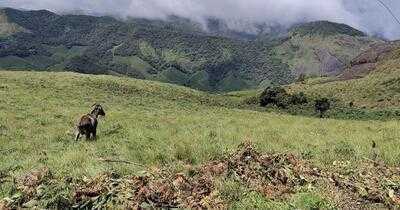
The hills of Eravikulam wake slowly. Before sunrise, the slopes are almost invisible, holding the last cold breath of night. Then a thin, colourless light appears over the rounded grass ridges and reveals shola hollows, rock faces, and faint animal paths. A Nilgiri tahr steps out near its main point Rajamala, pausing above a cliff as if listening for something familiar in the wind.
Located close to the famed hill town of Munnar in Idukki district of Kerala, Eravikulam looks inevitable today, as if these vast expanses of high grassland had always been destined to become a national park. Nothing about its present stability indicates how close it once came to vanishing under a file stamp at the state revenue department.
Fifty years ago, the same slopes, now described as prime habitat of the highly endangered Nilgiri tahr, were listed as surplus land under Kerala’s much-celebrated and revolutionary land reform programme.
The grasslands that hold the highest concentration of Nilgiri tahr in the world, apart from supporting vast spreads of Strobilanthes kunthiana, known as kurinji or Neelakurinji, which blooms once in 12 years, were treated in official language as “vacant”, “idle”, and “available for redistribution” among the landless.
When grass was insignificantIn fact, the misunderstanding did not begin in the 1970s. It began much earlier,...
Read more
-
NSC vs Fixed Deposit vs Mutual Funds: Which Investment Option Grows Your Money More in 5 Years?

-
Gold and Silver Prices Surge: Will You Get Full Compensation if Valuables Are Stolen from a Bank Locker?

-
Vande Bharat Sleeper Ticket Cancellation Can Be Costly: Rajdhani May Turn Cheaper, Know the Rules

-
IBPS RRB Clerk Prelims 2025 Results Released: How to Check, Important Dates, and What Comes Next

-
RRB NTPC CBT 2 Undergraduate Results 2025 Announced: Merit List, Cut-Off, and Next Selection Steps Explained