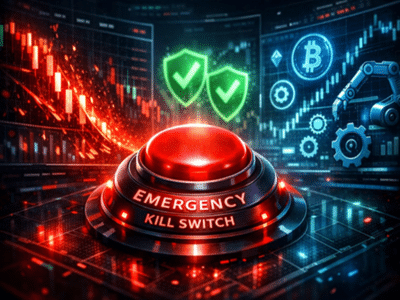
Cases of cyber fraud and "digital arrest" are rapidly increasing in India. According to RBI data, more than 23,800 fraud cases were registered in 2024-25, involving an amount of over ₹34,000 crore. Experts believe that fraudsters are now adopting more high-tech methods, making old banking security measures often fall short. For this reason, a high-level government committee has proposed adding a "kill switch" to banking and UPI apps.
What is "digital arrest"?
Digital arrest is an online fraud in which fraudsters, posing as police, CBI, or other government officials, intimidate people through video calls or messages, show fake warrants, and claim they are involved in illegal activities (such as drug trafficking or money laundering). They then demand money to avoid arrest, forcing people to pay up or share personal information. This is a cybercrime where people are duped by applying psychological pressure.
What is a 'kill switch'?
A special government committee has discussed this idea. This committee includes major institutions like the RBI, CBI, NIA, Delhi Police, and the Ministry of Information and Broadcasting (MeitY). Think of a kill switch as an emergency button in a banking or UPI app. Once a user activates it, all financial transactions linked to their account will immediately stop, such as bank transfers, debit/credit card payments, and UPI payments. This means that if someone suspects they are being defrauded, they can freeze their account with a single click to prevent further withdrawals. The committee has also spoken with major tech companies like Google, WhatsApp, Telegram, and Microsoft to strengthen measures to prevent online fraud.
Will it really work?
1) Problems on the ground
A kill switch will only help if the victim realizes they are being defrauded in time. But in cases like "digital arrest," people often send money out of fear and pressure. By the time they realize the truth, the damage is already done. Furthermore, fraudsters can devise new methods, such as forcing people to take wrong steps in the name of "security." Often, the fraudulent funds are distributed among multiple dummy accounts within minutes, making it difficult to stop them. Fraudsters will continue to trap people using OTPs or other excuses.
2) The Need for Digital Insurance
Experts say that cyber fraud should be considered a type of "digital accident." Just as insurance provides protection in road accidents, victims of cyber fraud should also be covered. Currently, the problem is that private cyber insurance companies often reject claims, citing negligence on the part of the customer (such as sharing OTPs). Therefore, it is suggested that banks, insurance companies, and regulators jointly create a system like the "Digital Payment Protection Fund" to provide relief to victims.
What should be done next?
Digital fraud is no longer just a technology problem; it has become a major social and economic crisis. A "kill switch" may be a good step, but experts agree that a single tool alone will not suffice. This requires features that give users more control, greater accountability for banks, strict monitoring of suspicious accounts, and clear and robust laws and regulations.
Disclaimer: This content has been sourced and edited from Amar Ujala. While we have made modifications for clarity and presentation, the original content belongs to its respective authors and website. We do not claim ownership of the content.
-
'PM Modi Responded Promptly': BJP Defends Govt After Pradhan's Resignation
-
Union Minister Pralhad Joshi Named New Education Minister Hours After Dharmendra Pradhan's Resignation; Know His Educational Qualification
-
LDA Demolishes Illegal Four-Storey Aliganj Building Where Coaching Centre Fire Killed 15 People In Lucknow

-
‘MP (LS), Sambalpur’: Dharmendra Pradhan Updates X Bio After Resigning As Union Education Minister

-
Dharmendra Pradhan's Resignation Draws Mixed Reactions; Educationists Say Reforms Must Go Beyond Change In Leadership