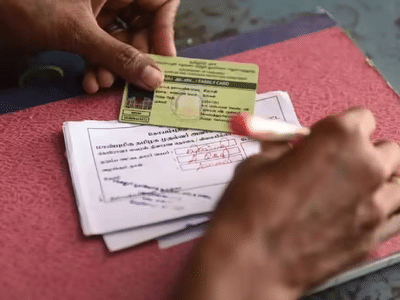
For millions of families in India, the ration card is not just an identity card but the basis for their household stoves to be lit. The central government is now embarking on a historic change to the ration distribution system (PDS) that could address decades of inequality. If you or someone you know is a beneficiary of the Antyodaya Anna Yojana (AAY), this news will directly impact your household budget.
What is the challenge of the current system?
Currently, Antyodaya ration card holders (pink or yellow card) receive 35 kg of grain per family per month. This sounds like a good amount, but it poses a significant practical problem. This rule applies equally to all families, whether they have just two or seven members.
As a result, smaller families accumulate more grain than they need, while larger families find it difficult to survive on 35 kg for the entire month. To address this discrepancy, the government is now moving from a "per family" model to a "per capita" model.
What is the new 7.5 kg rule?
According to reports from the Union Food Ministry, rules under the National Food Security Act (NFSA) are being amended. According to the new proposal, Antyodaya beneficiaries will now receive 7.5 kg of grain per person.
This amount is higher than the 5 kg per person provided to general ration card holders, as the Antyodaya category includes the poorest and most disadvantaged sections of society. The government aims to implement this new system nationwide by March 2026.
Who will benefit and who will suffer loss?
With the implementation of this new rule, the equations of about 1.71 crore Antyodaya families will change:
Relief to big families : Families with 5 or more members will now get more grains as compared to the earlier 35 kg. For example, if a family has 6 members, then they will get a total of 45 kg ration at the rate of 7.5 kg.
Impact on small families: The total quantity of ration for families with 4 or less members may decrease slightly. For example, a family with 4 members will now get 30 kg ration which will be 5 kg less than the earlier 35 kg.
The government's thinking behind this change
The government believes this move will prevent wastage of rations and ensure that aid reaches more people who need it most. This "need-based distribution" model will not only save food grains but also bring transparency to the distribution system.
About Antyodaya Anna Yojana
The Antyodaya Anna Yojana (Antyodaya Anna Yojana), also known as the "Pink Ration Card" in many states, is an important part of the National Food Security Scheme. This scheme is primarily aimed at those who do not have a fixed source of income, such as:
- Landless agricultural labourers and 'line-height: normal or people suffering from serious diseases.
- Elderly people above 60 years of age who have no support.
- Slum dwellers and daily wage labourers.
If the government finally approves this proposal, it will be a humane and logical change in India's food security policy. This reform directly places the "human" at the center, not the "family" size. This will provide a strong support to poor families in rural and urban areas in times of rising inflation.
-
Sour or bitter mouth as soon as you wake up in the morning is a sign of stomach related disease, know what is the reason – News Himachali News Himachali

-
Jyotiraditya Scindia lays foundation for Rs 80 cr Agarwood scheme in Tripura
-
Adarsh Nagar fire: AAP slams BJP for ignoring Goa tragedy warnings
-
ICC U19 World Cup 2026: India vs Pakistan Again In Asia Cup Final Repeat As Mhatre & Co Seal Super Sixers Berth

-
RCB Vs DC, WPL 2026: Delhi Capitals' Snap Smriti Mandhana & Co's Winning Run, Seal Dominating 7-Wicket To Keep Playoff Hopes Alive