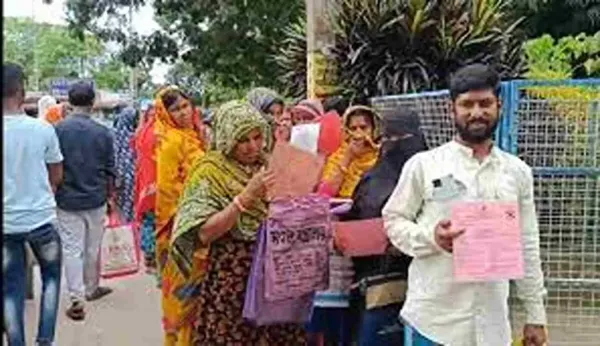
West Bengal Voter List: The Election Commission of India is facing significant operational challenges in meeting the Supreme Court’s deadline for publishing a comprehensive list of voters with data discrepancies in West Bengal. According to senior officials, delays in receiving critical software required by Booth Level Officers have created uncertainty over timely compliance, raising concerns about transparency and logistics during the ongoing electoral roll revision process.
Supreme Court Directive And Election Commission Response
In line with directions from the Supreme Court, the Election Commission instructed the West Bengal Chief Electoral Officer to publicly display the names of voters falling under the categories of logical discrepancies and unmapped voters across the state by January 24. This move was aimed at ensuring greater transparency in the Special Intensive Revision of electoral rolls and allowing voters to verify and correct their records.
However, officials involved in the process have acknowledged that the timeline set by the court has proven difficult to meet. The primary issue has been the late delivery of specialized software essential for compiling, downloading, printing, and displaying the massive volume of voter data at polling booth levels.
Software Delay And Logistical Challenges
Senior officials from the Chief Electoral Officer’s office stated that the required software was not received until late Friday night, leaving extremely limited time for field-level execution. Even if the software becomes fully accessible at the last moment, the sheer scale of the task poses a major logistical hurdle. With approximately 1.26 crore voter names needing publication, Booth Level Officers are under intense pressure.
Adding to the complexity, many Booth Level Officers are already engaged in hearing processes related to voter verification. Balancing these hearings with the additional responsibility of publishing extensive voter lists has made compliance with the deadline increasingly uncertain.
Scale Of Data Discrepancies
The list slated for publication includes voters flagged for logical discrepancies as well as those categorized as unmapped. Logical discrepancies cover a wide range of data inconsistencies, including incorrect or mismatched parental names, implausible age differences between family members, individuals listed as new voters despite being above 45 years of age, and records indicating voters with more than six children.
Unmapped voters refer to individuals whose entries could not be linked to the electoral rolls from 2002, the last time a similar intensive revision exercise was conducted. These inconsistencies prompted the Election Commission to issue verification hearing notices to affected voters.
Public Response And Hearing Attendance
Despite extensive outreach, officials reported that a notable number of unmapped voters failed to attend scheduled hearings. More than three lakh voters in this category did not appear, even after receiving formal notices. Officials estimate that roughly ten percent of unmapped voters skipped the verification process, potentially complicating efforts to finalize accurate electoral rolls.
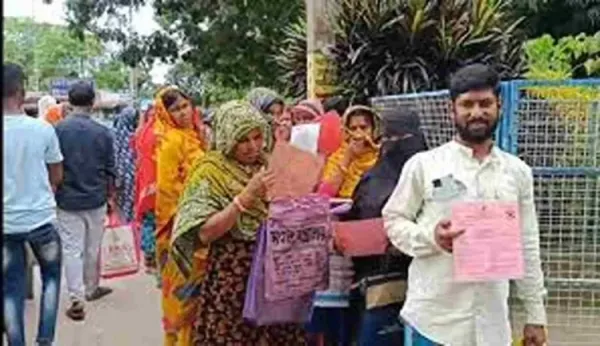
Long queues were observed at hearing centers across districts such as Dakshin Dinajpur, reflecting both public participation and the strain on administrative resources during the revision exercise.
Measures To Speed Up Revision Process
To address delays and ensure smoother operations, the Election Commission has decided to appoint 294 additional senior micro-observers at the assembly segment level. The objective behind this move is to enhance transparency, monitor proceedings more closely, and accelerate the disposal of pending verification cases.
Officials believe that the deployment of additional observers will help reduce bottlenecks and restore confidence in the integrity of the revision process, even as deadlines approach.
Status Of Electoral Roll Revision
As part of the revision drive, over 7.62 crore enumeration forms were distributed across West Bengal. The draft electoral rolls, released on December 16 after completion of the first phase of the Special Intensive Revision, resulted in the deletion of more than 58 lakh dead or bogus voters. This marked a significant step toward cleaning up the voter database.
Hearings for voters flagged with discrepancies are scheduled to conclude by February 7, while the final electoral roll is expected to be published on February 14. However, the Election Commission has indicated that these deadlines may be extended if operational challenges persist.
Outlook And Possible Deadline Extension
With field-level execution heavily dependent on Booth Level Officers and technology readiness, officials have candidly admitted that meeting the Supreme Court’s original timeline may not be feasible under current circumstances. The situation highlights the complexities involved in managing large-scale electoral data while maintaining accuracy, transparency, and legal compliance.
As the process continues, all eyes remain on whether the Election Commission will seek additional time and how effectively it can balance judicial directives with on-ground realities.
-
India's Five Biggest Successful Run Chases In T20 Internationals
-
Vizhinjam Port Phase II Launched, Adani Commits Rs 16,000 Crore Investment
-
Bangladesh Cricket Board Launches Probe Into Corruption Allegations Against Director Mokhlesur Rahman

-
Karnataka: 23 Students Booked For Brutal Ragging In Bengaluru College; 3 Arrested
-
Punjab: Over 2 Lakh Students Apply For 20,000 Seats In Meritorious Govt Schools