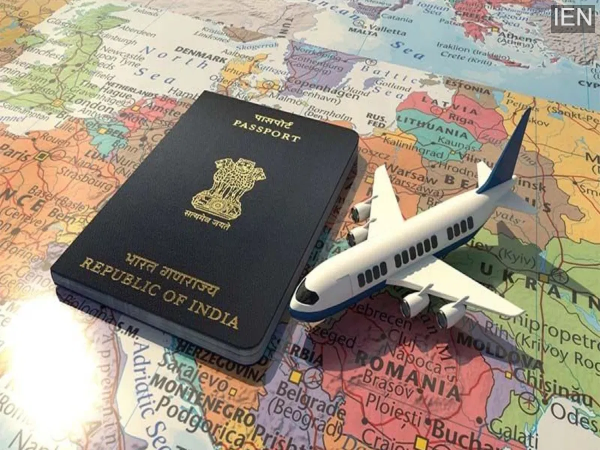
Getting a passport in India has become faster overall, but the actual waiting period still depends heavily on where an applicant lives. A recent report released by the Ministry of External Affairs (MEA) reveals striking differences in passport issuance timelines across regions and cities during 2025. While some applicants received their passports within just four to five working days, others had to wait up to 40 days under the normal category.
The data highlights how administrative capacity, local demand, and police verification efficiency together determine how quickly a passport reaches an applicant.
Fast in Some Places, Slow in Others
According to the MEA’s official figures, passport processing times varied sharply in 2025. In certain coastal and southern regions, passports under the normal category were issued in as little as four to five working days. In contrast, applicants in parts of central India experienced delays stretching up to 40 working days for the same service.
These differences were not limited to state-to-state comparisons. Even within the same region, the waiting period differed significantly depending on the Regional Passport Office (RPO) handling the application.
Growing Demand Slows Down Metro Cities
The report also shows that rising demand has started affecting turnaround times in major urban centers. For example, one leading technology hub that earlier issued passports in around seven days saw the average processing time rise to about 15 days in 2025. Officials believe this is not due to inefficiency, but a sharp increase in applications driven by overseas education, employment, and travel demand.
Southern regions continued to perform relatively better. Certain passport offices managed to maintain an average processing time of around five working days. In comparison, some industrial and educational hubs saw timelines extend beyond 20 days, almost double compared to previous years.
Western and Central Regions Show Mixed Results
Western regions displayed mixed performance. Some areas continued to lead with very quick processing times, averaging just four days. However, larger cities in the same zone faced visible pressure, with average issuance times ranging between 10 and 22 days depending on application volume.
In eastern and central parts of the country, passport issuance remained comparatively slower. Although some offices showed improvement compared to 2024, average timelines still hovered above 30 days in several locations. One major passport office remained the slowest in the country, with applicants waiting up to 40 working days under the normal category.
Tatkal Service Faster, But Not Uniform
The Tatkal (urgent) passport service remained significantly faster across most regions. In many places, Tatkal passports were issued within one to three working days. However, even this expedited service was not immune to regional variation.
In a few locations, Tatkal applicants still waited up to two weeks. Meanwhile, other regions consistently delivered Tatkal passports within three to four days, highlighting differences in local verification and administrative workflows.
Police Verification: The Biggest Bottleneck
Although police verification is technically not included in the passport issuance timeline, it has emerged as the single biggest cause of delays. As of December 1, 2025, nearly 2.8 lakh passport applications across the country were stuck at the police verification stage for more than 30 days.
One large western region alone accounted for over 1.2 lakh pending cases, followed by border and eastern regions with tens of thousands of delayed verifications. In contrast, some states reported fewer than 50 pending cases, while others managed to keep the backlog under 1,000 applications.
This uneven performance explains why applicants in some areas receive passports quickly while others face prolonged uncertainty.
Digital Push with mPassport App
To speed up police verification, the Ministry introduced the mPassport app, allowing verification reports to be sent digitally directly from police stations. Despite this technological upgrade, complaints related to delayed verification remain high.
Between 2023 and 2025, over 76,000 complaints were recorded regarding incomplete police verification or delays even after reports were submitted. Officials acknowledge the challenge but maintain that security checks have not been relaxed in faster-performing regions.
Security Remains a Priority
The MEA emphasized that speed has not come at the cost of security. Over the past five years, more than 1,300 cases were detected where individuals fraudulently obtained multiple passports. In all such cases, passports were seized or cancelled under the Passport Act, 1967.
To further reduce such risks, the upgraded Passport Seva Project 2.0 now includes a stronger duplicate-detection system to flag suspicious applications early in the process.
The Big Picture
The MEA report makes one thing clear: passport delivery speed in India is no longer uniform. While digital systems and streamlined processes have improved efficiency overall, local administrative capacity and police verification performance continue to create wide disparities.
For applicants, this means expectations should be set realistically based on location. For policymakers, the data serves as a roadmap to identify bottlenecks and bring slower regions closer to the national best practices—ensuring that a passport is no longer a matter of geography, but of efficient governance.
-
Trump Threatens 100% Tariffs On Canada Over China Deal, Tensions With Mark Carney Escalate

-
ICC Ropes In Scotland As Bangladesh's Replacement For T20 World Cup 2026
-
Kyunki Saas Bhi Kabhi Bahu Thi 2: Gomzy AKA Gautam Virani Returns To Smriti Irani's Show As Ranvijay's Lawyer- Watch Promo

-
ICC U19 World Cup 2026: Star player from Dhoni’s CSK smashes 24-ball fifty in India win over New Zealand
-
2 Suns Seen In Morning Sky Of Russia | Here's The Truth Behind The Rare Scenery