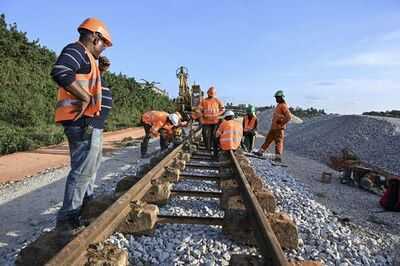
The Dakar Bamako Railway Rehabilitation project aims to restore a vital rail link between Senegal and Mali, which had suffered after the line's suspension in 2010 and its continued closure in 2018 due to poor track conditions. The restored railway is expected to boost trade efficiency, create jobs, and stimulate the local economy by providing a faster, safer way to move goods and people.
Both governments anticipate significant benefits, with Senegal particularly focused on upgrading the line from Tambacounda. Mali is offering a scheduled domestic passenger service between Kayes and Bamako that started in 2023, though the entire international line is yet to open.
The Senegalese Minister of Infrastructure, Mansour Faye, said: "We are going to put the rail back into service to improve transport between Senegal and Mali. Soon, work will start. And initially from Dakar to Tambacounda. On this axis, we are going to make metric rail and later make standard tracks and gauge."
The Darkar-Bamako Railway is a historical rail line. It was fully connected in 1924 during the French colonial period, making it one of the earliest rail connections in West Africa. Over the decades, a lack of investment has left the rails deteriorating and speeds dropping, making it unsafe. In 2024, the Kassor Bridge collapsed due to heavy rains, highlighting how serious the problem is.
"Work on the Malian section of the project will include upgrading 644km of rail lines and renovating 22 railway stations," Mamadou Hachim Koumare, the transport minister of Mali, told state-owned radio.
"This will allow us to have 100 km per hour passenger trains and freight trains of 80 km per hour. Today, passenger trains are not even doing 20 km per hour," he added.
To address the issues, Senegal and Mali came together, along with support from international partners such as China and multilateral bodies, and they have been focused on rehabilitating the line through track upgrades, station renovations, and rebuilding key structures, including
China Railway Construction Corporation(CRCC) has played a major role under contracts with both countries to rebuild the route and infrastructure to modern standards.
The project is estimated to cost $2.7-$2.8 billion. Senegal's section covers 644 km of the total 1,286 km railway and is funded at about $1.26 billion.
Mali's section costs around $1.47 billion, covering track improvements and station upgrades. Most of the funding comes from low-interest Chinese loans with long repayment periods of around 30 years, alongside financial support from both governments and regional organisations such as ECOWAS and the AU Development Agency.
-
Who is Shubhanshu Shukla? The First Indian to Receive the Ashoka Chakra for Space Exploration!

-
India's self-reliance in defence powered Op Sindoor historic success: President Murmu in address to nation of R-Day Eve

-
PM Modi hails President Murmu's Republic Day eve address, emphasis on women empowerment
-
Every word Liam Rosenior said on 'special' Estevao Willian, Andrey Santos' new role, Chelsea win

-
'Terrible!' – Arsenal gift for Man Utd sees Gary Neville pile in after Bryan Mbeumo goal