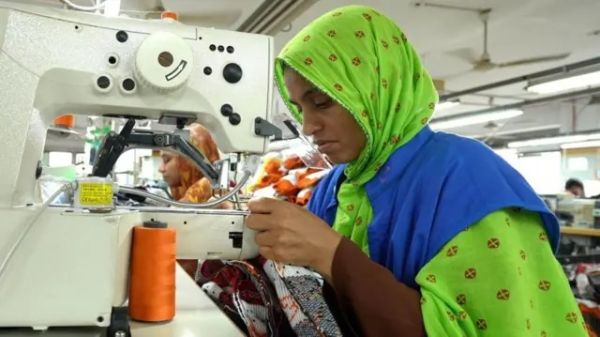
- Bangladesh textile mills on the brink of closure
- Due to the closure of mills, there is a massive employment crisis
- India’s blow to Yunus government of Bangladesh
Bangladesh Financial Crisis: It was thought that the Yunus government of Bangladesh, which was constantly throwing poison against India, would succeed with the support of Pakistan. However, India played such a trick that, without taking any action or uttering a word, it broke Bangladesh’s backbone. The industry that once sustained Bangladesh is now breathing its last. India is being blamed not directly but indirectly. Caught in the web of cheap Indian yarn, Bangladesh did not even know when it stood on the brink of destruction, say experts.
Bangladesh’s largest industry is textiles, the world’s second largest exporter. Brands like Zara and H&M are also manufactured in Bangladesh and then the world wears them. Bangladesh alone exports readymade garments worth approximately $47 billion to the world every year. To make these garments, Bangladesh imports yarn from India. This means direct trade: buy cheap yarn from India, make clothes out of it and sell it to the world. However, Bangladesh has become so addicted to this cheap yarn that today its multi-billion dollar business is on the verge of collapse because of this very cheap yarn. The situation is such that their mill owners have clearly told the government that if nothing is done, all textile mills will shut down by February 1.
Bangladesh does not produce enough locally to meet the needs of its textile industry. So, he imports cheap yarn from India and China. Since Indian thread is of good quality and cheap, he buys more thread. Its cost is 3 to 5 percent less per kg. In 2025, India imported 700 million kg of yarn, of which 78 percent or approximately $2 billion worth of yarn came from India alone. The main reason for these imports is that buyers do not have to pay any import duty while importing yarn under the bonded warehouse system.
Imports of cheap yarn from India have increased to such an extent that local mills in Bangladesh have stockpiled around Rs 10,000 crore, which no one is willing to buy. The stockpile has shut down more than 50 mills in the country and reduced production capacity by 50%. Thousands of jobs have been lost due to this crisis. Bangladesh has also been facing a gas crisis for the past four to five months, which has exacerbated the debt and debt repayment crisis. Bangladesh Textile Mills Association (BTMA) has given a clear warning to the government that if dumping of yarn from India is not stopped, they will stop production from February 1, 2026.
On the one hand, textile exporters of Bangladesh prefer to import cheap yarn, as local yarn is expensive and of inferior quality. Halting imports will increase costs and delay production, which is likely to reduce orders. If government action stops imports, manufacturers will have to buy local yarn at higher prices, which will affect their competitiveness. Earlier, small and medium-sized factories could order 10-20 tonnes of yarn in two days, but now this would cause delays and disrupt production.
-
Delhi-NCR sees marginal relief in air quality after moderate rainfall

-
Kodibengre tragedy: Young woman dies during treatment

-
Mary Berry's lemon crunch cake from the 90s is a weekly hit in my family

-
Rannvijay Singha on 'Kohrra 2': Became more comfortable with all the layers I have in my personal life

-
Tragic plane crash in Pune: Maharashtra deputy CM Ajit Pawar among 4 dead