Highlights
- Foldable OLED TVs use flexible OLED panels, but price and durability hold them back.
- Picture quality remains excellent, yet visible creases distract in daily viewing.
- Long-term reliability is unknown, increasing the risk for everyday users.
- For most buyers, regular OLED or QD-OLED TVs offer better value today.
For years, TVs have remained largely unchanged in appearance. Flat screen. Thin body. Bigger size every year. Then foldable screens entered phones, and suddenly TV brands started thinking bigger. A TV that can fold or bend sounds exciting. It feels new. It feels futuristic. However, once you see the price, the excitement quickly subsides.
Foldable OLED TVs are still very new. Some exist only as demo units. Some are sold, but only to a very small group of buyers who do not worry about money. So the real question is not about how cool they look. The real question is simple. Do they actually make sense right now?
What Is a Foldable OLED TV?
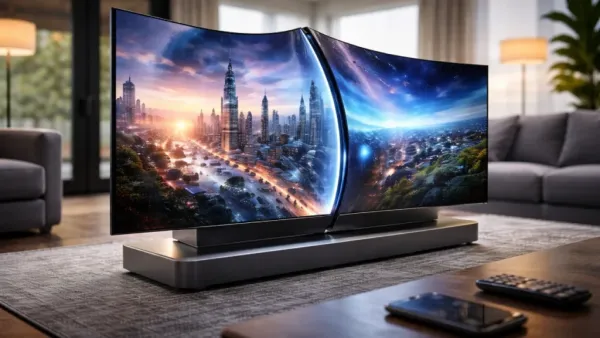
A foldable OLED TV uses a flexible OLED screen instead of a hard glass panel. That flexibility comes from plastic layers used inside the display. This is the same basic idea used in foldable phones. The difference is in size. A phone screen is small. A TV screen is huge, heavy, and much harder to manage.
Some foldable TVs fold in half like a book. Some bend slightly. Some can roll down and hide inside a base. All of them use similar flexible OLED technology. Right now, these TVs are not made for normal buyers. They are either concept models or luxury products made in very small numbers.
Picture Quality: Does It Feel Special?
OLED Quality Is Still There
In terms of picture quality, foldable OLED TVs look very good. That part is not a problem. You still get deep black levels. Colors look rich and natural. The contrast is strong. Viewing angles are wide, just like a regular OLED TV. Watching movies or shows on a foldable OLED TV feels premium. Games look sharp. Motion looks smooth. So no, folding the screen does not ruin OLED quality.
The Crease Changes Things
The problem is the crease. Because the screen folds, there is a visible line where the panel bends. On small foldable phones, this crease already bothers many users. On a TV-sized screen, it becomes more noticeable.
In bright scenes, the crease may not stand out much. In darker scenes, reflections make it easier to spot. Once you notice it, your eyes go back to it again and again. That is not something you want on a TV that costs this much. Brands say the crease will improve in future versions. Right now, it is still there.
Durability: Where Doubts Start
Flexible Screens Are Not Tough
Durability is the biggest concern with foldable OLED TVs. Even a normal OLED TV needs careful handling. You do not touch the screen much. You clean it gently. You keep it safe.
A foldable OLED TV needs even more care. The screen is sensitive to pressure. Dust can be a problem. Accidentally pressing the screen in the wrong spot can cause damage. This is not a TV you can treat casually.
Long-Term Life Is Unknown
This is first-generation technology. There is no long-term data. No one really knows how these TVs will perform after five or six years. Folding and unfolding the screen puts stress on it every time. OLED burn-in is already a known issue. Adding movement only increases the risk. When you are paying such a high price, uncertainty becomes a serious problem.
Price: The Biggest Reality Check
Very Few People Can Afford This
Foldable OLED TVs are extremely expensive. Not “premium expensive”. Much higher than that. Some rollable OLED TVs already cost more than most cars. Foldable OLED TVs are expected to stay in the same range. This instantly removes them from the list of normal buying options. Even people who regularly buy high-end TVs will think twice.
What Are You Paying For?
You are not paying for much better picture quality. Most of the price comes from low production numbers, complex manufacturing, and the fact that this is new technology. You are paying to be early. That is it. A regular OLED or QD-OLED TV already gives excellent picture quality at a much lower price.
Design: Looks Amazing, But Is It Useful?
A Strong Visual Statement
Foldable OLED TVs look impressive. There is no doubt about that. A screen that disappears when not in use or changes shape feels modern. In luxury homes or high-end hotels, this kind of TV can match the interior style very well. As a design piece, it works.
Daily Use Is Another Story
Most people just want a TV that works without thinking too much. They turn it on. They watch content. They turn it off. With foldable TVs, you always have that extra thought in your mind. Is the screen safe? Should I fold it now? Is dust getting inside? For everyday use, a fixed TV feels easier and safer
Is This TV Future-Proof?
Technology Will Change Fast
Foldable display technology is still improving. In the next few years, we will likely see better crease control, stronger screen layers, and more reliable designs. Prices should also come down. That means today’s models may feel outdated very quickly. Buying first-generation hardware usually means paying the most and getting the least refined version.
Software Is Not the Problem
Smart TV features, streaming apps, and connectivity are already good on most premium TVs. That part is not a concern. The real concern is whether the screen itself will age well. And right now, that answer is unclear.
Foldable OLED vs Regular OLED and QD-OLED TVs
If you compare picture quality alone, the difference is not huge. High-end OLED and QD-OLED TVs already look excellent. For most viewers, the visual gap between them and foldable OLED TVs is small. The main difference is design, not performance. Traditional OLED TVs also have years of real-world use behind them. That makes them a safer choice.
Who Is This TV Really For?
Foldable OLED TVs are not made for most people. They are meant for buyers who want something rare and new, no matter the cost. Tech collectors. Luxury home owners. Showrooms. Brands that want to show innovation. For families, regular viewers, or people who care about value, this is not the right product.
Is This Just Another Tech Trend?
Foldable OLED TVs are not fake tech. The idea is real, and flexible displays are part of the future. But the current products feel like early steps, not finished solutions.
We have seen this before. Early 3D TVs. Early curved TVs. The idea comes first. Practical use comes later, or sometimes not at all. Foldable TVs are still in that early phase.
Final Thoughts
Foldable OLED TVs look futuristic and show impressive engineering. Picture quality is strong, and the concept itself is interesting. But the price is too high, durability is still a question, and the real benefits for daily viewing are limited.
For now, regular OLED and QD-OLED TVs offer better value and peace of mind. Foldable OLED TVs show where TV technology is going, but they are not ready to be a smart choice for most buyers today.
-
Vijay Deverakonda reveals upcoming movie title, drops RanaBaali AV

-
Sly Dunbar dead: Reggae legend and Rolling Stones collaborator found unresponsive by wife

-
Fresh alert issued in Channel migrant crisis - 'open season for illegal immigrants'

-
Keir Starmer faces another humiliating U-turn - argument has already been lost

-
Tottenham Hotspur star put on the spot over Arsenal Premier League title hopes