India is preparing for its most significant opening of the automotive market in decades as it moves to slash import tariffs on cars from the European Union, signalling a major concession ahead of a long-awaited free trade agreement (FTA) between the two sides.
According to sources cited by Reuters, New Delhi has agreed to cut import duties on certain European cars to 40% from as high as 110%with a roadmap to eventually reduce them further to 10% over time. The deal could be announced as early as Tuesday, marking a breakthrough in negotiations that have dragged on for years.
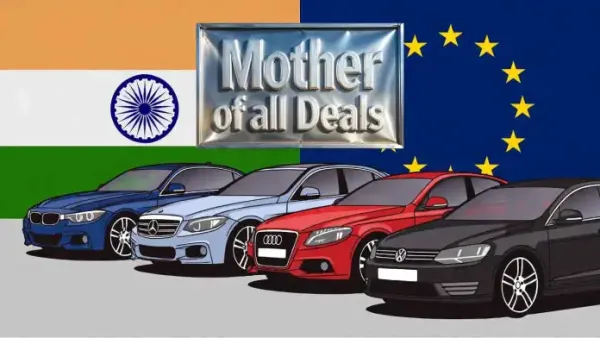
If finalised, the agreement would not only reshape India’s tightly protected auto sector but also redefine the broader India–EU economic relationship — already being dubbed by officials as the “mother of all deals.”
Credits: Hindustan Times
A Historic Shift in India’s Protectionist Auto Policy
India is the world’s third-largest car market after the US and China, but it has long been one of the most protected. Import tariffs of 70–110% have effectively kept foreign carmakers at bay, forcing global manufacturers to either manufacture locally or stay out altogether.
Under the proposed pact, India will immediately reduce duties on a limited quota of high-value European cars — those priced above €15,000 (around $17,700). The initial cut to 40% would apply to around 200,000 internal combustion engine (ICE) vehicles per yearthough the quota could still be revised before the final announcement.
For European automakers, this is the biggest access opening India has ever offered.
Big Win for European Carmakers
The move will directly benefit companies such as Volkswagen, BMW, Mercedes-Benz, Renault, and Stellantismany of which already operate in India but have struggled to scale due to cost disadvantages created by high tariffs.
Lower duties will allow these companies to import more models at competitive pricestest demand, and build a stronger brand presence before committing to deeper manufacturing investments.
This is particularly critical for European manufacturers at a time when their home markets are under pressure from aggressive Chinese EV makers. India, with a car market expected to grow from 4.4 million units today to nearly 6 million units by 2030represents one of the last major growth frontiers.
EVs Get Temporary Protection to Safeguard Local Investment
Notably, battery electric vehicles (EVs) will be excluded from tariff reductions for the first five years. This carve-out is designed to protect domestic players such as Tata Motors and Mahindra & Mahindrawhich have invested heavily in building India’s early EV ecosystem.
After five years, EVs will follow a similar duty-reduction path, giving local companies time to scale and become globally competitive before facing full international competition.
This phased approach reflects India’s broader industrial strategy — open markets, but not at the cost of domestic manufacturing and employment.
India–EU Trade Pact: More Than Just Cars
While automobiles are grabbing headlines, the free trade agreement has far wider implications. The deal is expected to boost Indian exports of textiles, jewellery, and manufactured goodsmany of which have suffered after the US imposed 50% tariffs on select products last year.
For the EU, India offers a fast-growing consumer market and a strategic alternative to China in global supply chains. For India, the pact brings access to capital, technology, and high-quality manufacturing partnerships.
A Market Long Dominated by Local Giants
Today, European carmakers account for less than 4% of India’s car saleswith the market dominated by Maruti SuzukiTata Motors, and Mahindra — together controlling nearly two-thirds of all sales.
But that could soon change. Companies like Renault are planning a comeback strategywhile Volkswagen Group is finalising its next investment phase via Skoda. Lower tariffs will allow them to introduce more models, price them competitively, and gradually expand local manufacturing footprints.
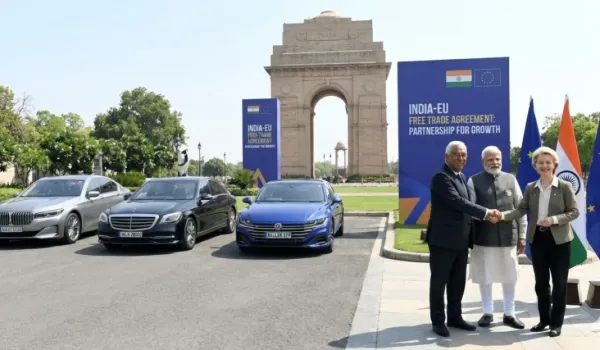
Credits: Bharat Tech & Infra
A Defining Moment for India’s Auto Future
If announced as expected, this tariff cut will mark a turning point for India’s auto industrysignalling that the country is ready to balance protectionism with global integration.
For consumers, it could mean more choice and better technology at lower prices. For automakers, it opens the door to the world’s fastest-growing large car market. And for policymakers, it represents a high-stakes bet that opening up today will create stronger, more competitive domestic champions tomorrow.
The “mother of all deals” may just be getting started — but its impact on India’s roads, factories, and showrooms could last for decades.
-
CBSE CTET Admit Card 2026 To Be OUT Soon At ctet.nic.in; Check Admit Card Details, Exam Timings, Pattern And Passing Marks
-
CBSE Admit Card 2026 For Class 10, 12 To Be Released Soon At cbse.gov.in; Check Steps, Important Details & Exam Schedule
-
Border 2 Box Office Collection Day 4: Sunny Deol Starrer Collects ₹59 Crore On Republic Day

-
Bad news for Thalapathy Vijay fans, Jana Nayagan gets no relief, Madras High Court sends matter back to single judge
-
New Income Tax Rules Take Effect April 1: What Taxpayers Need To Know