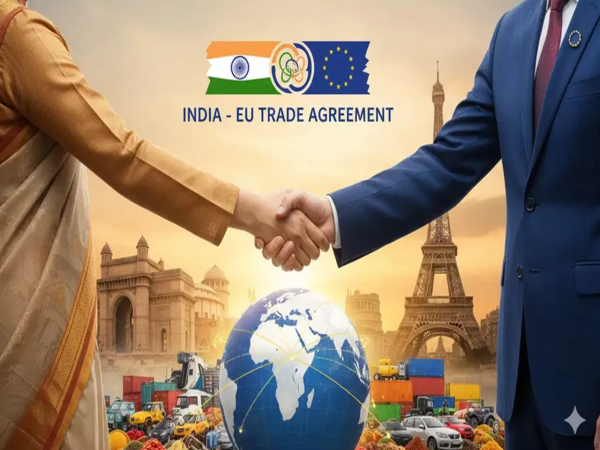
The long-running Free Trade Agreement (FTA) deal between India and the European Union is now in its final stages. The agreement between the two sides is almost finalized and only the signing remains, which is expected to take place today, January 27th. This deal could reduce India's dependence on major trading partners like Russia, the US, and China to some extent. Let's look at the potential benefits for India from this agreement.
Negotiations on the FTA between India and the European Union began in 2007, but talks repeatedly stalled over issues such as market access, labor laws, intellectual property rights, and regulations. Amidst global trade disruptions and rising protectionism, negotiations resumed in 2022 and have accelerated over the past year.
Will the budget end TDS worries and provide relief from 'tax complexities'?
According to officials, the biggest change this time is the political will. Both New Delhi and Brussels now consider this economic partnership strategically crucial for strengthening supply chains and reducing dependence on China.
Tariffs on Cars
According to officials and Reuters reports, the biggest issue in this proposed agreement is the reduction of import duties on European cars. Currently, fully assembled cars in India are subject to taxes ranging from 70% to 110%. Under the plan, import duties on a limited number of EU-made cars priced above 15,000 euros could be immediately reduced to 40%, gradually decreasing to 10%. According to sources, approximately 200,000 petrol and diesel cars annually could be covered under this reduction in the initial phase, although the final number is still under negotiation.
To protect domestic investment, electric cars will be excluded from this exemption for the first five years. This move could significantly open up India's hitherto protected auto market for European companies like Volkswagen, Mercedes-Benz, and BMW. What does India want from this agreement?
India wants better access to the European market for its labor-intensive industries. This includes sectors such as textiles, ready-made garments, leather, gems and jewelry, engineering products, and processed foods. These sectors suffered a major setback in 2023 when the European Union withdrew the concessions granted under its Generalised Scheme of Preferences (GSP). Reduced or eliminated tariffs under the FTA could give Indian exporters a competitive edge in a large and lucrative consumer market.
In addition, India seeks easier regulations for the pharmaceutical and chemical sectors, greater access for IT and professional services, easier movement of skilled workers, and relief from double social security payments in both countries. Sensitive sectors like agriculture and dairy have been kept out of the agreement for now to protect the interests of domestic farmers.
What will the European Union gain from this?
For the European Union, this deal will provide an opportunity to strengthen its foothold in India, one of the world's fastest-growing major economies. European wines and spirits, which currently face import duties of 150% to 200%, are expected to benefit from a gradual reduction in taxes and simplified certification rules. Luxury cars, machinery, chemicals, medical devices, and electronics could also benefit from lower tariffs.
Besides goods, the European Union seeks clear rules on the services sector, government procurement, intellectual property rights, and labor and environmental standards. Robust investment protection is also a major priority. This agreement is expected to boost European investment in manufacturing, clean energy, and digital infrastructure in India.
Disclaimer: This content has been sourced and edited from TV9. While we have made modifications for clarity and presentation, the original content belongs to its respective authors and website. We do not claim ownership of the content.
-
Boeing stock: BA stock falls after Boeing's defense business suffers. All you need to know

-
Healthians executive chairman Deepak Sahni steps down

-
Meta signs deal to pay Corning up to $6 billion for fiber-optic cables: Report
-
Pinterest cuts nearly 15% jobs to redirect resources to AI

-
As gold prices surge again, here’s where to buy a budget bar starting around $224