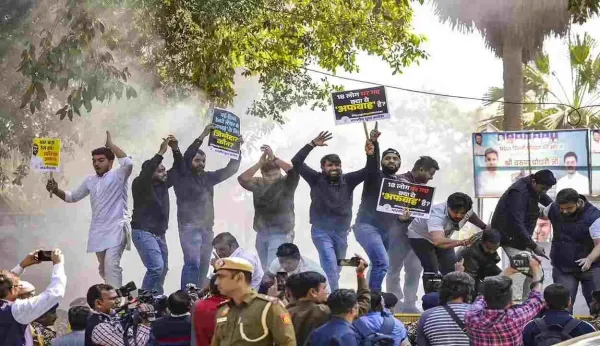
UGC: Widespread demonstrations have broken out across several states following the University Grants Commission’s notification of revised regulations, with critics arguing that the changes risk reinforcing social divisions rather than addressing discrimination on campuses. Students, youth groups, and community organisations have staged coordinated protests, calling for the immediate rollback of the new framework.
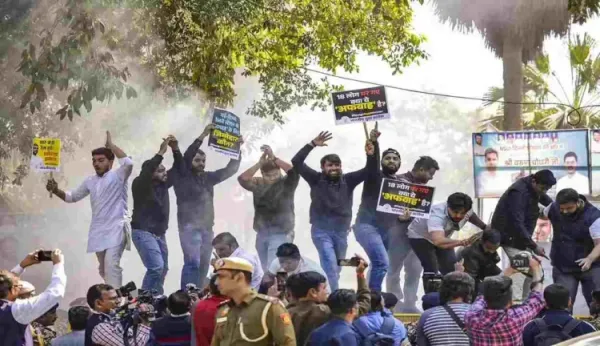
Growing Street Protests Across States
On Tuesday, students and young people from the general category gathered in multiple cities to voice opposition to the updated UGC rules. Protesters described the regulations as unfair and exclusionary, claiming they could lead to heightened tensions within universities. Rallies were reported from urban centres and district headquarters alike, reflecting the rapid spread of the agitation.
Concerns Raised by Upper-Caste Groups
The movement has gained particular traction among upper-caste communities, who say the revised guidelines have generated a sense of marginalisation. Demonstrators argue that policies aimed at addressing caste-based discrimination should be applied evenly, without presuming the identity of either victims or accused individuals. According to protest organisers, selective safeguards undermine trust in institutional grievance mechanisms.
Calls for Equal Protection on Campuses
A recurring demand during the protests has been the introduction of explicit protections for students and faculty from non-reserved categories. Participants claim that harassment and derogatory labelling can affect any group and should be addressed through impartial procedures. They warn that a perception of unequal treatment could discourage dialogue and cooperation within academic spaces.
Legal Challenge Reaches the Supreme Court
The controversy has now entered the legal arena, with a petition filed before the Supreme Court questioning the validity of the newly notified regulations. The plea contends that the definition of caste-based discrimination adopted in the rules is restrictive and fails to recognise the experiences of certain social groups. It further alleges that the framework creates an imbalance by limiting access to institutional remedies for those outside reserved categories.
Demonstration Outside UGC Headquarters in Delhi
In New Delhi, members of upper-caste organisations assembled near the UGC headquarters at ITO to register their protest. Authorities deployed heavy security, installing multiple barricades to restrict access to the premises. Protesters criticised the measures, asserting that peaceful assembly is a democratic right and accusing the administration of attempting to silence dissent.
Uttar Pradesh Emerges as a Key Protest Hub
Several districts in Uttar Pradesh witnessed parallel demonstrations, highlighting the regional intensity of the issue. In Amethi, protesters warned that they would escalate their campaign to the national capital if their concerns were ignored. Organisers also announced plans for a nationwide shutdown on February 1, signalling an intention to broaden the movement.
Student Voices from Varanasi
In Varanasi, students and youth assembled at the district headquarters to oppose the revised rules. Speakers at the gathering expressed unease over what they described as early and rigid categorisation within educational settings. One student said such divisions, particularly among children, risk undermining the sense of shared learning that schools and universities traditionally promote.
Developments in Bareilly Add New Dimension
The unrest took a different turn in Bareilly, where the suspension of PCS officer Alankar Agnihotri drew attention amid the ongoing protests. Agnihotri, who had earlier resigned as city magistrate, arrived at the collectorate with supporters seeking an explanation from the district administration. When entry was restricted, they staged a sit-in at the gate.
Allegations of Targeting and Cultural Insensitivity
Addressing supporters, Agnihotri alleged that he had been unfairly singled out and criticised the language he claimed was used against him by senior officials. He argued that the remarks were disrespectful and indicative of a broader disregard for cultural identity. Emphasising that his protest extended beyond personal grievances, he said the issue reflected a wider sense of injustice felt by sections of society.
As demonstrations continue and the legal challenge unfolds, the revised UGC regulations remain at the centre of a complex national debate involving policy, equality, and social cohesion.
-
T20 World Cup 2026: Former captain Rohit Sharma picks THIS Mumbai Indians teammate as ‘big-match player’, says ‘whenever team in trouble…’

-
Kannada actress Kavya Gowda’s husband hospitalised after alleged stabbing due to…

-
America’s top trading partners in 2025: Who dominates US trade as global supply chains shift

-
As tech chiefs woo Trump, Silicon Valley seethes over Minneapolis shootings
-
IndiGo cancels flights to and from Tbilisi, Almaty, Baku, and Tashkent until February 11