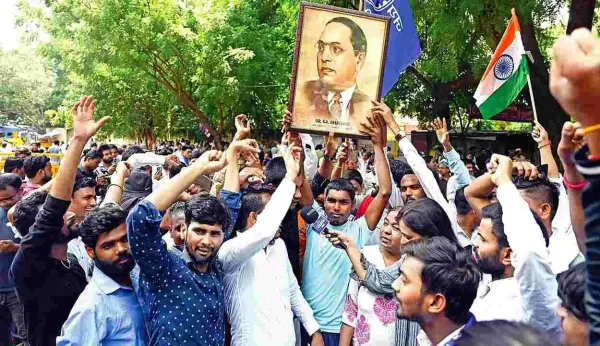
Nationwide: Large demonstrations have broken out in several states following the University Grants Commission’s recent overhaul of its regulations, with protesters arguing that the changes risk increasing division rather than ensuring fairness in higher education. Students and youth groups, particularly from the general category, have been leading the protests, calling for the immediate withdrawal of the revised framework.
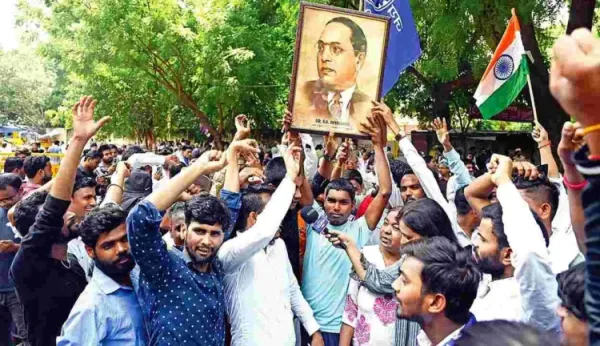
The demonstrations, which took place across multiple cities on Tuesday, reflect growing unease among sections of the academic community who believe the new rules could alter the balance of how discrimination complaints are addressed on campuses. Protesters say the regulations, as currently framed, may intensify social tensions rather than promote inclusion.
Growing Opposition Among Student Groups
Opposition to the revised UGC regulations has gained traction nationwide, especially among students and youth identifying with upper-caste communities. They argue that the guidelines have generated feelings of exclusion and resentment instead of creating a neutral system that protects everyone equally.
Those participating in the protests maintain that any policy aimed at addressing discrimination must be applied uniformly, without regard to the caste identity of either the complainant or the accused. According to them, selective safeguards risk undermining trust in institutional grievance mechanisms.
Demands for Equal Protection on Campuses
A key demand raised during the protests is the inclusion of safeguards for students and faculty members from non-reserved categories. Demonstrators claim that harassment and derogatory labelling can affect individuals across social groups, and that existing protections should not be limited to specific categories.
Protesters argue that a balanced framework is essential to prevent misuse of regulations and to ensure that complaints are examined objectively. They warn that without such balance, universities could see heightened friction among students, affecting the academic environment.
Legal Challenge Reaches the Supreme Court
The controversy has also moved into the legal arena, with a petition filed before the Supreme Court challenging the newly notified UGC regulations. The plea contends that the rules rely on a narrow interpretation of caste-based discrimination, leaving certain social groups outside the scope of institutional protection.
According to the petitioners, the current framework fails to adequately safeguard students and staff who do not belong to reserved categories, potentially creating an uneven grievance redressal system within higher education institutions.
Protests Outside UGC Headquarters in Delhi
In New Delhi, members of upper-caste communities gathered outside the UGC headquarters at ITO to voice their opposition. Authorities deployed heavy security, erecting multiple layers of barricades to prevent protesters from approaching the building.
Participants expressed frustration over the restrictions, questioning their right to peaceful protest. Many said the regulations threatened their interests and accused the administration of ignoring their concerns, reiterating their demand for a complete rollback of the revised rules.
Demonstrations Spread Across Uttar Pradesh
Similar protests were reported from several districts in Uttar Pradesh, including Varanasi, Amethi, and Bareilly, highlighting the expanding reach of the agitation. In Amethi, demonstrators also directed criticism at the BJP, warning that they would escalate their movement and march to the national capital if their concerns were not addressed.
Organisers further announced plans for a Bharat Bandh on February 1, signalling a possible intensification of the protests in the coming weeks.
Student Voices and Social Concerns
In Varanasi, students and youth gathered at the district headquarters, cautioning that the movement could shift to Delhi if corrective measures were not taken. Some students expressed concern over what they described as increasing caste-based distinctions in educational spaces, arguing that such divisions could affect social interaction and harmony among young learners.
They said earlier campus environments allowed students to interact freely, while the current framework risks reinforcing social boundaries at a formative stage.
Developments in Bareilly Add New Dimension
The situation in Bareilly introduced another layer to the unfolding events. PCS officer Alankar Agnihotri, who had earlier resigned as City Magistrate, was subsequently suspended by authorities. Following the suspension, he arrived at the collectorate with supporters and sought a meeting with the District Magistrate.
When police restricted entry, Agnihotri and his supporters staged a sit-in at the gate, stating that the protest would continue until his concerns were addressed. Senior administrative officials later reached the site, but the demonstration persisted.
Agnihotri alleged that he had been personally targeted and claimed that remarks made against him were unacceptable. He also said his protest reflected broader concerns, asserting that cultural symbols were being disrespected and that the issue extended beyond his individual case to questions of social justice.
-
T20 World Cup 2026: Former captain Rohit Sharma picks THIS Mumbai Indians teammate as ‘big-match player’, says ‘whenever team in trouble…’

-
Kannada actress Kavya Gowda’s husband hospitalised after alleged stabbing due to…

-
America’s top trading partners in 2025: Who dominates US trade as global supply chains shift

-
As tech chiefs woo Trump, Silicon Valley seethes over Minneapolis shootings
-
IndiGo cancels flights to and from Tbilisi, Almaty, Baku, and Tashkent until February 11