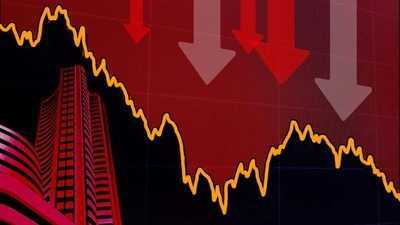
Sensex plunges 4% in January: Buy the dip or wait?
27 Jan 2026
India's leading stock indices, the Sensex and Nifty, have seen a decline of over 4% this month.
The fall is largely attributed to continued foreign fund outflows, a depreciating rupee, lackluster corporate earnings, geopolitical tensions, and new tariff worries.
The 30-share BSE Sensex has plummeted by 3,682.9 points or 4.32%, while the broader NSE Nifty index has fallen by 1,080.95 points or 4.1%.
Market participants hope for post-Budget recovery
Historical trends
Santosh Meena, Head of Research at Swastika Investmart Ltd, noted that similar pre-budget trends in January have seen sharp falls followed by recoveries after Republic Day.
He said market participants are hoping for a similar reversal this time around.
Notably, the BSE benchmark had also fallen in January 2025 and previous years.
Historically, January is a "weak" month, but a 4 % decline is well above normal seasonal weakness.
Geopolitical uncertainties and tariff concerns impact domestic equities
Market pressures
Ponmudi R, CEO of Enrich Money, an online trading and wealth tech firm, said geopolitical uncertainties and new tariff concerns have had a cascading effect on domestic equities.
He added that a global risk-off environment has led to aggressive selling by foreign portfolio investors this month.
This has further weighed down the rupee which hit record lows.
Crude oil prices, global bond yields add to risk aversion
Investor caution
Ponmudi further said high crude oil prices in international markets and rising global bond yields have added to risk aversion.
This has kept investors on edge and strengthened a defensive stance as markets navigate an increasingly uncertain global macroeconomic and geopolitical landscape.
The rupee hit a historic low of 92 against the US dollar on January 23, having depreciated over 2% this month alone.
Union Budget 2026-27 to balance growth support and macro stability
Budget expectations
Axis Securities has reported that considering global uncertainty, domestic growth resilience, and fiscal discipline, the Union Budget 2026-27 will strike a balance between supporting growth and ensuring macro stability.
As per analysts, it is a good time to buy if you're a long-term investor (3-5+ years) and you are buying quality large-caps/index funds, not speculative names.
Valuations have cooled after the January fall, making risk-reward better.
-
Ranveer Singh's Dhurandhar Enters Rs 1000 Crore Club; Becomes First Hindi Film to Achieve Feat

-
Get a fixed interest of ₹39,000+ on ₹1,00,000! This government bank is offering incredible returns on FDs; make your investment plan today..
-
Meet Aloka: The peaceful dog that touched many lives with his calm companionship

-
How Sleep Deprivation Affects The New Mother's Brain And Body

-
Understanding Why Your Fingers Wrinkle After Water Exposure