When we examine the democratic system as we enter the 77th Republic of India, the situation that arises before us is whether this journey of freedom has been able to bring women the same dignity, equality and rights that the Constitution had loudly promised. The reality is that even today women are struggling in search of not just numbers but acceptance, participation and decisive presence in Indian democracy.
Women, who stood shoulder to shoulder in the freedom movement, are still kept away from the center of power, policy and social decisions. Be it the matter of representation from Parliament to Panchayat or questions of education, health, labor and security, everywhere women’s participation appears to be limited and a struggle. Democracy has given them the right to vote, but their mental freedom is still incomplete, they still have to do their work under the guidance of men.
Legal rights have been provided but social consciousness has not expanded. Slogans ranging from Beti Bachao to Beti Padhao have been echoed but the society has not yet been able to muster the courage to make the daughter a decision maker. Even today, women are discharging the burden of dual responsibilities. While on one hand it is expected to be modern, on the other hand its wings of flight have been cut off by binding it in the chains of traditions.
Be it the fight for equal pay in the workplace or the ignoring of invisible labor within the home, women’s labor is still underestimated, despite entering the digital age, their access to technology and resources is limited, due to which the new democratic space is also becoming male-dominated.
The question of 33 percent reservation in politics has been waiting for decades, which shows that democracy has been considering women not as partners but only as symbols, the statistics of violence show that even today a woman’s body remains a ground of power, domination and intolerance and the process of justice becomes long, complex and many times humiliating for her.
It is an irony that in a democracy whose foundation is based on equality, a woman has to prove her identity. If seen in new contexts, a woman is not only a victim but also a carrier of change. From self-help groups to startup culture, from movements to literature and media, women are creating their own new language which demands self-respect along with rights.
Today’s woman does not want pity, she wants opportunity, not protection, she wants partnership and not representation but a share in the decision. The pride of the 77th Republic will be meaningful only when democracy will not be just an extension of male experience but will be redefined from the female point of view, when women’s life experience will be included in policy making, when a culture of equality will develop at all three levels – home, society and power, because women’s freedom is not a question of any one class but is the test of the quality of democracy and until women ensure not just their presence but their place. Until it is done, Indian democracy will remain incomplete, unbalanced and devoid of self-respect.
In this struggling democracy, there are some women who broke all the obstacles, neglect and social walls and created their own identity and showed the mirror to the system. Draupadi Murmu reaching the post of President is a symbol of the journey of a tribal woman who has been marginalized for centuries. His becoming President is a great symbol of tribal pride.
Kalpana Chawla gave new heights to India’s female consciousness in space, Mary Kom proved that despite limited resources and social constraints, a woman can become the pride of India on the world stage. Irom Sharmila reminded democracy of its sensitivity through non-violent struggle, today’s teachers, carrying forward the legacy of Fatima Shaikh and Savitribai Phule, are still making education a weapon for women’s liberation.
Arunima Sinha defeated physical disability and proved that a woman’s strength is not dependent on sympathy. Mithali Raj and PV Sindhu challenged male dominance in the sports field, Kiran Bedi presented a tough but sensitive image of female leadership in administration, from Anju Bobby George to Bachendri Pal, women left the mark of their courage both on the hills and in the field, these names are not just individual successes but are the beacons of resistance that have grown amidst the shortcomings of that democracy which show that if given the opportunity, women are second to none in policy, leadership and innovation.
Yet the irony remains that these examples are considered exceptions and the collective status of women remains the same. The real pride of the 77th Republic will be when the stories of these struggling women will not become mere inspiration but will become the basis of policy and social behavior, when democracy will not consider women as symbols but as participants, because the struggle of these women makes it clear that women’s success is not born from pity but from rights, opportunities and self-respect. Unless this understanding becomes widespread, half of the population will be waiting for their rights and participation in Indian democracy.
-
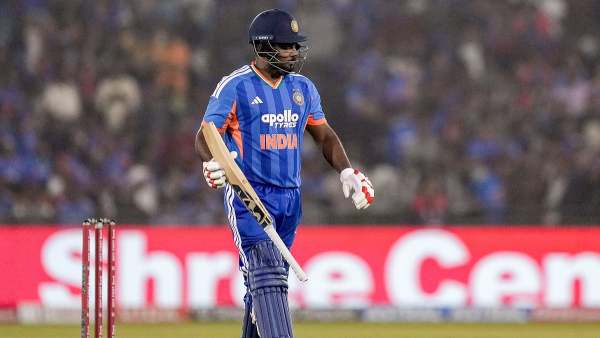
IND Vs NZ 4th T20I: 'Do Or Die' For Sanju Samson As Indian Opener's ICC T20 World Cup 2026 Playing XI Spot At Risk
-
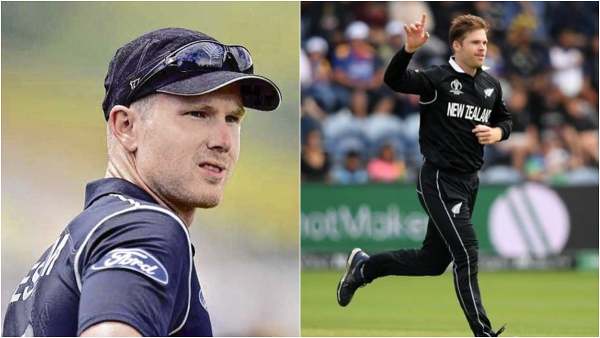
IND Vs NZ 4th T20I: New Zealand Add Firepower With Jimmy Neesham, Ferguson & Finn Allen After 3-0 Down In Series
-
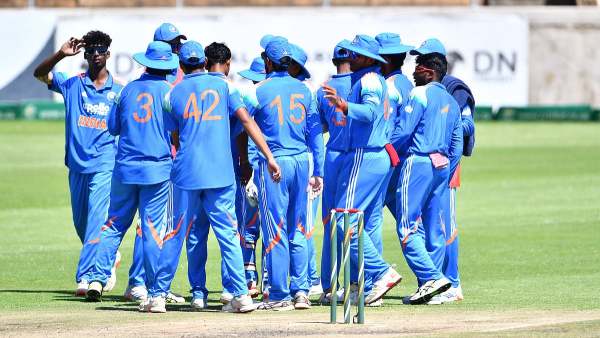
IND Vs ZIM, ICC U19 World Cup 2026: Vihaan Malhotra Century, Bowlers Power India To Thumping 204-Run Victory
-
MSSA Football: OLPS, Campion, Hiranandani Foundation Excel In Boys U-10 Div I Tournament
-
Amazon To Begin 16,000 Job Cuts From Today; Indian Offices Among Worst Hit