India has concluded social security agreements (SSA) with 14 members of the 27-nation EU bloc, and it is hoping to finalise these pacts with the remaining 13 countries in the next five years, Commerce Secretary Rajesh Agrawal said on Tuesday.
These pacts help avoid double contribution to social security funds by Indian professionals working for a limited period in the European Union member nations.
He also said that for the first time, the EU has brought in SSA in a free trade agreement.
The SSAs are in the remit of the member states, and it does not fall under the European Commission.
"That is why none of the EU FTAs have got any commitment under SSA. This is the first FTA wherein we have brought in social security because this is an important need of India and we have linked it to some of our forward MFN (most favoured nation) commitments under services," Agrawal told reporters here.
He said that for the first five years, this commitment will expand along with the nudge to the member states to move towards SSAs.
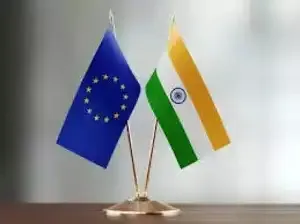
India and the EU on Tuesday announced the conclusion of negotiations for the FTA. It is likely to be implemented this year.
The secretary said that these agreements naturally have to be done bilaterally.
"Today we already have with 14 out of the 27-member states and we hope that in the next five years, we will have with the remaining 13," he said.
India has secured a framework to constructively engage on Social Security Agreements over a five-year horizon.
Presently, Indian professionals working for a limited period in countries with which India does not have these pacts contribute to their social security funds, but are not able to get their benefits as they return once the projects are complete.
It was a demand of Indian businesses operating in such nations to cut down on the additional cost burden associated with bringing in skilled Indian professionals on a short-term basis.
India has social security agreements with countries like Belgium, Germany, Switzerland, France, Denmark, South Korea, and the Netherlands. Thus, Indians going abroad for employment are not required to contribute towards social security schemes in these countries.
These pacts help avoid double contribution to social security funds by Indian professionals working for a limited period in the European Union member nations.
He also said that for the first time, the EU has brought in SSA in a free trade agreement.
The SSAs are in the remit of the member states, and it does not fall under the European Commission.
"That is why none of the EU FTAs have got any commitment under SSA. This is the first FTA wherein we have brought in social security because this is an important need of India and we have linked it to some of our forward MFN (most favoured nation) commitments under services," Agrawal told reporters here.
He said that for the first five years, this commitment will expand along with the nudge to the member states to move towards SSAs.
India and the EU on Tuesday announced the conclusion of negotiations for the FTA. It is likely to be implemented this year.
The secretary said that these agreements naturally have to be done bilaterally.
"Today we already have with 14 out of the 27-member states and we hope that in the next five years, we will have with the remaining 13," he said.
India has secured a framework to constructively engage on Social Security Agreements over a five-year horizon.
Presently, Indian professionals working for a limited period in countries with which India does not have these pacts contribute to their social security funds, but are not able to get their benefits as they return once the projects are complete.
It was a demand of Indian businesses operating in such nations to cut down on the additional cost burden associated with bringing in skilled Indian professionals on a short-term basis.
India has social security agreements with countries like Belgium, Germany, Switzerland, France, Denmark, South Korea, and the Netherlands. Thus, Indians going abroad for employment are not required to contribute towards social security schemes in these countries.