The FTA with EU aligns directly with India's pivot from scale-led domestic manufacturing to export-oriented integration with global value chains, while promoting inclusive growth across regions and skills, India Cellular and Electronics Association (ICEA) said on Tuesday.
In electronics, the FTA creates a credible pathway to build exports of nearly USD 50 billion by 2031 across electronic goods, including mobile phones, consumer electronics, and IT hardware, with the potential to exceed USD 100 billion in the following decade anchored in manufacturing depth, job creation, innovation, and India's emergence as a trusted global supplier, the industry body said.
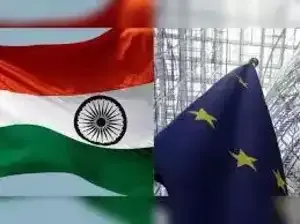
ICEA's views come as India and the European Union (EU) have sealed a landmark free trade agreement -- billed as "mother of all deals" -- with Prime Minister Narendra Modi and the top EU leadership unveiling a grand agenda to leverage trade and defence to strengthen ties.
The two sides also inked two crucial pacts -- one on security and defence collaboration and another on the mobility of Indian talent to Europe -- after Prime Minister Modi hosted EU leaders Ursula von der Leyen and Antonio Costa for summit talks.
ICEA Chairman Pankaj Mohindroo said the agreement aligns directly with India's shift from scale-led domestic manufacturing to export-oriented integration with global value chains, while promoting inclusive growth across regions and skill levels.
"The finalisation of the India-EU Free Trade Agreement reflects the Prime Minister's sustained leadership in positioning India as a globally competitive manufacturing and export economy," Mohindroo said.
GX Group CEO Paritosh Prajapati noted that the India-EU FTA brings together complementary strengths.
India offers scale, speed, and manufacturing depth, while Europe contributes advanced design capability, technology collaboration, standards alignment, and predictable market access.
"When competence, IP, and supply chains integrate bilaterally, this partnership moves beyond trade volumes and becomes a long-term industrial growth platform for both economies," Prajapati said. PTI
In electronics, the FTA creates a credible pathway to build exports of nearly USD 50 billion by 2031 across electronic goods, including mobile phones, consumer electronics, and IT hardware, with the potential to exceed USD 100 billion in the following decade anchored in manufacturing depth, job creation, innovation, and India's emergence as a trusted global supplier, the industry body said.
ICEA's views come as India and the European Union (EU) have sealed a landmark free trade agreement -- billed as "mother of all deals" -- with Prime Minister Narendra Modi and the top EU leadership unveiling a grand agenda to leverage trade and defence to strengthen ties.
The two sides also inked two crucial pacts -- one on security and defence collaboration and another on the mobility of Indian talent to Europe -- after Prime Minister Modi hosted EU leaders Ursula von der Leyen and Antonio Costa for summit talks.
ICEA Chairman Pankaj Mohindroo said the agreement aligns directly with India's shift from scale-led domestic manufacturing to export-oriented integration with global value chains, while promoting inclusive growth across regions and skill levels.
"The finalisation of the India-EU Free Trade Agreement reflects the Prime Minister's sustained leadership in positioning India as a globally competitive manufacturing and export economy," Mohindroo said.
GX Group CEO Paritosh Prajapati noted that the India-EU FTA brings together complementary strengths.
India offers scale, speed, and manufacturing depth, while Europe contributes advanced design capability, technology collaboration, standards alignment, and predictable market access.
"When competence, IP, and supply chains integrate bilaterally, this partnership moves beyond trade volumes and becomes a long-term industrial growth platform for both economies," Prajapati said. PTI