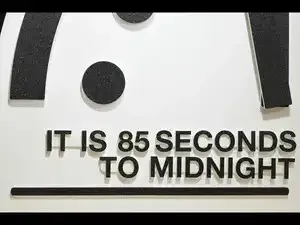
Scientists made the Doomsday Clock a long time ago to show how close humans are to destroying the world. On Tuesday, the clock was set at 85 seconds to midnight. This is the closest it has ever been to midnight, said the Bulletin of the Atomic Scientists.
Midnight on the clock means the time when Earth becomes unsafe for humans, according to the Bulletin. Last year, the clock was at 89 seconds to midnight, which was the closest before this, the Bulletin said. In 2023 and 2024, the clock was at 90 seconds to midnight, scientists said. Scientists moved the clock closer in 2025 because the world did not improve enough on big dangers.
Bell said the clock is a way to show how close humans are to destroying the world using their own technologies. She added that dangers from nuclear weapons, climate change, and disruptive technologies are growing fast. “Every second counts and we are running out of time,” Bell said. Bell also said, “It is a hard truth, but this is our reality”. Last year, scientists warned countries to work together more to reduce global risks, said Dr. Daniel Holz, chair of the Bulletin’s science and security board.
Scientists also warned about serious dangers in life sciences, especially new work on synthetic mirror life, Holz said. He said the world has no coordinated plan to deal with dangerous biological threats. Holz said the rapid spread of AI tools, with little regulation, makes misinformation worse and increases all other global risks.
The time is set by experts on the Bulletin’s science and security board. These experts work with the board of sponsors, which was created by Albert Einstein in 1948. J. Robert Oppenheimer was the first chair of the board of sponsors. Today, the board includes eight Nobel Prize winners, mainly scientists.
As Mann claimed that the clock is an important reminder of the fragility of the human life on the planet, Eryn MacDonald, a senior analyst at the Union of Concerned Scientists, claimed that rakes up public attention by making those thoughtful choices. The reflection of time in seconds instead of minutes on the Doomsday clock shows the seriousness of the problem, with ex- Prime Minister of UK, Boris Johnson mentioning it in 2021 climate change U.N. conference.
What happens if the clock hits midnight?
The Doomsday Clock has never reached midnight. Former Bulletin President Rachel Bronson said she hopes it never does, according to CNN. Bronson said midnight would mean nuclear war or catastrophic climate change that wipes out humanity. She said humans would not even know when it happens.
Scientists said individuals can help by talking about these issues and sharing correct information. Public discussion can reduce misinformation and pressure leaders to act, scientists said. “Without facts, you can’t have truth,” said Maria Ressa, CEO of Rappler, during the Bulletin briefing. Ressa said shared facts are necessary for journalism, democracy, and collective action. Scientists also said people can help the climate by making small daily changes, according to CNN.
These include walking instead of driving when possible and using less energy at home. Eating local and seasonal food, reducing waste, saving water, and recycling properly can also help. Scientists said these small actions, combined with global cooperation, can help push the Doomsday Clock away from midnight.
It is a symbolic clock showing how close the world is to disaster, updated by scientists.
Q2. Why did the Doomsday Clock move closer to midnight?
Because global risks like nuclear threats, climate change, and AI dangers are growing.
Midnight on the clock means the time when Earth becomes unsafe for humans, according to the Bulletin. Last year, the clock was at 89 seconds to midnight, which was the closest before this, the Bulletin said. In 2023 and 2024, the clock was at 90 seconds to midnight, scientists said. Scientists moved the clock closer in 2025 because the world did not improve enough on big dangers.
Nuclear threats from countries
These dangers include nuclear weapons risks, the climate crisis, biological threats, and new disruptive technologies like artificial intelligence, as per CNN report. Scientists also warned that misinformation, disinformation, and conspiracy theories are serious threats to humanity. “Humanity has not made sufficient progress on the existential risks that endanger us all,” said Alexandra Bell, President and CEO of the Bulletin of the Atomic Scientists.Bell said the clock is a way to show how close humans are to destroying the world using their own technologies. She added that dangers from nuclear weapons, climate change, and disruptive technologies are growing fast. “Every second counts and we are running out of time,” Bell said. Bell also said, “It is a hard truth, but this is our reality”. Last year, scientists warned countries to work together more to reduce global risks, said Dr. Daniel Holz, chair of the Bulletin’s science and security board.
Global conflicts
Instead of cooperating, major countries became more aggressive and nationalistic, Holz said during a news briefing, according to CNN. HHolz said that conflicts went up in 2025, including fights involving countries with nuclear weapons, said CNN. He warned that the last nuclear weapons treaty between the US and Russia will end on February 4, said the Bulletin. Holz said that after the treaty ends, nothing will stop a new nuclear arms race for the first time in over 50 years.Scientists also warned about serious dangers in life sciences, especially new work on synthetic mirror life, Holz said. He said the world has no coordinated plan to deal with dangerous biological threats. Holz said the rapid spread of AI tools, with little regulation, makes misinformation worse and increases all other global risks.
What is the doomsday clock?
The Bulletin of the Atomic Scientists was created in 1945 by scientists who worked on the Manhattan Project, according to CNN. The Manhattan Project was the program that developed the atomic bomb during World War II. The original goal of the Bulletin was to track nuclear threats. In 2007, the Bulletin also began including the climate crisis in its clock calculations. For the past 79 years, scientists have adjusted the clock every year based on how close they believe humanity is to total destruction.The time is set by experts on the Bulletin’s science and security board. These experts work with the board of sponsors, which was created by Albert Einstein in 1948. J. Robert Oppenheimer was the first chair of the board of sponsors. Today, the board includes eight Nobel Prize winners, mainly scientists.
Is the doomsday clock real?
The clock is not meant to be a precise measurement but a symbol to start serious conversations. Some experts question how useful the clock is, according to CNN. “It’s an imperfect metaphor,” said Dr. Michael Mann, a climate scientist at the University of Pennsylvania. Mann said the clock mixes different risks that happen on different timelines.As Mann claimed that the clock is an important reminder of the fragility of the human life on the planet, Eryn MacDonald, a senior analyst at the Union of Concerned Scientists, claimed that rakes up public attention by making those thoughtful choices. The reflection of time in seconds instead of minutes on the Doomsday clock shows the seriousness of the problem, with ex- Prime Minister of UK, Boris Johnson mentioning it in 2021 climate change U.N. conference.
What happens if the clock hits midnight?
The Doomsday Clock has never reached midnight. Former Bulletin President Rachel Bronson said she hopes it never does, according to CNN. Bronson said midnight would mean nuclear war or catastrophic climate change that wipes out humanity. She said humans would not even know when it happens.
Can we turn back the clock?
Scientists say it is still possible to move the clock backward with strong global action. The clock was farthest from midnight — 17 minutes away — in 1991. This happened after the US and the Soviet Union signed the Strategic Arms Reduction Treaty. Bronson said humans created these dangers, so humans can also reduce them. She added that fixing these problems requires serious effort and global cooperation.Scientists said individuals can help by talking about these issues and sharing correct information. Public discussion can reduce misinformation and pressure leaders to act, scientists said. “Without facts, you can’t have truth,” said Maria Ressa, CEO of Rappler, during the Bulletin briefing. Ressa said shared facts are necessary for journalism, democracy, and collective action. Scientists also said people can help the climate by making small daily changes, according to CNN.
These include walking instead of driving when possible and using less energy at home. Eating local and seasonal food, reducing waste, saving water, and recycling properly can also help. Scientists said these small actions, combined with global cooperation, can help push the Doomsday Clock away from midnight.
FAQs
Q1. What is the Doomsday Clock 2026?It is a symbolic clock showing how close the world is to disaster, updated by scientists.
Q2. Why did the Doomsday Clock move closer to midnight?
Because global risks like nuclear threats, climate change, and AI dangers are growing.
( Originally published on Jan 27, 2026 )