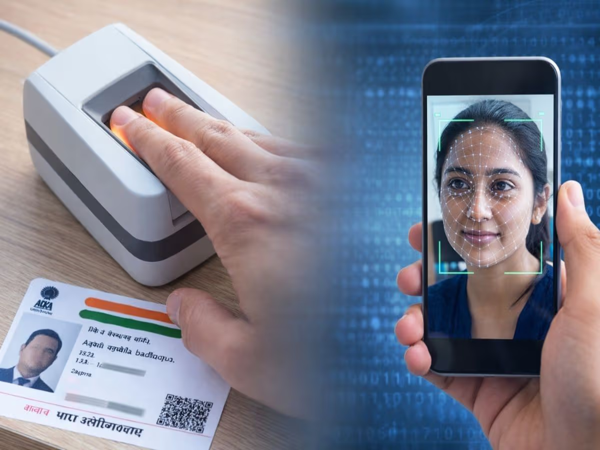
The Indian government has begun preparations for major changes to Aadhaar. Millions of people in the country use Aadhaar for identity verification every day. Given the growing population, the expansion of digital services, and the threat of cyber fraud, significant changes will be made to Aadhaar's technical infrastructure. The government has released a key document called ‘Aadhaar Vision 2032,’ which outlines a clear roadmap for adopting modern technologies such as AI, cloud computing, blockchain, and quantum computing.
Three Major Changes in Aadhaar
Under the new plan, there are preparations to make facial recognition the primary means of identification, replacing fingerprints.
Approximately 90 million Aadhaar authentications are performed daily, of which about 10 million are completed through face authentication. The government aims to achieve 1 billion authentications per month using facial recognition in the future.
By utilizing technologies like AI, cloud computing, blockchain, and quantum computing, the government wants to future-proof Aadhaar. The objective is clear: to create an identity system that is fast, secure, and minimizes the scope for fraud.
AI will make authentication easier.
According to Aadhaar CEO Bhuvnesh Kumar, preparations are being made keeping Vision 2032 in mind, but the technological vision extends even further. Under this vision, Aadhaar verification will be done using facial data with the help of artificial intelligence, eliminating the need for people to repeatedly verify themselves using fingerprints. This will not only make the system faster but also reduce identification-related problems.
Free updates for children and adolescents
The government has already updated the biometric data of 50 million children and adolescents. This process will continue to be completely free until September 2026. The aim is to ensure that there are no discrepancies in biometric data that change with age and to prevent future identity-related problems.
Technical roadmap for the next five years prepared
The committee formed to develop the new technical framework for Aadhaar will finalize its draft next month. The report will then be submitted to UIDAI in March. Based on this report, the technology architecture for Aadhaar will be decided for the next five years. The current technology contract expires in 2027, after which a new contract will be awarded for the period until 2032.
To prepare this crucial document, an expert committee was formed in October, chaired by UIDAI Chairman Neelkanth Mishra. The committee includes Vivek Raghavan, co-founder of Sarvam AI; Dheeraj Pandey, founder of Nutanix; Dr. P. Poornachandran of Amrita University; Professor Anil Jain of Michigan State University; and Mayank Vats of IIT Jodhpur.
Disclaimer: This content has been sourced and edited from Amar Ujala. While we have made modifications for clarity and presentation, the original content belongs to its respective authors and website. We do not claim ownership of the content.
-
LIC: Forget about FD and RD! This is LIC's 'Jeevan Utsav Single Premium' plan, which will bring a lifetime of abundant wealth..

-
IND vs NZ 4th T20I: India Wins Toss! Here’s What Suryakumar Yadav Chose

-
Sunny Deol’s Border 2 Enters Rs 200 Cr Club In Five Days Despite Tuesday Dip

-
Bengaluru’s Roads Prepare For A Quiet Shift As 1,750 Electric Buses Get The Go-Ahead
-
December IIP Data: Industrial Output Hits Highest Level In Over Two Years