Congress: As Parliament prepares for the presentation of the Economic Survey and the Union Budget, the Congress party has mounted a sharp critique of the government’s handling of the economy, arguing that official data paints an overly optimistic picture while living conditions for many Indians continue to deteriorate.
The opposition party released a detailed note through its research wing on Tuesday, saying it wanted to place what it described as “verifiable facts” before the public ahead of a series of key government announcements, including the President’s address to Parliament, the Economic Survey, and the Budget. According to the Congress, these events would otherwise be used to promote a narrative that does not fully reflect economic realities on the ground.
Questioning the credibility of official statistics
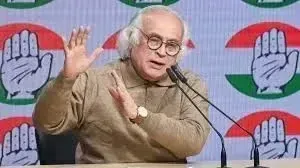
At a press briefing, Rajeev Gowda, chairman of the Congress research department, raised doubts about the reliability of economic figures presented by the Modi government. Referring to upbeat descriptions of the economy as being in a “Goldilocks moment,” he argued that such characterisations were not supported by independent assessments.
Gowda cited evaluations by international institutions to underline his point, noting that India’s official inflation numbers, which suggest relatively low price pressures, do not match the everyday experience of most households. He asked whether claims of modest inflation were consistent with the rising cost of essentials faced by ordinary citizens.
GDP growth and manufacturing performance under scrutiny
The Congress also drew attention to concerns raised by former chief economic adviser Arvind Subramanian, who has previously argued that India’s reported GDP growth may be overstated. According to Gowda, Subramanian’s analysis suggests that headline growth figures could be at least 2.5 percentage points higher than the actual pace of economic expansion.
He further questioned government claims of strong manufacturing growth. While official data pointed to manufacturing expanding at over 8 percent in the first half of the year, Gowda said a closer look at core indicators told a more subdued story. The index covering eight major industrial sectors, which together account for a large share of manufacturing output, recorded growth of under 3 percent during the same period, he noted.
Currency trends and household financial stress
Another area of concern highlighted by the Congress was the performance of the Indian rupee. Gowda claimed that over the past year, the rupee had depreciated more sharply against the US dollar than any other major Asian currency, raising questions about external stability.
On domestic finances, the party painted a picture of mounting pressure on households. According to the figures cited, nearly four out of five Indians live on less than ₹200 a day, while roughly one-third survive on under ₹100 daily. Household financial savings have reportedly fallen to about 5.2 percent, the lowest level seen in five decades, even as household debt has climbed to around 41 percent, up from 35 percent in 2019.
Shifting tax burden and inequality concerns
The Congress argued that inequality has widened alongside these trends. Gowda said the share of direct taxes paid by individuals has steadily increased compared to corporate contributions. He pointed out that individuals now account for over half of direct tax collections, up from just under 40 percent a decade ago, suggesting a heavier burden on ordinary taxpayers.
The party linked these developments to what it described as a retreat of welfare support, claiming that fiscal choices have increasingly favoured corporations over households at a time when personal incomes remain under strain.
Environmental risks and economic costs
Beyond conventional economic indicators, the Congress also highlighted environmental challenges as a growing economic risk. Gowda referenced comments by former IMF chief economist Gita Gopinath, who has warned that pollution could pose a greater threat to India’s economy than trade barriers.
He cited findings from global health studies indicating that air pollution contributed to millions of premature deaths in India in recent years. Estimates published in leading medical journals suggest that the economic cost of mortality linked to outdoor air pollution amounted to nearly a tenth of India’s GDP in 2022, underscoring the scale of the problem.
-
Delhi-NCR sees marginal relief in air quality after moderate rainfall
-
Kodibengre tragedy: Young woman dies during treatment

-
Mary Berry's lemon crunch cake from the 90s is a weekly hit in my family

-
Rannvijay Singha on 'Kohrra 2': Became more comfortable with all the layers I have in my personal life

-
Tragic plane crash in Pune: Maharashtra deputy CM Ajit Pawar among 4 dead