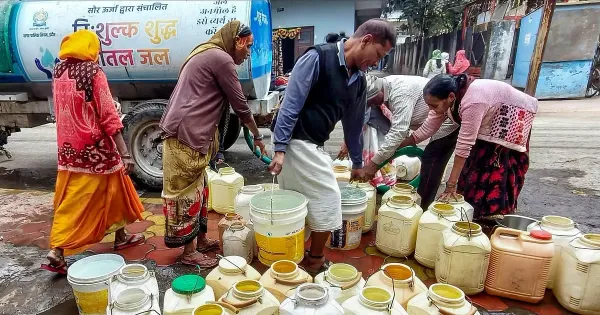
Indore : More than a month after a series of deaths linked to a contaminated water supply in Indore, the Madhya Pradesh High Court has stepped in to order an independent investigation. The Indore Bench, citing the seriousness of the allegations and their direct connection to the constitutional right to life, announced the formation of a one-member inquiry commission to examine the circumstances surrounding the incident.
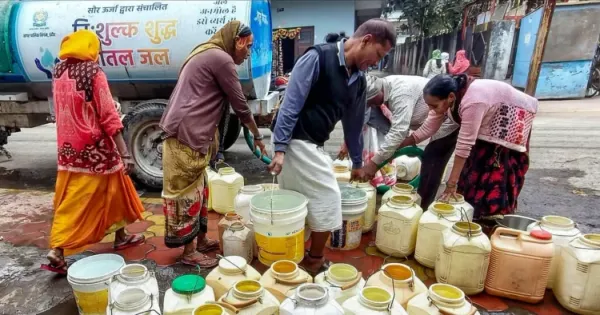
High Court Orders Independent Probe
In an order passed on Tuesday, the High Court appointed Justice Sushil Kumar Gupta, a former judge of the Madhya Pradesh High Court, to head the inquiry. The court emphasized that the allegations raised were grave in nature and required an impartial and credible fact-finding process beyond routine administrative checks.
A division bench comprising Justices Vijay Kumar Shukla and Alok Awasthi observed that the reported deaths potentially involved a violation of Article 21 of the Constitution of India, which guarantees the right to life. The bench concluded that an independent authority was necessary to investigate the matter thoroughly and objectively.
Scope of the Inquiry Commission
The commission has been tasked with examining all issues related to the alleged water contamination in the Bhagirathpura area of Indore. This includes determining whether the drinking water supplied to residents was contaminated and, if so, identifying the source and cause of the contamination.
According to the court’s directions, the commission will submit an interim report within four weeks from the commencement of its proceedings. The High Court has scheduled the next hearing in the matter for February 5, by which time it expects to review the initial findings.
Findings Presented by State Government
Earlier on the same day, the state government submitted a status update to the court based on assessments conducted by a specialized death audit committee. The government informed the bench that 16 out of the 23 deaths examined so far were found to be linked to water contamination.
These findings added urgency to the case and reinforced the court’s view that a deeper, independent inquiry was essential. The remaining deaths are still under review, and further audits are expected to continue alongside the commission’s investigation.
Civil Court Powers Granted to Commission
To ensure an effective and comprehensive inquiry, the High Court has vested the commission with powers equivalent to those of a civil court. This authority will allow Justice Gupta to summon government officials and other witnesses, demand official records, and seek documents from hospitals, laboratories, and civic agencies.
The commission will also be empowered to order water quality tests, inspect affected sites, and conduct on-ground assessments as needed. These powers are intended to remove procedural barriers and enable the commission to access all relevant information without delay.
Focus on Accountability and Public Safety
The court made it clear that the inquiry is not limited to identifying technical failures but will also look into accountability across departments and agencies involved in water supply and public health oversight. By ordering an independent probe, the High Court aims to restore public confidence and ensure that systemic lapses, if any, are addressed.
The case has drawn attention to broader concerns around urban water safety and monitoring mechanisms, particularly in densely populated areas. The commission’s findings are expected to play a crucial role in shaping corrective measures and preventing similar incidents in the future.
-
Suspected KFD death reported in Thirthahalli, first this year

-
Maharashtra Deputy Chief Minister Eknath Shinde Mourns the Loss of Ajit Pawar in Tragic Plane Crash

-
Falcon Risers Hyderabad Clinches Victory with Vicky Bhoir's Hat-Trick in ISPL Season 3

-
Maharashtra in shock as Dy CM Ajit Pawar passes away; Leaders recall fearless 'Dada'
-
Good Morning Britain halts show to issue urgent warning just minutes into show