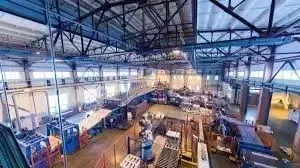
Bihar : has laid down the essential groundwork required to support large-scale industrial investment, according to Chief Secretary Pratyaya Amrit, who says the state is now positioned for accelerated economic growth. In an interaction held recently in Patna, he outlined how sustained infrastructure development, administrative reforms, and new policy initiatives are being combined to attract both domestic and global investors.
Infrastructure Base Built Over Two Decades
Over the past 20 years, Bihar has steadily strengthened its physical infrastructure to support industrial activity. Extensive networks of rural and urban roads, national highways and newly built expressways have significantly improved connectivity across the state. Reliable electricity supply, once a major concern, has seen marked improvement and is no longer viewed as a limiting factor for industry.
Law and order, another key requirement for investor confidence, has also improved substantially. According to the state administration, these changes together have created an environment conducive to industrial expansion and long-term investment planning.
Policy Reforms Designed to Attract Investment
To capitalise on this improved foundation, the state government has rolled out updated industrial policies, including the Bihar State Industrial Investment Promotion Policy 2022 and the Bihar Industrial Investment Promotion Policy 2025. These frameworks aim to simplify procedures, offer incentives and reduce delays, helping investors move from proposal to execution more efficiently.
Officials say the policies are already drawing attention from the business community, with a growing number of investment proposals being submitted for consideration.
Direct Engagement Through Udyog Varta
A key feature of Bihar’s investment strategy is direct dialogue with industry stakeholders. Through an initiative known as Udyog Varta, entrepreneurs and business representatives can meet senior officials, ministers and department heads to discuss projects and operational concerns. These interactions are available both in person and online.
District administrations have also been instructed to hold similar meetings locally, with district magistrates visiting industrial zones to assess infrastructure gaps and address issues faced by businesses on the ground.
Focus on Technology and Emerging Sectors
The state is placing strong emphasis on future-oriented industries. One of the recent additions is a Global Capability Centre policy, which is expected to support high-value services and skilled employment. Alongside this, sector-specific policies such as those for electronic manufacturing have been introduced.
Bihar is also seeking to expand the use of artificial intelligence across sectors, with the aim of positioning itself as a technology hub in eastern India. An expert committee, including members from within and outside the state, has already begun work on shaping this roadmap.
Plans for New Hubs and Urban Development
Beyond traditional industry, the government is working on proposals to establish fintech hubs, education-focused cities, sports cities and satellite townships. Detailed roadmaps for these initiatives are expected to be finalised within the next few months.
Officials describe this approach as a broader form of industrialisation that links employment creation with education, entrepreneurship and institutional development, supported by start-ups and innovation-driven ecosystems.
Reviving Sugar Mills and Agricultural Linkages
Bihar is also revisiting its historical association with sugar manufacturing. Plans are underway to revive nine closed sugar mills and establish 25 new ones, largely through cooperative models. The focus is on modern technology to improve efficiency and reduce challenges faced by farmers and workers linked to the sector.
The broader governance approach, according to the administration, remains centred on citizens, with an emphasis on simplifying business processes and supporting agriculture through digital tools.
Addressing Migration and Employment Generation
Migration has long been a concern for Bihar, but the government believes new industrial and technology-led opportunities can help reverse this trend. Policies such as the Global Capability Centre initiative are designed to encourage skilled professionals to return and invest their expertise locally.
Large employment-focused schemes aim to align opportunities with the capabilities of the state’s workforce. Officials say the target is to generate one crore jobs over five years, with early signs suggesting a gradual reduction in outward migration.
Tackling Corruption Through System Reforms
To improve transparency, the state is reducing the need for direct interaction between investors and government offices. Digital systems and streamlined processes are being prioritised to limit discretionary decision-making.
The administration maintains a zero-tolerance stance on corruption, crime and communal disturbances, viewing technology-driven governance as central to building investor trust and supporting start-ups.
Key Priorities Going Forward
Looking ahead, the state’s focus remains on expanding technology use across sectors, particularly in agriculture, where digital platforms have already improved farmer registration and service delivery. Industry, urban development, tourism and agricultural modernisation are being pursued together, with employment generation as the common objective.
-
Suspected KFD death reported in Thirthahalli, first this year

-
Maharashtra Deputy Chief Minister Eknath Shinde Mourns the Loss of Ajit Pawar in Tragic Plane Crash
-
Falcon Risers Hyderabad Clinches Victory with Vicky Bhoir's Hat-Trick in ISPL Season 3

-
Maharashtra in shock as Dy CM Ajit Pawar passes away; Leaders recall fearless 'Dada'
-
Good Morning Britain halts show to issue urgent warning just minutes into show