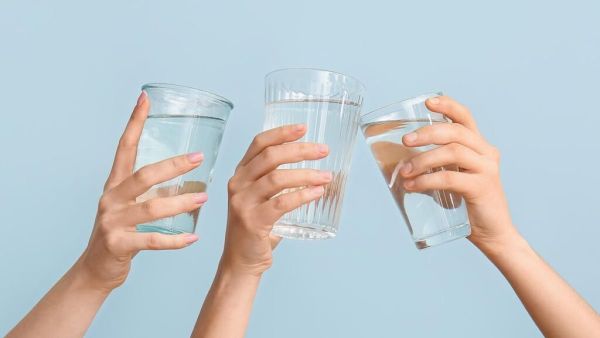
CLAIM:
Forcing excessive water intake is unhealthy and misleading, as hydration needs vary by individual, and drinking too much water at once can increase the risk of water intoxication and electrolyte imbalance.
FACT:
Drinking excessive amounts of water, especially over a short period, can be harmful and may lead to dilutional hyponatremia (water intoxication). Experts suggest that hydration needs vary from person to person, and forcing water intake beyond natural thirst signals is unnecessary and potentially dangerous.
We are often advised to “drink more water” for better health. But is drinking more water always better for the body? Can excessive water intake actually be harmful?
In a viral Instagram reel, dietician Bhawesh Gupta, who has over 7.13 lakh followers, addresses this commonly misunderstood belief and warns against blindly forcing water intake.
“We have heard since childhood that the more water you drink, the better it is. Because of this, many people forcefully drink water. Some have even become so obsessed that they download water reminder apps,” he says in the reel.
Bhawesh explains that water requirements vary from person to person and depend on multiple factors. These include weather conditions, physical activity levels, body weight, and dietary habits. “In cold weather, water requirement is lower compared to hot and humid climates. Sedentary people need less water than athletes. Similarly, people with lower body weight and those consuming more water-rich foods need less plain water,” he adds.
He also clarifies a common misconception about hydration. According to him, hydration does not simply mean drinking large quantities of water and passing it out through urine. “Hydration means how much water your body retains,” Bhawesh explains. Referring to the Beverage Hydration Index, he notes that drinks like milk, ORS, coconut water, and orange juice hydrate the body better than plain water because they contain electrolytes.
Warning against drinking too much water at once, he says, “Never drink a lot of water in one go. It can increase the risk of hyponatremia or water intoxication.” This condition occurs when sodium levels in the blood become dangerously low due to excessive water intake.
He advises people to rely on natural thirst signals and simple body cues. “Drink water when you feel thirsty and check your urine colour. It should not be too dark,” he suggests. Quoting traditional wisdom, he adds that Ayurveda recommends drinking water slowly, sip by sip, instead of gulping large quantities at once.
Bhawesh further encourages adding water-rich fruits, milk products, smoothies, and coconut water to the daily diet for better hydration, as they provide both fluids and essential electrolytes.
The reel has gained 4.84 lakh views, 28,900 likes, and over 5,499 shares, sparking widespread discussion on social media about hydration myths and the risks of overhydration.
Can drinking too much water be harmful? What does research say?
Scientific evidence shows that excessive water intake, especially over a short period, can dilute sodium levels in the blood and lead to a dangerous condition known as hyponatremia, or water intoxication.
A 2002 review examining military training cases highlighted the serious risks of overhydration. The study noted, “With recent emphasis on increased water intake during exercise for the prevention of dehydration and exertional heat illness, there has been an increase in cases of hyponatremia to excessive water intake.”
The review documented several military cases and three deaths caused by overhydration, where individuals consumed more than 5 litres, and in some cases 10–20 litres of water within a few hours. Researchers warned that while hydration is important during physical activity, excessive intake can be life-threatening. “Excessive fluid intake may lead to life-threatening hyponatremia,” the study stated, recommending that fluid intake during heavy sweating be limited to 1–1.5 litres per hour.
Further evidence came from a 2007 clinical case reportwhich showed that water intoxication is not limited to people with psychiatric conditions. The study described a healthy woman who developed severe hyponatremia after voluntarily drinking 4 litres of water in just three hours. “The present case suggests that one should consider water intoxication as a cause of hyponatremia in a patient without signs of dehydration, even if he/she does not have a history of compulsive water ingestion,” the researchers noted.
This challenged the assumption that only individuals with mental health disorders are at risk and highlighted that rapid, excessive intake alone can be dangerous.
A 2016 study raised concerns about the common medical advice to “drink plenty of fluids” during illness. Researchers reported a case of a 59-year-old woman who consumed large volumes of water while treating a urinary tract infection. She developed symptoms such as confusion, nausea, vomiting, tremors, and speech difficulties. Her blood sodium level dropped to 123 mmol/L, a range associated with high mortality risk.
The study warned, “The harmful effects of increased fluid intake include confusion, vomiting and speech disturbance, and potential for catastrophic outcomes due to low blood sodium concentrations.”
It also noted that emergency department data show a mortality rate of nearly 29% among patients presenting with extremely low sodium levels. Researchers questioned whether routine advice to increase fluid intake during illness may unintentionally worsen electrolyte imbalance in vulnerable patients.
Expanding on the physiology of overhydration, a 2019 review examined how the body responds when water intake exceeds natural thirst. The authors explained that while the body normally protects itself by increasing urine output, this defence can be overwhelmed when intake becomes excessive.
The review reported, “Complications from acute (>3 litres per hour) or chronic (5–10+ litres per day) water intakes at rest are uncommon but may result in acute water intoxication or chronic urinary tract abnormalities.”
It also highlighted that overhydration can lead to bladder distension, ureter dilation, and kidney stress, though modest increases in water intake may benefit specific groups such as people prone to kidney stones. However, researchers clearly warned about the potentially fatal consequences of extreme intake.
The strongest population-level evidence comes from a 2022 review that analysed 177 studies involving 590 patients with water intoxication. The findings showed that the median water intake was around 8 litres per day, with average blood sodium levels dropping to 118 mmol/L, far below the normal range.
The study reported that 53 per cent of patients experienced severe symptoms such as seizures or coma, 35 per cent developed moderate symptoms including confusion and vomiting and 13 per cent of cases resulted in death.
“Water intoxication is associated with significant morbidity and mortality and requires daily intake to substantially exceed population-based recommendations,” researchers concluded.
Then, how much water should we drink?
Dr Rajiv Kovil, Head of Diabetology and Weight Loss Expert at Zandra Healthcare, explains that excessive water intake can lead to a medically recognised condition known as dilutional hyponatremia. He notes that the body maintains blood sodium within a very narrow and tightly regulated range of 135 to 145 millimoles per litre.
“When a person drinks large volumes of water faster than what the kidneys can excrete, the blood becomes diluted. Our kidneys can usually excrete only about 0.5 to 1 litre of water per hour,” Dr Kovil explains. As sodium levels fall, water shifts into the body’s cells, causing them to swell. “This cellular swelling can lead to serious complications,” he adds.
Dr Kovil also highlights that many people replace sweat loss with plain water alone, ignoring the loss of electrolytes. “During prolonged sweating or endurance activity, it is important to consume electrolyte-containing fluids, not just water,” he says. This is particularly relevant for athletes and people engaged in intense physical activity.
He also addresses a common cultural practice in India of drinking large quantities of water early in the morning for “detox” or “cleansing.” “There is a belief that waking up and drinking two to three litres of water cleans the body. That simply does not happen,” Dr Kovil states.
According to him, certain groups face a higher risk from excessive water intake. These include people with liver disease, heart disease, chronic kidney disease, as well as athletes and elderly individuals. He emphasises that the body already has a built-in mechanism to regulate hydration. “Our hypothalamus provides a very strong physiological thirst signal. It tells us when the body actually needs water,” he explains.
Dr Kovil suggests that for most healthy individuals, around 2 to 2.5 litres of water per day is generally sufficient under normal conditions. “Carrying a bottle and sipping through the day is fine, but forcing excessive water intake is unnecessary and potentially harmful,” he says.
He also warns against the growing obsession with forced hydration. “There is a myth that drinking more water means better detoxification or that clear urine always equals perfect hydration. These are misconceptions,” he notes.
Addressing extreme intake, Dr Kovil cautions, “Consuming more than 5 to 6 litres of water within a few hours can cause serious health problems due to dilutional hyponatremia.” He adds that water needs are not fixed and should be adjusted based on circumstances. “During exercise, fever, or extremely hot and humid weather, fluid requirements increase. But even then, it is better to include electrolyte-containing fluids rather than consuming large amounts of plain water,” he advises.
“Your physiological thirst response works well. The goal is balance, not excess,” he concludes.
This story is done in collaboration with First Checkwhich is the health journalism vertical of DataLEADS.
-
Ranveer Singh's Dhurandhar Enters Rs 1000 Crore Club; Becomes First Hindi Film to Achieve Feat

-
Get a fixed interest of ₹39,000+ on ₹1,00,000! This government bank is offering incredible returns on FDs; make your investment plan today..

-
Meet Aloka: The peaceful dog that touched many lives with his calm companionship

-
How Sleep Deprivation Affects The New Mother's Brain And Body

-
Understanding Why Your Fingers Wrinkle After Water Exposure