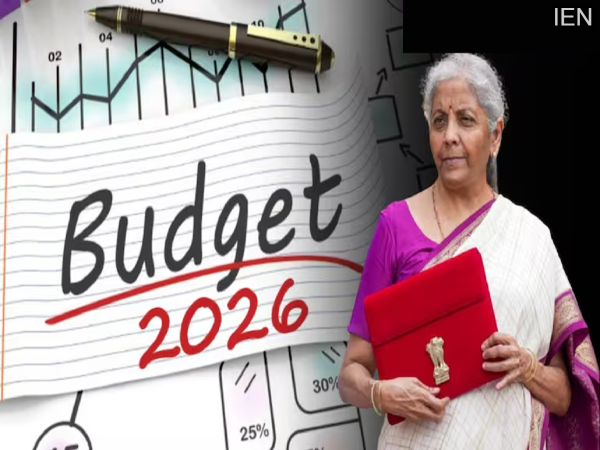
India’s Union Budget 2026 is expected to be a landmark event, not only for its economic impact but also for the historic record it will create. On February 1, Finance Minister Nirmala Sitharaman will present her ninth consecutive Union Budget, bringing her closer to a long-standing record set by former Prime Minister Morarji Desai. Amid global economic uncertainty, this budget is being closely watched for policy reforms and growth-oriented decisions.
Over the decades, India’s budget presentations have reflected the country’s economic priorities and political changes. From the first budget in independent India to modern-day reforms, several moments in budget history continue to shape today’s financial roadmap.
Nirmala Sitharaman’s Record-Breaking Streak
With her ninth straight budget, Nirmala Sitharaman will create a unique milestone by becoming the finance minister to present the highest number of consecutive budgets under the same Prime Minister. Former Prime Minister Morarji Desai had presented a total of 10 budgets across different terms, including six budgets between 1959 and 1964 and four more from 1967 to 1969.
While Desai still holds the overall record, Sitharaman’s achievement stands out because all her budgets have been delivered under the leadership of Prime Minister Narendra Modi. This continuity reflects stability in economic policymaking and long-term planning.
India’s First Budget: A Historic Beginning
India’s budget journey began soon after independence. The first Union Budget of independent India was presented on November 26, 1947, by then Finance Minister R.K. Shanmukham Chetty. That budget laid the foundation for managing a newly formed nation’s economy and set the stage for future financial policies.
Since then, several finance ministers have left their mark through repeated budget presentations. P. Chidambaram delivered the budget nine times, first during the United Front government in 1996 and later during the UPA regime. Pranab Mukherjee presented eight budgets, spanning his tenures in the 1980s and during the UPA government.
Former Prime Minister Manmohan Singh also played a crucial role in shaping India’s financial direction. Between 1991 and 1995, he presented five consecutive budgets, which became the cornerstone of India’s economic liberalization and reform process.
The Longest and Shortest Budget Speeches
Budget speeches themselves have become part of India’s political history. Nirmala Sitharaman holds the record for delivering the longest budget speech. On February 1, 2020, her address to Parliament lasted nearly two hours and forty minutes, covering a wide range of policy initiatives and economic measures.
In contrast, the shortest budget speech was delivered in 1977, when an interim budget was presented in just 800 words. This sharp difference highlights how budget communication has evolved over time, becoming more detailed and policy-driven.
Changing Time and Date of Budget Presentation
The tradition of presenting the Union Budget has also changed significantly over the years. During the British era and for many years after independence, the budget was presented on the last working day of February at 5:00 PM. This practice continued until 1999.
In that year, then Finance Minister Yashwant Sinha changed the timing of the budget presentation to 11:00 AM, making it more accessible to citizens and markets.
Another major reform came in 2017, when the government shifted the budget date from the end of February to February 1. This change allowed new financial proposals and schemes to be implemented from the start of the financial year on April 1, improving efficiency and execution.
Why Budget 2026 Matters
Budget 2026 is expected to play a key role in addressing current economic challenges while maintaining growth momentum. With global markets facing uncertainty, the government is likely to focus on infrastructure development, job creation, and fiscal discipline.
Beyond policy expectations, this budget also carries symbolic importance. It connects India’s present economic strategy with decades of budget history—from the first post-independence budget to record-setting presentations by modern finance ministers.
Conclusion
The story of India’s Union Budget is deeply linked with the country’s political and economic evolution. Budget 2026 will not only outline the government’s financial priorities but also mark an important chapter in this long journey. As Nirmala Sitharaman approaches a historic record and the tradition of budget presentation continues to evolve, the Union Budget remains one of the most significant events in India’s democratic and economic calendar.
-
Martin Lewis speaks about 'particularly good' bank account for couples

-
Punjab's health insurance scheme impractical, publicity-driven: BJP
-
Himachal secures first place for average response time in distress, says CM Sukhu
-
Nitish Kumar launches, inaugurates projects worth Rs 136 crore in Darbhanga
-
Tragic Warehouse Fire in Kolkata Claims Lives and Sparks Rescue Efforts