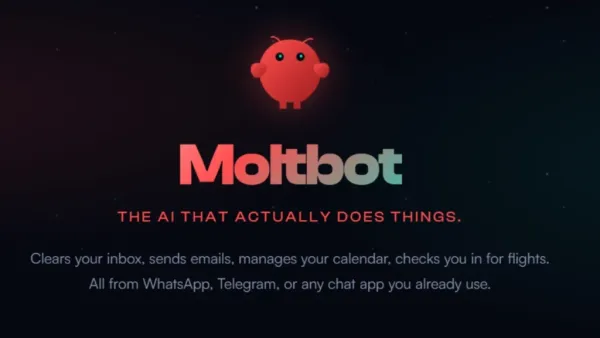
Highlights
- Moltbot is a viral, open-source AI agent that automates tasks across apps, not just text generation.
- It runs locally under user control, prioritizing privacy, customization, and persistent memory.
- Users can issue natural-language commands via messaging platforms such as WhatsApp and Telegram.
- Experts warn of security risks such as prompt injections and credential exposure if misconfigured.
In early 2026, a new artificial intelligence assistant called Moltbot AI made waves in the tech world. It quickly became one of the most discussed projects in AI communities. Originally named Clawdbot, the open-source tool was rebranded following a trademark dispute with Anthropic, the creator of the Claude AI models. This change allowed its developer to maintain the project’s functionality and momentum.
Unlike typical chatbots that just respond, Moltbot is designed to perform actions for users. It can manage calendars, automate workflows, check emails, book flights, send reminders, and connect with familiar communications platforms like WhatsApp, Telegram, and Discord. Its rapid adoption reflects the growing interest in what experts call “agentic AI,” systems that execute tasks on their own rather than just generating text.
What Moltbot AI Is and How It Works
Moltbot is an open-source AI assistant that users can host on their own machines or servers. Unlike most consumer chat AIs that operate in the cloud, it runs locally. This setup gives users greater control over their data and systems. Once installed, Moltbot listens for instructions, breaks them down into manageable steps, and interacts directly with apps, files, and services on the host device.
Moltbot connects to several AI models, including OpenAI’s GPT and Anthropic’s Claude. This gives users flexibility in balancing performance, cost, and privacy. Once plugged in, users can issue natural-language commands through messaging platforms, and the AI will handle tasks like managing emails, scheduling meetings, sorting files, or sending messages for the user. This level of automation sets it apart from standard AI assistants that only respond.
A notable feature of Moltbot is its persistent memory and proactive behavior. Unlike assistants that don’t remember past interactions, Moltbot can recall previous instructions, preferences, and routines. This allows it to personalize actions over time. It can also send alerts, summaries, and reminders without prompting, functioning more like a digital employee than a simple chatbot.
Why It Went Viral
Moltbot gained rapid popularity because it demonstrated what many tech experts believe is the next phase of AI: autonomous agents that can take action rather than talk. Early users shared screenshots and videos of the agent performing complex tasks, such as booking flights or organizing files, directly in chat apps, creating the impression of a capable, hands-off assistant. Within days of its initial release, the project received tens of thousands of stars on GitHub, widespread media coverage, and sparked intense online discussions.
This viral success even affected the economy unexpectedly. The social media buzz around Moltbot influenced stock prices of tech infrastructure companies, as some investors connected its rise to broader trends in AI adoption and edge computing.
Developers are attracted to its open-source nature and extensibility. Beyond its core features, a community of contributors has created integrations and plugins, often called skills, that enhance Moltbot’s functionality and automate more complex workflows.
Capabilities and Use Cases
Moltbot stands out from traditional assistants due to its range of capabilities and ability to take action. While typical AI tools might summarize an email or draft a message, Moltbot can:
- Manage calendars and schedules on its own
- Sort and organize email inboxes
- Book travel or appointments
- Automate web tasks like filling out forms or scraping data
- Run maintenance scripts or system commands
- Integrate with messaging platforms for seamless command input and output
It also acts as a central automation hub, connecting various services and personal workflows. For example, a user could tell Moltbot to collect industry news and deliver the summary every morning. The agent would do this via a chosen messaging app without needing further input.
Since it operates locally and works with existing apps, Moltbot blurs the lines between AI and traditional automation tools. It provides both flexibility and depth of execution that cloud-only assistants typically lack.
Security and Risk Concerns
Despite its usefulness, Moltbot’s deep access raises significant security and safety concerns. The features that make it powerful, such as file system access, scripted automation, persistent memory, and messaging platform integration, could be exploited if the agent is misconfigured or hacked.
Security researchers have pointed out several real-world risks:
- Prompt injection vulnerabilities, where malicious content in an email or message could trick the agent into performing unintended actions.
- Exposed credentials or API keys stored in plain text on local systems, which could leak sensitive information.
- Unauthorized remote access if users expose Moltbot’s gateway to the public internet without proper protections.
Experts suggest treating Moltbot like specialized automation infrastructure rather than a simple consumer assistant. They recommend running it in isolated environments, such as virtual machines or dedicated servers, to limit potential damage from misuse.
There have also been reports of misconfigured instances revealing private chat histories and API keys because users set up the service without proper security measures. This highlights the need for best security practices when working with agentic AIs.
Who Should Use Moltbot and Who Should Not
Moltbot is currently best suited for developers, security-conscious users, and technical experimenters rather than casual consumers. Setting it up requires understanding server environments, permissions, AI model integration, and secure configurations. Users expecting a plug-and-play experience, like with cloud chatbots such as ChatGPT, may find the setup, monitoring, and potential security risks overwhelming.
Additionally, those handling sensitive data, like personal messages or financial information, should avoid connecting these sources until robust safety measures are in place.
The Broader Impact and Future Outlook
Moltbot’s rapid rise reflects an evolving view on how AI should interact with everyday computing environments. AI agents are moving beyond static chat interfaces to executing tasks, remembering context, adapting behavior, and deeply integrating with workflows. This marks a significant expansion of AI’s practical role.
The interest in open-source agents like Moltbot suggests a future where hybrid models (local and cloud) and agent ecosystems become common. However, it also underscores the need for careful security design, thoughtful user education, and strong governance of autonomous AI tools.
-
UK's Keir Starmer visits China as Beijing courts US allies

-
Rajasthan govt to develop state as aerospace & defence manufacturing hub

-
Meghan Markle promises fans 'something new' as she makes major announcement

-
22 Kids and Counting star Noel Radford 'really not well' as health worries mount

-
'That's b******s!' Liz Truss loses it after TV star asks 'why didn't you speak up?'