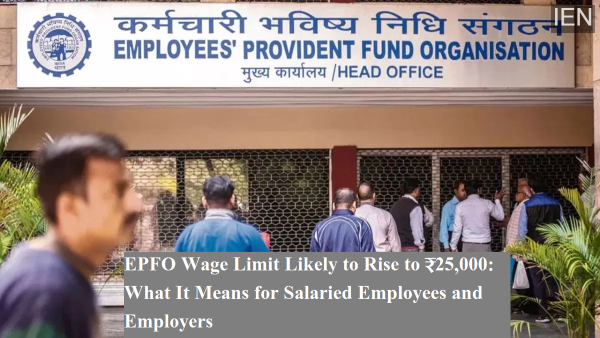
The Employees’ Provident Fund Organisation (EPFO) is preparing for a significant policy shift that could bring millions of additional salaried workers under its mandatory social security umbrella. According to recent reports, the central government is actively considering an increase in the EPFO wage ceiling from the existing ₹15,000 per month to ₹25,000 per month.
If implemented, this move will expand provident fund (PF) coverage to a much larger segment of the workforce, especially those in the semi-organised and unorganised sectors who are currently excluded from mandatory EPFO benefits.
Why the Government Is Planning This Change
The current wage ceiling of ₹15,000 has remained unchanged since 2014, despite steady growth in salaries and inflation. As a result, many employees earning slightly above this limit are left out of mandatory EPF and EPS (Employees’ Pension Scheme) contributions.
The government believes that raising the wage cap will strengthen India’s social security framework and ensure better financial protection for employees after retirement. The proposal is also aligned with the broader goal of formalising employment and increasing long-term savings among salaried individuals.
What Is the Proposed EPFO Wage Ceiling?
-
Current wage ceiling: ₹15,000 per month
-
Proposed new limit: ₹25,000 per month
-
Status: Under discussion at a high level
-
Possible implementation: From April 1, subject to approval by the EPFO Central Board of Trustees
Once approved, employees earning up to ₹25,000 per month may be mandatorily covered under EPFO.
Impact on Employees’ Salaries
An increase in the wage ceiling will lead to higher monthly PF deductions for employees. Since EPF contributions are calculated as a percentage of basic salary, take-home pay may reduce slightly.
However, the long-term benefits could outweigh the short-term impact. Higher contributions mean:
-
A larger EPF corpus at retirement
-
Improved pension benefits under EPS
-
Enhanced financial security post-retirement
For many employees, this change could act as a forced savings mechanism that builds wealth over time.
What It Means for Employers
Employers will also face increased financial responsibility, as they must match employees’ PF contributions. This could raise operational costs, especially for small and medium enterprises.
That said, policymakers believe the long-term advantages—such as a financially secure workforce and reduced dependency on government welfare—justify the additional burden on employers.
Strengthening India’s Social Security Net
Analysts see this move as a step toward expanding formal employment benefits and bridging gaps in India’s retirement system. By widening EPFO coverage, the government aims to ensure that more workers benefit from structured savings and pension schemes.
While the proposal is still under discussion, it signals a clear intent to modernise EPFO rules in line with current economic realities.
-
Henderson and Welbeck moves after Chelsea should still target six more 30-plus players

-
Liverpool’s move for France and PSG attacker Bradley Barcola may take time: report

-
Snitch Acquires D2C Women's Fashion Brand Berrylush To Expand Beyond Menswear

-
This book uncovers Chand Bibi's life and battles in the Deccan against the Mughal Empire

-
Gujarat Unveils New Shipbuilding and Repair Policy to Become India's Next Maritime Manufacturing Hub