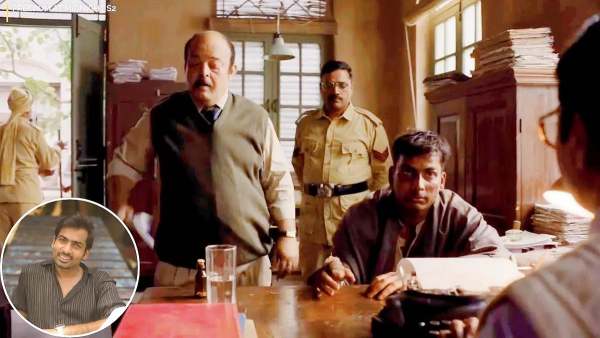
In an exclusive interview, actor Anurag Thakur speaks about portraying Madan Pahwa in Freedom at Midnight Season 2, exploring trauma, ideological manipulation and moral collapse. He reflects on theatre training, emotional detachment, and Nikkhil Advani’s balanced handling of sensitive political history.
In an exclusive interview with , actor Anurag Thakur opens up about portraying Madan Lal Pahwa in Sony LIV’s Season 2, a character shaped as much by personal trauma as by political manipulation.
A scene-stealer in the series, Madan is disowned by his father after Partition and channels that abandonment into hatred towards the Father of the Nation, Gandhi, for his unwavering empathy towards Muslims. Weaponised by Hindu fundamentalists, Madan becomes both victim and perpetrator.
Thakur, who broke out with , delivers a deeply internal yet explosive performance, navigating vulnerability, rage and moral collapse. He also reflects on Nikkhil Advani’s sensitive handling of ideological clashes, particularly between Nehru and Patel, depicted not as binaries of right and wrong, but as a clash of ideals within a shared moral framework.
Q. Madan Pahwa is neither a conventional villain nor a hero. When you first read the script, what disturbed you the most about him, his hatred or his vulnerability?
Nothing really disturbed me initially, because I read it very neutrally. I did not read it to judge the character. I simply read it as it was written. Later, I read more about him.
When I reflected on it, I felt that he was extremely vulnerable. He went through a lot, and that disturbed me — the entire process and the events around him — more than just his personal journey.
Q. Madan is disowned by his father after Partition, and that emotional rupture seems to define his politics later. Do you see Madan’s ideology as something he chooses, or something he inherits from his trauma?
I think it is something he inherits from his trauma. He was only around 20 or 21 when this happened. As a young man, he was not prepared for any of it. He believed he would have a better life.
But when everything around him started falling apart, he lost control. He could not process it the way he should have. In that vulnerable state, someone else convinced him to do things he may never have done otherwise. So yes, the events he witnessed shaped him into a man who did things he never intended to do.
Q. There’s a chilling moment where Madan’s personal grief turns into political violence. Was there a specific scene where you felt the weight of playing someone who attempts to harm the Father of the Nation?
More than that, it was the moment where his own father abandons him, and he begins comparing his father to the Father of the Nation. There is a dialogue about this in the script.
He loses the balance between the two. In his confusion, he starts imagining his own father as the Father of the Nation and vice versa. He can no longer differentiate who should be revered and who should not. If fathers are like this, then maybe they shouldn’t exist at all.
It’s a psychological disturbance triggered by his circumstances. There were also other catalysts — people who used him. Had he met a more balanced individual, perhaps his anger could have been channelled differently. But that did not happen. He was made to believe that this was the only way.
Q. Your performance is very internal, restrained, yet explosive. What was your process like? Did theatre training help you?
Of course. It’s entirely because of my theatre training. My teachers taught me this approach.
I had just done , where Dahiya was very loud and outgoing. It would have been easy for me to repeat that. But the script demanded something else. Nikkhil sir never instructed me to play it a certain way. This choice came from me.
I felt that after the initial shock, Madan would shut down emotionally. When you go through something traumatic, you withdraw into yourself. You keep thinking over and over again. Based on observation and training, I chose restraint, and Nikkhil sir supported it completely.
Q. You’ve been doing theatre for nearly 14 years. Did that grounding help you approach such a morally complex role with more confidence?
Absolutely. Theatre teaches you balance. Even when you play a dark, complex character, you must return home as yourself. You meet your friends, your family, and live normally.
Theatre helps you understand where the character ends and where your life begins. You emotionally detach after the performance, not during it. That balance is essential.
Q. Were there moments during the shoot where you had to emotionally detach from Madan because the material became too heavy?
While performing, I attach myself fully, I empathise with the character. But there’s a beautiful word called depathy. I once heard Shah Rukh Khan mention it.
Depathy means empathy with detachment. As actors, we must do both. Today I’m playing this character, tomorrow another. If I don’t detach, all performances will start feeling the same. Detachment is essential for survival.
Q. Nikkhil Advani handles ideological clashes, like Nehru vs Patel, with remarkable sensitivity. As an actor, did his direction help you feel safe while navigating such politically charged material?
Absolutely. With Nikkhil sir, you trust your director. You know he will make something balanced and neutral, especially in sensitive times.
The writing itself was very balanced. I never feared that anything would be portrayed irresponsibly. That freedom allowed me to perform without hesitation, and that trust is very important for an actor.
Q. After , this role feels like a significant leap. Do you feel has changed how the industry perceives you?
I think people are more welcoming now. I’m getting better interviews, better questions, and more interesting character calls.
Of course, there’s always a risk of being typecast, and I remain aware of that. But yes, after and , there is more respect. That change is visible.
Q. Coming from Bihar, doing theatre for years, and now getting such impactful roles, what has the journey taught you about patience in this industry?
I have always been a patient person. Theatre taught me that things take time. I never expected instant success when I came to Mumbai.
When things don’t happen immediately, there’s no point sitting at home and worrying. I continue doing theatre, writing, reading and talking to friends. That keeps me focused on the work.
On set too, patience is crucial. A 10-second shot may take 8–10 hours. You still have to stay fresh. If you don’t, the fatigue will show in your performance.
Q. As an actor, do roles like Madan Pahwa scare you or excite you more?
They excite me. I’m not scared of roles anymore — that phase is over. What excites me is doing something different each time.
When I got Madan Pahwa, the first thing I asked was about the accent — Punjabi. I don’t know Punjabi at all, so that excited me. The look was completely different too.
If you observe closely, Madan’s walk, body language and presence are very different from Dahiya. These technical transformations excite me the most.
Also Watch:
Q. Finally, if there’s one conversation you hope sparks among young viewers today, what should it be?
Read history. Form your own opinions instead of being influenced by others.
Read it yourself, understand it yourself, and be more empathetic towards people around you. Many people have gone through unimaginable pain. If you truly empathise, it will make you more human. And that’s a better way to live.
-
Pankaj Tripathi Calls Theatre Festival Selection a Defining Moment in His Career
-
Ranveer Singh: Police Register Case Against Actor Over Alleged IFFI Performance Remarks

-
Kohrra Season 2 Trailer Signals Darker Case, New Partnerships

-
Punjab Secretariat: Bomb Threat Email Prompts Security Lockdown at Punjab Secretariat in Chandigarh
-
Kashmir weather: Freezing Nights as Avalanche Alerts Issued in Higher Regions