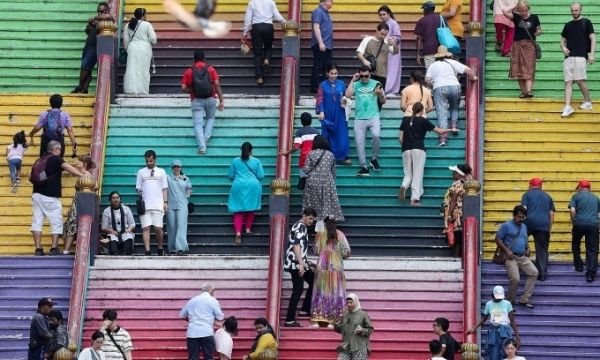
Tourists and Hindu devotees are seen on the 272 steps of Sri Subramaniar Swamy Temple at Batu Caves, Malaysia, April 19, 2024. Photo by Reuters
Malaysia’s tourism sector recorded 42.2 million visitors in 2025, an 11.2% year-on-year increase and 20.4% higher than 2019 benchmarks, making it the most visited country in Southeast Asia.
Deputy Prime Minister Ahmad Zahid Hamidi hailed the performance as a “solid foundation” for the Visit Malaysia 2026 (VM2026) campaign, the country’s state agency Named reported.
Last year, Malaysia received 38 million foreign arrivals.
Speaking after the Tourism and Culture Cabinet Committee meeting, he emphasized that the industry has solidified its position as a primary engine for the country’s economic growth and job creation, New Straits Times Online reported.
“The government is strengthening coordination to ensure the tourism industry remains the main driver of the country’s economic growth,” he said, noting that the strategy aims not only to attract more international visitors but also to extend their length of stay and maximize their spending.
With this outstanding achievement, Malaysia continued to be the tourism champion in Southeast Asia for the second consecutive year.
Thailand, traditionally the region’s favorite, ranked second after receiving 32.9 million arrivals for 2025, a 7% year-on-year decrease in what was also the first annual drop in international arrivals in a decade outside the pandemic period, Bloomberg reported.
Once a tourism powerhouse in Southeast Asia, Thailand struggled with setbacks last year due to kidnapping, deadly earthquake, border tensions with Cambodia and severe flooding.
-
Tesla announces $20B investment push for Musk's AI-first future

-
Microsoft makes $7.6B from OpenAI as AI bets pay off

-
FM Sitharaman tables Economic Survey for FY 2025-26 ahead of her 9th consecutive Union Budget

-
The Top Employers in Asia-Pacific Have Been Announced for 2026
-
Economic Survey pegs India's potential growth between 6.8-7.2% in FY27, outlook positive despite global risks