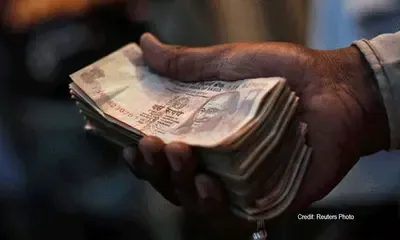
Dharwad: Until a few years ago, people who came to villages seeking alms would happily accept rice. They arrived in different forms and voices, asking for rice in the name of rituals, deities, charity, or hunger. Villagers would give rice from their homes, and it was received with gratitude. Today, the situation has changed. Beggars no longer want rice and are instead asking only for money.
Rice, which once held a central place in charity, culture, and religious practices, is now being rejected by those who come to villages seeking alms. Just 10 to 15 years ago, groups such as Budbudaki, Durugamargi, Ranigya, Jogavva, Gorappa, Mailari, Dasayya, Kurumama, religious saints, and Fakir Khajas would visit villages. They would stand in front of houses, chant mantras or blessings, and ask for alms. Villagers would give a portion of rice from their homes, which was accepted gladly.
Even today, at least 10 to 15 people visit each village every week seeking food alms. Over a year, one person would collect around 2 to 3 quintals of grain through alms. Across the state, more than 1.76 lakh people depend on alms, and it is estimated that around 350 metric tonnes of food grains are collected every year. However, now none of them want rice. They clearly say they do not want rice and ask for some money instead.
Why is rice being rejected?
Under the ‘Anna Bhagya’ scheme, every eligible person is receiving up to 40 kg of rice free of cost, though sometimes the quantity may be less. Because of this, many households now have surplus rice. Rice is used for meals, dosa, and paddus, yet a large quantity still remains unused. Even very poor households currently have rice stored in large amounts. As a result, people are hesitant to accept rice as alms or even as help. Moreover, even if rice is received through alms, it has become difficult to sell it.
Black market sale of rice:
While the government distributes free rice under the Anna Bhagya scheme, illegal sale of the same rice is also taking place. Despite efforts by the government to stop it, tonnes of rice are being sold from villages at ₹15 to ₹17 per kg. This rice is transported from villages to cities in passenger autos, especially to hotels that prepare dosa and paddu.
Disappearance of traditional alms grains:
Traditionally, rice alms were common in Kittur, Malenadu, and coastal Karnataka regions. In Kalyana Karnataka, jowar was commonly given, while ragi was the traditional alms grain in the old Mysuru region. However, after the introduction of Anna Bhagya rice, people have stopped giving traditional grains and are giving only rice. As a result, those seeking alms now say that money is enough.
Reasons for refusing rice:
Reduced demand for rice after the Anna Bhagya scheme
Distribution of up to 40 kg of free rice per person
Rice remains unused even after preparing meals, dosa, and paddu
People giving rice instead of traditional alms grains
Hesitation to accept rice as alms or assistance
Beggars asking for money instead of rice
“We have traditionally survived on rice alms based on our community culture. Now, government rice is available for our own meals. Rice received through alms fetches only about ₹15 per kg. So, we reject rice and ask for money,” said Durgappa Kosekor, a Duruga Margi artist.
-
Renault Duster 2026 First Look: What Stands Out, What Falls Short

-
Lucknow University Students Welcome Supreme Court Stay on New UGC Equity Rules
-
SBI SCO 2026: Registration Process Starts At sbi.co.in; Check Eligibility Criteria Here
-
Kohrra Season 2 OTT Release Date: When & Where To Watch Mona Singh's Crime Drama Series?
-
Big relief for Shah Rukh Khan, Aryan Khan as Delhi HC rejects Sameer Wankhede’s defamation suit on ‘The Ba***ds of Bollywood’ – Check details