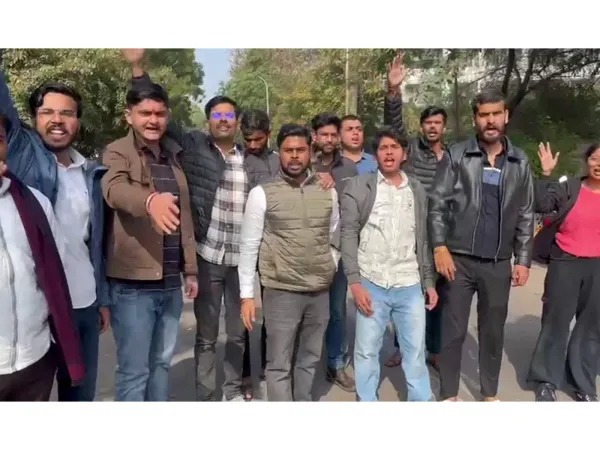
Lucknow: Students at Lucknow University on Thursday expressed relief and enthusiasm after the Supreme Court put an interim stay on the University Grants Commission’s Promotion of Equity in Higher Education Institutions Regulations, 2026. The decision prompted celebrations across the campus, with students gathering to raise slogans supporting unity and collective student interests. Many described the ruling as a timely intervention that acknowledged concerns raised by students nationwide.
Campus Reactions Reflect Relief and Unity
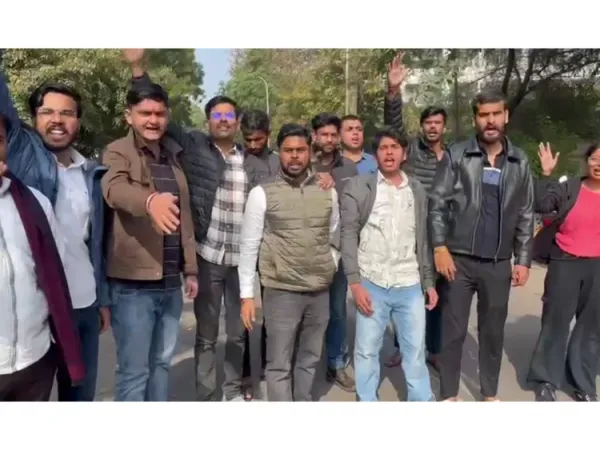
Soon after the court’s order became public, groups of students assembled within the university premises, chanting slogans that emphasized solidarity among students. The mood on campus reflected a sense of reassurance, particularly among those who had been actively involved in demonstrations against the newly notified regulations. For many, the stay signaled that their voices had been heard at the highest judicial level.
Students Call Verdict a Significant Win
Several students described the Supreme Court’s move as an important moment for the student community. Speaking to reporters, Shakti Dubey said the ruling recognized the widespread protests that had taken place across the country, including those led by students at Lucknow University. According to him, the decision safeguarded student interests and opened the door for further discussion and necessary revisions to the regulations. He also expressed gratitude to the judiciary for considering student concerns.
Protests and Memorandums Highlight Opposition
Another student, Jatin Shukla, highlighted the sustained nature of the protests on campus. He said students had consistently opposed the new guidelines, describing them as divisive. He recalled that a large-scale protest was organized on January 27, during which students submitted a formal memorandum to the UGC Chairman. Shukla noted that the Chief Justice of India’s remarks about the need to move forward inclusively resonated strongly with students. While acknowledging that the stay is temporary, he said it represented a momentary victory.
Preference for Existing Framework
Students also drew comparisons between the earlier 2012 regulations and the newly introduced framework. Shukla and others said they did not have major objections to the older rules, which they felt were more balanced. In contrast, the latest guidelines were criticized for creating divisions rather than fostering equity. This distinction formed a central argument during student demonstrations.
Positive Impact on Student Morale
Astha Pandey, another student, said the court’s intervention had a positive effect on student morale. She stated that the stay helped ease fears about potential divisions on campus and reinforced confidence in the judicial process. According to her, the decision served student interests by preventing the immediate implementation of rules that many believed could disrupt harmony within universities.
Legal Challenges to the New Regulations
The UGC regulations, officially notified on January 23, were challenged by multiple petitioners who argued that the provisions were arbitrary, exclusionary, and discriminatory. The petitions claimed that the rules violated constitutional principles as well as the University Grants Commission Act of 1956. After reviewing the matter, the Supreme Court ruled that the existing 2012 regulations would remain in force for the time being.
Court Raises Concerns Over Ambiguity
In its observations, the Supreme Court pointed to a lack of clarity in Regulation 3(C), which defines caste-based discrimination. The bench noted that the vague wording could allow for misuse and emphasized the need for clearer language. The court suggested that the regulation requires reconsideration and redrafting to avoid unintended consequences.
Background of the Contested Rules
The new UGC regulations were introduced with the stated aim of preventing caste-based discrimination in colleges and universities. They require institutions to set up special committees and helplines to handle complaints, particularly from students belonging to Scheduled Caste, Scheduled Tribe, and Other Backward Classes categories. However, the updated rules, notified on January 13 as a revision of the 2012 framework, triggered criticism from sections of general category students who feared the provisions could result in unfair treatment.
-
ABP Live Pet First: Is Your Pet At Risk? Key Signs Of Diabetes In Dogs That Often Go Unnoticed

-
Dalal Street Ends Higher As Sensex Gains 222 Points, Nifty Tests 25,400

-
OPS–EPS Reunion On Cards? AIADMK Unity Talks Trigger Political Drama

-
Supreme Court Reserves Order In Suo Motu Case On Stray Dogs

-
Prayagraj: Shankaracharya Continues Criticism After Leaving Magh Mela in