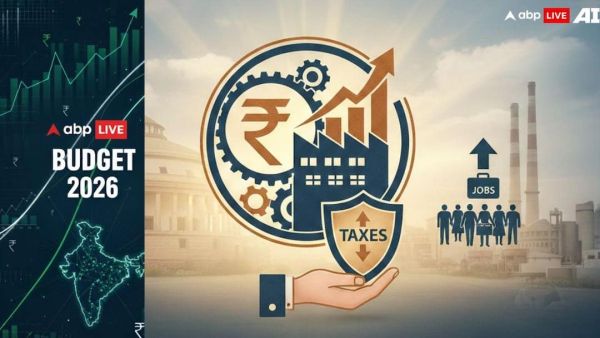
As India prepares for the upcoming Union Budget, a subtle but significant shift in fiscal strategy is taking centre stage. Rather than focusing solely on a headline fiscal deficit number, the government is placing greater emphasis on easing the debt-to-GDP ratio, currently around 56 per cent. The move signals a transition in how fiscal discipline will be measured in the coming years.
This approach comes as India nears the end of the glide path set out under the revised Fiscal Responsibility and Budget Management (FRBM) framework, reported PTI.
Moving Beyond A Single Deficit Target
For years, the fiscal deficit, the gap between government expenditure and revenue, has been the primary yardstick of fiscal prudence. A deficit in the range of 3-4 per cent of GDP is widely regarded as comfortable and desirable for a developing economy like India, allowing room for growth while maintaining macroeconomic stability.
Under the revised FRBM Act, the fiscal deficit target was set at below 4.5 per cent of GDP for 2025-26. However, with that milestone nearly achieved, the Union government has introduced a new glide path that places the debt-to-GDP ratio at the centre of fiscal management.
The roadmap for the next six years was outlined in the FRBM statement released on February 1, 2025.
What The Finance Minister Has Said
Finance Minister Nirmala Sitharaman already hinted at this evolution in fiscal thinking. In her Budget speech in July 2024, she said, “The fiscal consolidation path announced by me in 2021 has served our economy very well, and we aim to reach a deficit below 4.5 per cent next year. The government is committed to staying the course.”
Looking beyond 2025-26, she added, “From 2026-27 onwards, our endeavour will be to keep the fiscal deficit each year such that the central government debt will be on a declining path as a percentage of GDP.”
Her remarks underline the government’s intent to ensure that borrowing remains sustainable over time, rather than merely meeting an annual deficit figure.
Why Debt-To-GDP Is Becoming The Fiscal Anchor
Economists view the debt-to-GDP ratio as a more comprehensive measure of fiscal health. Unlike a single-year deficit number, it reflects the cumulative impact of past and present fiscal decisions. It captures borrowing trends, growth momentum and the government’s repayment capacity in one consolidated metric.
The FRBM statement dated February 1, 2025, noted that the choice of fiscal anchor aligns with sustained efforts to improve transparency, particularly through better disclosure of off-budget borrowings.
A debt-focused strategy also introduces operational flexibility. Instead of adhering strictly to an annual target that may require abrupt spending cuts during economic slowdowns, the government can calibrate fiscal policy in line with growth needs while keeping long-term debt sustainability in view.
The Six-Year Roadmap To 2031
For the period FY 2026-27 to FY 2030-31, the government has indicated that multiple fiscal scenarios can be constructed based on GDP growth trajectories and varying degrees of fiscal calibration.
The FRBM statement makes this clear: “Sans any major macro-economic disruptive exogenous shock(s), and while keeping in mind potential growth trends and emergent development needs, the government would endeavour to keep fiscal deficit in each year (from FY 2026-27 till FY 2030-31) such that the central government debt is on declining path to attain a debt-to-GDP level of about 50±1 per cent by March 31, 2031 (the last year of the 16th Finance Commission cycle).”
In essence, the objective is to bring the debt-to-GDP ratio down from the current 56 per cent to around 50 per cent by 2031.
-
Gold, Online Shopping And More: Inside India’s New Inflation Formula

-
Daldal OTT Review: Bhumi Pednekar Brings Twists, Chills In 7 Episodes Of Edge-Of-Seat Drama

-
'Can't Qualify As Electrifying': Aakash Chopra Takes Dig At Pakistan PM Shehbaz Sharif For Praising PAK Team's T20 Win Over Australia

-
ISI Students, Alumni Protest Draft ISI Bill, NEP 2020 In Kolkata, Allege Threat To Autonomy

-
Sunetra Ajit Pawar Education Qualification: All You Need To Know About The NCP Rajya Sabha MP