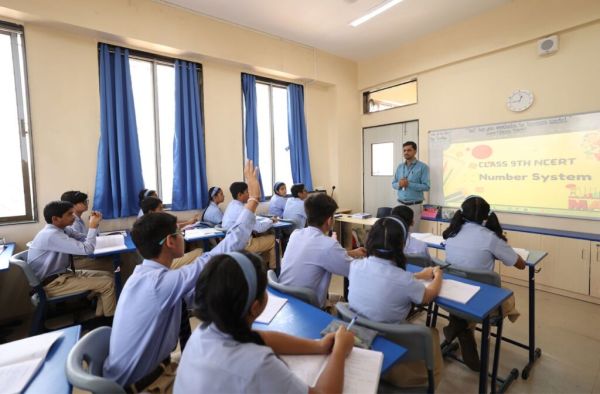
- Higher education has reached a new stage
- A big revelation from the Economic Survey
- Radical changes in education due to National Education Policy
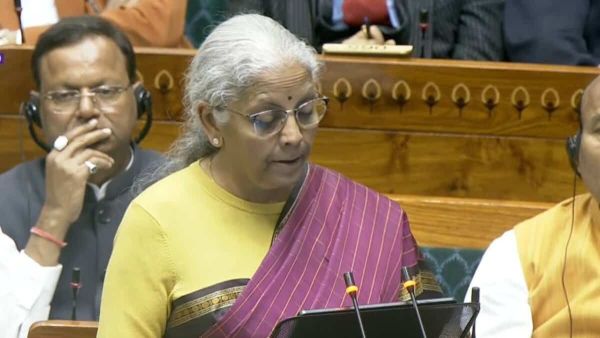
Economic Survey 2025-26: Presenting the Economic Survey 2025-26 in Parliament, Union Finance Minister Nirmala Sitharaman said India’s school education system has now become one of the largest educational institutions in the world. The past decade has seen record growth in the number of higher education institutions and student enrollment. The primary goal of the government is to achieve 100% enrollment at all school levels by 2030 through the National Education Policy (NEP). According to this survey, seamless integration of skill development and vocational education will be the primary focus in future to make education employable.
India currently operates one of the largest school education systems in the world, with 1.471 million schools, serving 246.9 million students. More than 1.01 million teachers across the country continuously help to ensure the smooth functioning of this vast and complex system. Steady progress is underway towards achieving 100% Gross Enrollment Ratio (GER) in pre-primary to secondary education by 2030, as per the National Education Policy objectives.
The number of Higher Education Institutions (HEIs) in the country has increased significantly, from 51,534 in 2014-15 to 70,018 by June 2025. Due to the expanding network of universities and colleges, student enrollment in higher education is projected to increase from 43.3 million in 2021-22 to 44.6 million in 2022-23. Currently, the Gross Enrollment Ratio (GER) at the primary level is 90.9, while at the upper primary level it is 90.3 and at the secondary level it is 78.7.
India now has 23 prestigious institutes like IITs, 21 IIMs and 20 AIIMS, which has significantly enhanced the country’s academic reputation internationally. India has taken a step towards global expansion of its higher education system by opening two international IIT campuses in Zanzibar and Abu Dhabi. Moreover, 2,660 institutions have been brought under the ambit of Academic Bank of Credit and over 46 million digital IDs have been issued to students.
According to the Economic Survey, the years of schooling should be extended to fifteen years to convert the vast human resource into high-quality human capital. The 5+3+3+4 framework of the National Education Policy works to integrate children’s early education, basic literacy and numeracy with vocational skills. Facilitating systematic skill development in secondary schools aims to equip students for future employment while studying.
The establishment of 13,076 PMSHRI schools in 33 states and union territories has made universal access to quality education easier and more accessible. Schemes like Jadu Patara and Indian Language Book are making learning fun by providing engaging learning materials in local languages. Schemes like Samagra Shiksha Abhiyan and Poshan Shakti Nirman are not only increasing enrolment, but also promoting educational equality in the society.
According to PLFS 2023-24, so far only 0.97 percent of youth aged 14-18 have received institutional training, while about 92 percent of youth have received no training. Bridging this huge gap is crucial to harness India’s demographic dividend and equip the youth to meet market demands. The introduction of the “Practice Professor” category by the UGC and AICTE has opened a new way of augmenting faculty resources in institutions through experienced experts.
-
Union Budget 2026 live: Proposal to extend deadline for revised I-T returns

-
Budget 2026–27: Key announcements for education, youth
-
Grammy Awards 2026: Star nominees, power-packed performances & more

-
Pollution now a national health emergency, govt must act: Rahul

-
Welcome February 2026! Fresh wishes, quotes, and beautiful images to start new month