In 1995, a small firm began operations in China’s Shenzhen with just 20 employees and limited capital. Just three decades later, before it even turned 30, BYD is the world’s largest electric car company, having overtaken Tesla. Its rise was fuelled not just by technology, but by sustained state backing. Estimates suggest BYD received around $4.3 billion in government support between 2015 and 2020, alongside strong consumer subsidies.
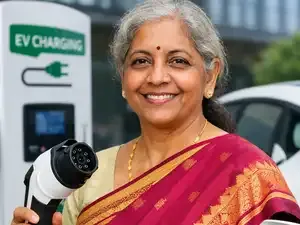
That success story now frames a key question for India: can Budget 2026 create conditions for an Indian BYD?
India’s EV story so far: Growth, but with cracks
India’s EV market crossed a major milestone in 2025, with registrations topping 2 million units even before the year ended -- up from 1.95 million in 2024. Lower prices, better charging access and newer long-range models kept demand steady despite policy shifts.
Electric two-wheelers led the charge with nearly 1.2 million units. Electric cars and SUVs saw a sharp 57% jump to 156,455 units.
The year also marked an inflection point for the industry. Maruti Suzuki entered the EV space. Tata Motors doubled down on battery tech and scale. Hyundai Motor India pushed charging infrastructure and localisation, while MG Motor India expanded electric SUV production with local suppliers. BYD widened its India footprint and global players like VinFast made their debut.
Where the momentum stalled
The slowdown is most visible in electric two-wheelers. Of 173 manufacturers, over 46 reported zero sales, while nearly 100 sold fewer than 10 units.
A major turning point came in September 2025. While EVs continued to attract 5% GST, petrol two-wheelers saw their tax slashed from 28% to 18%. The price gap narrowed overnight.
For mass buyers, the challenges run deeper: limited high-trust EV brands, uncertain resale value, patchy financing and persistent charging worries -- especially in apartments and rental housing.
The result: ICE vehicles got cheaper, EV adoption lost urgency.
Why Budget 2026 matters
With demand wobbling and manufacturing still scaling up, the EV industry sees Union Budget 2026 as a reset moment— -- less about short-term boosts, more about long-term structure.
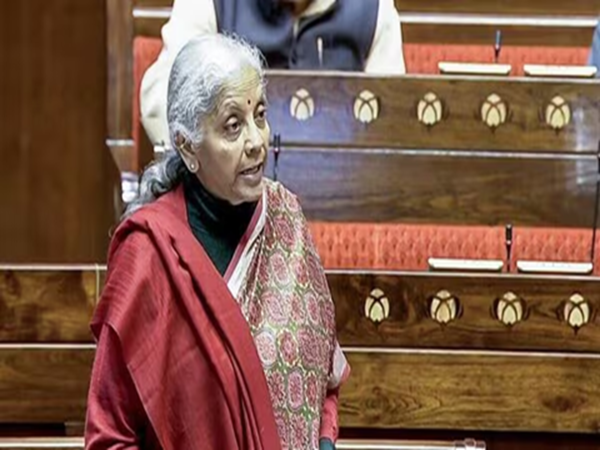
Can Finance Minister Nirmala Sitharaman rebalance the equation?
What EV companies want from Budget 2026
Saket Mehra, Partner and Auto & EV Industry Leader at Grant Thornton Bharat, says the focus must shift to an ecosystem-led approach. Key asks include GST rationalisation for charging and battery swapping, tax parity for EV leasing and a stable multi-year incentive roadmap under PM E-Drive. Faster execution of PLI and advanced cell battery schemes is equally critical. India’s “BYD moment,” he says, will come when localisation, cost competitiveness, and ecosystem maturity move together.
Samrath S Kochar, Founder and CEO of Trontek Electronics, wants deeper manufacturing support. He calls for accelerated localisation of batteries, power electronics and critical components, along with clear rules for battery recycling and second-life usage. A predictable, long-term Make in India policy is key to global competitiveness.
RK Misra, Co-founder and President (Ecosystem Partnerships) at Yulu, highlights structural GST issues. Battery-as-a-service models attract 18% GST versus 5% for fixed-battery EVs, creating capital blockages for shared mobility players. Rationalising GST and extending subsidies to low-speed EVs, he says, could unlock cleaner and more affordable urban transport.
Kunal Arya, Co-founder and MD of Zelio E Mobility, argues that mass adoption needs lower GST on electric two-wheelers, priority-style financing, and component-level PLI support for battery cells and power electronics. He also calls for a national charging roadmap, including 50,000 public charging points by 2027 and mandatory chargers at highways and fuel stations.
Mohal Lalbhai, Founder and Group CEO, Matter Motor, hopes PM E-DRIVE benefits to continue. He urged the FM to review the ex-factory price cap of Rs 1.5 lakh, for PM E-DRIVE. "A more inclusive PLI 2.0 for startups can further strengthen localisation and innovation."
Oben Electric's Founder & CEO Madhumita Agrawal says the industry’s long-term health depends on structural tax reforms. A primary concern for domestic manufacturers is the inverted tax structure. "While finished EVs attract a 5% GST, the raw materials sourced to build these vehicles are taxed at 18%. This 13% disparity traps vital working capital across the industry, driving up production costs and straining liquidity. Aligning the GST on all EV components to a uniform 5% is essential to support domestic manufacturing and make 'Make-in-India' EVs more affordable for the mass market."
"The budget should introduce targeted subsidies and demand incentives specifically for electric motorcycles. Prioritizing this dominant segment will unlock the next level of mass-market electrification and move India closer to a truly self-reliant EV ecosystem," he added.
Kunal Arya, Co-founder & MD of Zelio E Mobility, wants Budget 2026–27 to prioritise deeper localisation through component-specific PLI support for battery cells, controllers, and power electronics to reduce import dependence and strengthen Make in India. "Rationalising GST on electric two-wheelers and enabling priority-style, low-cost financing can accelerate mass adoption more effectively than one-time incentives. A clear national charging roadmap, including a target of 50,000 public charging points by 2027 and mandatory chargers at highways and fuel stations, along with longer-tenure capital, will be essential to building a scalable and resilient EV ecosystem." .
"The Union Budget 2026–27 must capitalize on the momentum of India’s electric two-wheeler segment, which dominated the EV market in 2025 and already serves millions of daily commuters. The focus should be on Make in India electric two-wheelers that are not just assembled locally, but designed, manufactured, and scaled domestically to create jobs, build resilient supply chains, and reduce import dependency. Incentives should drive battery localisation, affordable financing, and mass-scale production, while sustained investment in robust, widely accessible charging infrastructure will make EVs practical for all users, not just urban elites," says Sameer Moidin, Founder & CEO of EVeium Smart Mobility
S. Raghav Bharadwaj, CEO & Founder at Bolt.Earth, says reducing the inverted duty structure on charging services to 5% would lower costs for the end consumer, spurring growth. "Second, inclusion of EV charging infrastructure under Priority Sector Lending (PSL). This would unlock affordable capital for CPOs, businesses and startups, allowing us to move from installing thousands of chargers to millions," he added.
Navneet Daga, Co-founder & CEO, Zenergize, said, “To promote Atmanirbhar Bharat, we must treat energy infrastructure like EV chargers and solar inverters as vital national assets. We hope the government addresses the inverted GST structure for these products to enhance affordability. Moreover, to strengthen Indian manufacturing, duties on essential electronic components should be lowered, while duties on partially or fully assembled imported chargers and inverters are increased.”
Kunal Arya, Co-founder & MD at Zelio E Mobility, said, "The Union Budget 2026–27 should prioritise deeper localisation through component-specific PLI support for battery cells, controllers, and power electronics to reduce import dependence and strengthen Make in India. Rationalising GST on electric two-wheelers and enabling priority-style, low-cost financing can accelerate mass adoption more effectively than one-time incentives. A clear national charging roadmap, including a target of 50,000 public charging points by 2027 and mandatory chargers at highways and fuel stations, along with longer-tenure capital, will be essential to building a scalable and resilient EV ecosystem.”
That success story now frames a key question for India: can Budget 2026 create conditions for an Indian BYD?
India’s EV story so far: Growth, but with cracks
India’s EV market crossed a major milestone in 2025, with registrations topping 2 million units even before the year ended -- up from 1.95 million in 2024. Lower prices, better charging access and newer long-range models kept demand steady despite policy shifts.
Electric two-wheelers led the charge with nearly 1.2 million units. Electric cars and SUVs saw a sharp 57% jump to 156,455 units.
The year also marked an inflection point for the industry. Maruti Suzuki entered the EV space. Tata Motors doubled down on battery tech and scale. Hyundai Motor India pushed charging infrastructure and localisation, while MG Motor India expanded electric SUV production with local suppliers. BYD widened its India footprint and global players like VinFast made their debut.
Where the momentum stalled
The slowdown is most visible in electric two-wheelers. Of 173 manufacturers, over 46 reported zero sales, while nearly 100 sold fewer than 10 units.
A major turning point came in September 2025. While EVs continued to attract 5% GST, petrol two-wheelers saw their tax slashed from 28% to 18%. The price gap narrowed overnight.
For mass buyers, the challenges run deeper: limited high-trust EV brands, uncertain resale value, patchy financing and persistent charging worries -- especially in apartments and rental housing.
The result: ICE vehicles got cheaper, EV adoption lost urgency.
Why Budget 2026 matters
With demand wobbling and manufacturing still scaling up, the EV industry sees Union Budget 2026 as a reset moment— -- less about short-term boosts, more about long-term structure.
Can Finance Minister Nirmala Sitharaman rebalance the equation?
What EV companies want from Budget 2026
Saket Mehra, Partner and Auto & EV Industry Leader at Grant Thornton Bharat, says the focus must shift to an ecosystem-led approach. Key asks include GST rationalisation for charging and battery swapping, tax parity for EV leasing and a stable multi-year incentive roadmap under PM E-Drive. Faster execution of PLI and advanced cell battery schemes is equally critical. India’s “BYD moment,” he says, will come when localisation, cost competitiveness, and ecosystem maturity move together.
Samrath S Kochar, Founder and CEO of Trontek Electronics, wants deeper manufacturing support. He calls for accelerated localisation of batteries, power electronics and critical components, along with clear rules for battery recycling and second-life usage. A predictable, long-term Make in India policy is key to global competitiveness.
RK Misra, Co-founder and President (Ecosystem Partnerships) at Yulu, highlights structural GST issues. Battery-as-a-service models attract 18% GST versus 5% for fixed-battery EVs, creating capital blockages for shared mobility players. Rationalising GST and extending subsidies to low-speed EVs, he says, could unlock cleaner and more affordable urban transport.
Kunal Arya, Co-founder and MD of Zelio E Mobility, argues that mass adoption needs lower GST on electric two-wheelers, priority-style financing, and component-level PLI support for battery cells and power electronics. He also calls for a national charging roadmap, including 50,000 public charging points by 2027 and mandatory chargers at highways and fuel stations.
Mohal Lalbhai, Founder and Group CEO, Matter Motor, hopes PM E-DRIVE benefits to continue. He urged the FM to review the ex-factory price cap of Rs 1.5 lakh, for PM E-DRIVE. "A more inclusive PLI 2.0 for startups can further strengthen localisation and innovation."
Oben Electric's Founder & CEO Madhumita Agrawal says the industry’s long-term health depends on structural tax reforms. A primary concern for domestic manufacturers is the inverted tax structure. "While finished EVs attract a 5% GST, the raw materials sourced to build these vehicles are taxed at 18%. This 13% disparity traps vital working capital across the industry, driving up production costs and straining liquidity. Aligning the GST on all EV components to a uniform 5% is essential to support domestic manufacturing and make 'Make-in-India' EVs more affordable for the mass market."
"The budget should introduce targeted subsidies and demand incentives specifically for electric motorcycles. Prioritizing this dominant segment will unlock the next level of mass-market electrification and move India closer to a truly self-reliant EV ecosystem," he added.
Kunal Arya, Co-founder & MD of Zelio E Mobility, wants Budget 2026–27 to prioritise deeper localisation through component-specific PLI support for battery cells, controllers, and power electronics to reduce import dependence and strengthen Make in India. "Rationalising GST on electric two-wheelers and enabling priority-style, low-cost financing can accelerate mass adoption more effectively than one-time incentives. A clear national charging roadmap, including a target of 50,000 public charging points by 2027 and mandatory chargers at highways and fuel stations, along with longer-tenure capital, will be essential to building a scalable and resilient EV ecosystem." .
"The Union Budget 2026–27 must capitalize on the momentum of India’s electric two-wheeler segment, which dominated the EV market in 2025 and already serves millions of daily commuters. The focus should be on Make in India electric two-wheelers that are not just assembled locally, but designed, manufactured, and scaled domestically to create jobs, build resilient supply chains, and reduce import dependency. Incentives should drive battery localisation, affordable financing, and mass-scale production, while sustained investment in robust, widely accessible charging infrastructure will make EVs practical for all users, not just urban elites," says Sameer Moidin, Founder & CEO of EVeium Smart Mobility
S. Raghav Bharadwaj, CEO & Founder at Bolt.Earth, says reducing the inverted duty structure on charging services to 5% would lower costs for the end consumer, spurring growth. "Second, inclusion of EV charging infrastructure under Priority Sector Lending (PSL). This would unlock affordable capital for CPOs, businesses and startups, allowing us to move from installing thousands of chargers to millions," he added.
Navneet Daga, Co-founder & CEO, Zenergize, said, “To promote Atmanirbhar Bharat, we must treat energy infrastructure like EV chargers and solar inverters as vital national assets. We hope the government addresses the inverted GST structure for these products to enhance affordability. Moreover, to strengthen Indian manufacturing, duties on essential electronic components should be lowered, while duties on partially or fully assembled imported chargers and inverters are increased.”
Kunal Arya, Co-founder & MD at Zelio E Mobility, said, "The Union Budget 2026–27 should prioritise deeper localisation through component-specific PLI support for battery cells, controllers, and power electronics to reduce import dependence and strengthen Make in India. Rationalising GST on electric two-wheelers and enabling priority-style, low-cost financing can accelerate mass adoption more effectively than one-time incentives. A clear national charging roadmap, including a target of 50,000 public charging points by 2027 and mandatory chargers at highways and fuel stations, along with longer-tenure capital, will be essential to building a scalable and resilient EV ecosystem.”