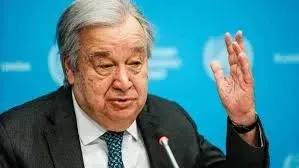
UN : The United Nations is facing one of the most serious financial challenges in its history, with senior officials warning that persistent funding shortfalls could soon disrupt the organisation’s core operations. As unpaid contributions continue to mount and long-standing budget rules remain unchanged, the UN’s leadership is urging member states to act quickly to prevent a breakdown in day-to-day functioning.
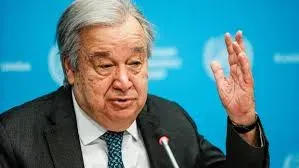
Secretary-General Issues Stark Financial Warning
In a recent letter circulated to all UN member countries, Secretary-General António Guterres laid out the severity of the organisation’s financial position. He cautioned that without immediate action, the UN could face what he described as an imminent risk to its financial stability. Governments were asked to settle outstanding dues promptly or support reforms to the existing budget system, which he argued is no longer fit for purpose.
The message was reinforced during a public briefing on Friday, when a UN spokesperson addressed questions about the letter. The response was blunt, stressing that the time for delayed payments had passed and that urgent action was now required to keep the organisation operating.
Limited Reserves Add to Financial Strain
UN officials have emphasised that the organisation lacks the financial buffers it once relied upon during periods of delayed funding. According to spokesperson Farhan Haq, the UN no longer has sufficient cash reserves or liquidity to absorb ongoing shortfalls. He noted that the secretary-general has raised similar concerns in recent years, but warned that the situation has now reached a critical stage.
Without adequate reserves, even routine activities such as peacekeeping coordination, humanitarian planning, and administrative operations could face disruption if funds are not received on time.
Global Political Context Shapes Funding Debate
The financial warning comes amid a changing international landscape, particularly regarding the role of major contributors. While Guterres did not name specific countries, his appeal follows recent moves by the United States administration to scale back financial involvement in multilateral institutions. Washington has announced plans to withdraw from several UN-linked agencies and has promoted alternative international initiatives outside the UN framework.
Some analysts quoted by international media outlets suggest that these proposals could weaken the UN’s central role in global diplomacy by shifting influence away from established multilateral structures.
Concerns Over Alternative Governance Proposals
Human rights groups have raised questions about the implications of these alternative initiatives. Louis Charbonneau, UN director at Human Rights Watch, described one such proposal as resembling a pay-to-participate model, citing reports of a substantial fee for permanent membership. He argued that governments would be better served by strengthening existing international institutions rather than diverting resources elsewhere.
Charbonneau added that the UN remains essential for upholding international human rights standards, humanitarian law, and accountability mechanisms that have developed over decades.
How UN Contributions Are Calculated
Under the current system, each country’s financial contribution to the UN is determined by a formula that considers economic size, income levels, and debt burden. The United States remains the largest contributor to the core budget, responsible for 22 percent, followed closely by China at 20 percent.
Despite this structured approach, the UN has struggled with late and incomplete payments. Guterres revealed that by the end of 2025, unpaid contributions had reached a record level of 1.57 billion US dollars, though he did not identify which countries were responsible for the arrears.
Budget Cuts and Structural Challenges
Earlier this month, the General Assembly approved a 3.45 billion US dollar budget for 2026, representing a seven percent reduction from the previous year. The cut reflects efforts to rein in spending as financial pressure intensifies. However, UN officials say cost-cutting alone will not resolve the underlying problem.
In his letter, Guterres warned that even with reduced spending, the organisation could run out of available cash by July. He also criticised a long-standing rule that requires the UN to return unused funds to member states annually, calling it a structural flaw that worsens cash shortages.
Payment Levels Remain Low
The scale of the challenge is underscored by recent payment data. As of last week, only 36 out of the UN’s 193 member states had fully paid their regular contributions for 2026. With the majority of payments still outstanding, officials say decisive action is needed to prevent further financial deterioration.
-
Ex-husband’s former wife accuses Chinese actress Zhang Yuqi of hiring surrogate

-
Shaan Shahid returns this Eid-Ul- Fitr 2026 with power packed Punjabi action film “BULLAH”

-
Mail Carrier Was Suspended Without Pay After Complaining About Working During Snowstorm

-
Deep Love Arrives For 3 Zodiac Signs On February 2, 2026

-
You Shouldn’t Use A Microfiber Towel If It’s Touched The Ground
