“अन्तःसलिले येन तिष्ठति काशी सदा स्थिरा।”
Kashi stands eternal, held within the waters themselves.
Why is Ganga Jal from Kashi traditionally not taken home? This article explains the belief, scriptures, and spiritual logic behind why Kashi treats Ganga Jal differently from other places. It explores Kashi’s role as a moksha city, the concept of maryada, the presence of Shiva, and why Ganga in Kashi is seen as a living presence rather than sacred water to be carried. The piece helps readers understand tradition without superstition, using simple language and clear reasoning.er complete form.
1. Kashi Is Not Just on the Ganga, Kashi Exists Within Her
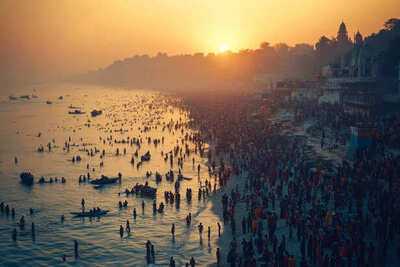
 Devotees taking holy dip in the Ganga during sunrise symbolizing purification and spiritual renewal on Makar Sankranti
Scriptural tradition places Kashi in a unique position. Texts like the Skanda Purana describe Kashi as a city that exists beyond time, held steady by divine will. Ganga here is not passing through. She is present.
In most places, the Ganga flows. In Kashi, she abides.
This distinction matters deeply. Water that flows can be carried. Presence is not meant to be moved. Ganga jal in Kashi is understood as part of the living sacred space itself, not a resource to be taken elsewhere.
2. Kashi Is the Place of Moksha, Not TransferKashi is traditionally known as the city of liberation. It is believed that those who leave their body here attain release from the cycle of rebirth.
Because Kashi is linked to moksha, everything here is considered complete in itself. The role of the pilgrim is not to take something away, but to let go.
Taking Ganga jal home symbolises carrying merit. Kashi teaches surrender of merit. This is why the spiritual logic of Kashi works in the opposite direction from most pilgrimage sites.
3. Ganga in Kashi Is Considered Sada Shuddha

In many traditions, Ganga jal is carried home for purification. In Kashi, Ganga is believed to be eternally pure and self complete.
Texts describe Ganga in Kashi as never losing her sanctity regardless of physical condition. This belief removes the need to preserve or transport her water. What is eternally present does not need safeguarding.
The sanctity of Ganga here is not stored in a vessel. It is understood to be active and alive within the space itself.
4. Kashi Follows Maryada, Not ConvenienceHindu traditions operate on maryada, disciplined boundaries shaped by meaning rather than comfort.
In Kashi, the maryada is clear. Ganga jal belongs to Kashi. It is meant for ritual use at the ghats, for ancestral rites, and for final offerings. These acts are performed where the river meets the sacred ground.
Taking the water home removes it from its ritual purpose. This is why many priests advise devotees to perform offerings here rather than carrying the water away.
5. Ganga Jal in Kashi Is Linked to Antyeshti and Pitra KriyaKashi is one of the most important places for last rites. Ganga jal here is closely associated with pitra karma and liberation rites.
Water used in these rituals is meant to return to the river and the earth, not to be stored or reused. Carrying it home would disconnect it from its intended spiritual cycle.
This belief reinforces the idea that Ganga jal in Kashi is meant to complete rites here, not extend them elsewhere.
6. The Presence of Shiva Changes the Meaning of Ganga Jal
Kashi is believed to be the city of Lord Shiva. Scriptures describe Shiva as constantly present here, whispering the Taraka mantra to departing souls.
Because of this, Ganga in Kashi is seen as existing under Shiva’s direct guardianship. Water under divine guardianship is not treated as an object of personal possession.
The presence of Shiva transforms Ganga jal from a sacred substance into a sacred presence. Presence is respected, not transported.
7. Carrying Ganga Jal Home Is a Symbol of Holding OnAcross Hindu philosophy, liberation is linked to release. Kashi embodies this teaching fully.
Taking something home represents holding. Kashi represents letting go.
This is why the tradition subtly discourages taking Ganga jal home from Kashi. The city itself teaches detachment. Even sacred things are not meant to be possessed here.
-
India A vs USA: How to Buy T20 World Cup 2026 Warm-Up Match Tickets
-
F1 2026 Barcelona Shakedown Conclusion: Hamilton Tops Timesheets As Ferrari And Mercedes Show Might

-
Tirupati Laddu Row: Andhra Minister Claims Previous Govt Suppressed Test Results; CBI Says No Beef Tallow Found
-
Elise Mertens And Zhang Shuai Capture Australian Open Women's Doubles Crown In Thrilling Final

-
Assam: Govt School Principal Arrested For Alleged Sexual Abuse Of Student During Saraswati Puja Celebrations