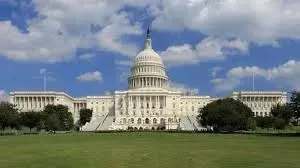
Partial US Government: A partial shutdown of the United States federal government took effect early Saturday local time after lawmakers failed to complete final approval of updated funding legislation, according to reporting from ABC News. The lapse followed a tense final stretch in Congress, where negotiations continued into the final hours before the deadline but ultimately fell short of full passage.
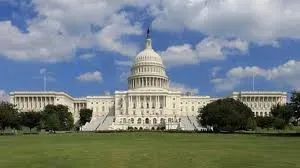
Senate Acts, but House Delay Triggers Shutdown
The shutdown began despite late-night action in the Senate, which approved a revised package of government funding bills just before the deadline expired. While the Senate cleared the measure, the House of Representatives was not prepared to vote on the changes immediately. ABC News reported that the House is unlikely to take up the revised package before Monday, leaving parts of the federal government without funding in the interim.
This procedural gap between the two chambers resulted in the partial shutdown, affecting select federal agencies and services while others continue operating under existing appropriations.
Homeland Security Funding Split From Broader Package
As part of Friday’s legislative maneuvering, the Senate voted to separate extended funding for the Department of Homeland Security from the broader government funding bill. This move followed an agreement with the White House to delay final action on Homeland Security funding for two weeks.
The temporary delay is intended to give lawmakers time to negotiate Democratic demands related to Immigration and Customs Enforcement operations. Those demands include requiring ICE agents to wear body cameras that remain activated during operations and prohibiting the use of masks by agents.
Senate Vote Shows Broad Bipartisan Support
The Senate approved the procedural funding measure by a vote of 71 to 29, reflecting broad bipartisan backing. Only five Republican senators voted against the bill: Rand Paul, Ted Cruz, Mike Lee, Ron Johnson, and Rick Scott.
With Senate approval secured, the legislation now moves to the House of Representatives. Speaker Mike Johnson is expected to bring the funding package to the floor once the House reconvenes. Under House rules, the bill will require a two-thirds majority to pass, setting a high threshold for approval.
Path to Presidential Approval Remains Narrow
For the funding measure to become law, it must receive strong support from both Republicans and Democrats in the House. If approved, the bill would then be sent to US President Donald Trump for final consideration, ABC News reported.
Given the supermajority requirement and internal divisions within both parties, the outcome in the House remains uncertain. Lawmakers from both sides are continuing discussions in an effort to resolve outstanding disagreements before a prolonged shutdown takes hold.
Graham Lifts Hold After Sanctuary City Commitment
Earlier on Friday, progress toward the Senate vote was unlocked when Republican Senator Lindsey Graham lifted his procedural hold on the legislation. Graham agreed to move forward after receiving a commitment from Senate Majority Leader John Thune to schedule a future vote on legislation aimed at banning sanctuary cities.
That commitment cleared the way for the Senate to proceed with the funding package ahead of the shutdown deadline.
Democrats Press for ICE Policy Changes
Democratic leaders used the funding debate to highlight their concerns about ICE enforcement practices. Senate Minority Leader Chuck Schumer emphasized the urgency of addressing what he described as troubling images and actions associated with immigration enforcement.
“This is not America,” Schumer said, according to ABC News. He urged Republican colleagues to support meaningful reforms, warning that Democratic votes would not be guaranteed without substantive changes.
Schumer added that lawmakers face a narrow window to demonstrate progress, noting that public attention remains focused on Congress as negotiations continue.
Uncertainty Ahead as Deadline Pressure Continues
With parts of the government now shut down, pressure is mounting on House lawmakers to act quickly. While Senate leaders have signaled readiness to move forward, the timing and outcome of the House vote will determine how long the shutdown lasts and whether broader policy disputes can be resolved in the coming days.
-
The 50: Total 10 contestants evicted so far, Khanzaadi out

-
No India-Pakistan Knockout In T20 WC 2026? Here's Who Benefits And Why

-
Australia To Begin T20 World Cup 2026 Without Star Fast Bowler

-
JKBOSE Class 11 Results 2026 Declared At jkbose.jk.gov.in, Direct Link To Check Here

-
Woman Fidayeen Coordinated Attacks Across Balochistan; Who Is Asifa Mengal? BLA Releases Photo
